

The court ruled that that administration overstepped its authority in levying global tariffs under an emergency powers law.
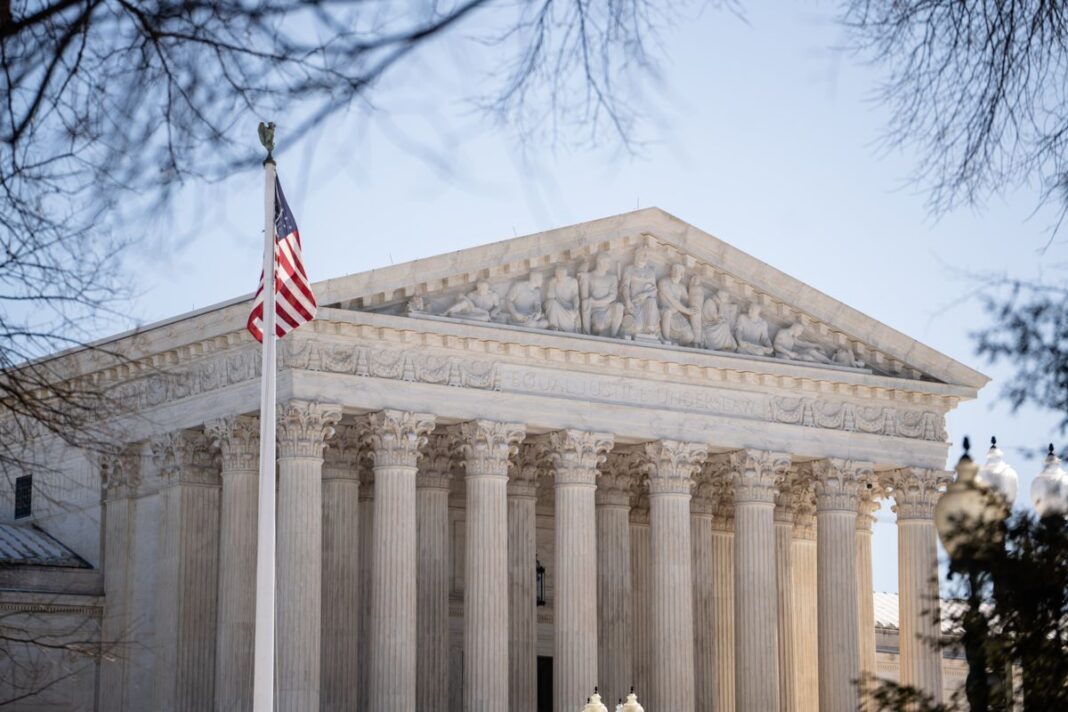
The Supreme Court on Feb. 20 struck down many of President Donald Trump’s tariffs, stating they violated an emergency powers law he invoked last year.
The president previously declared a national emergency under the International Emergency Economic Powers Act, saying the tariffs were needed to stem the flow of illegal drugs and to combat “large and persistent” trade deficits with foreign nations.
The act generally gives the president the power to regulate imports to address emergencies, but debate ensued over what that meant in practice.
Writing for the 6–3 majority, Chief Justice John Roberts rejected Trump’s arguments, saying that the law’s phrasing did not clearly authorize tariffs.
Tariffs enacted under other laws are not affected by the ruling.
Tariffs Not Authorized Under Emergency Law
Roberts said Trump rested his claim of tariff authority on the words “regulate” and “importation” in the International Emergency Economic Powers Act, which gives the president authority to act.
“The President asserts the independent power to impose tariffs on imports from any country, of any product, at any rate, for any amount of time,” Roberts said. “Those words cannot bear such weight.”
The Supreme Court has long been reluctant to approve delegations of congressional power based on ambiguous statutory text, especially where they concern a core congressional power such as spending power, he said.
Roberts said that Trump would have needed clearer authorization from Congress to prove it wanted to delegate its tariff power under Article I of the Constitution.
Refund Process Likely a ‘Mess’
In a dissenting opinion, Justice Brett Kavanaugh said providing refunds to those affected by the tariffs would probably be a “mess.”
The federal government may be forced to refund billions of dollars to importers who paid tariffs under the International Emergency Economic Powers Act, “even though some importers may have already passed on costs to consumers or others,” he said.
Kavanaugh said the United States has benefited from the tariffs, which gave the government leverage to negotiate trillions of dollars in trade deals with governments in countries such as China, Japan, and the United Kingdom.
The court’s decision “could generate uncertainty regarding those trade agreements,” he added.
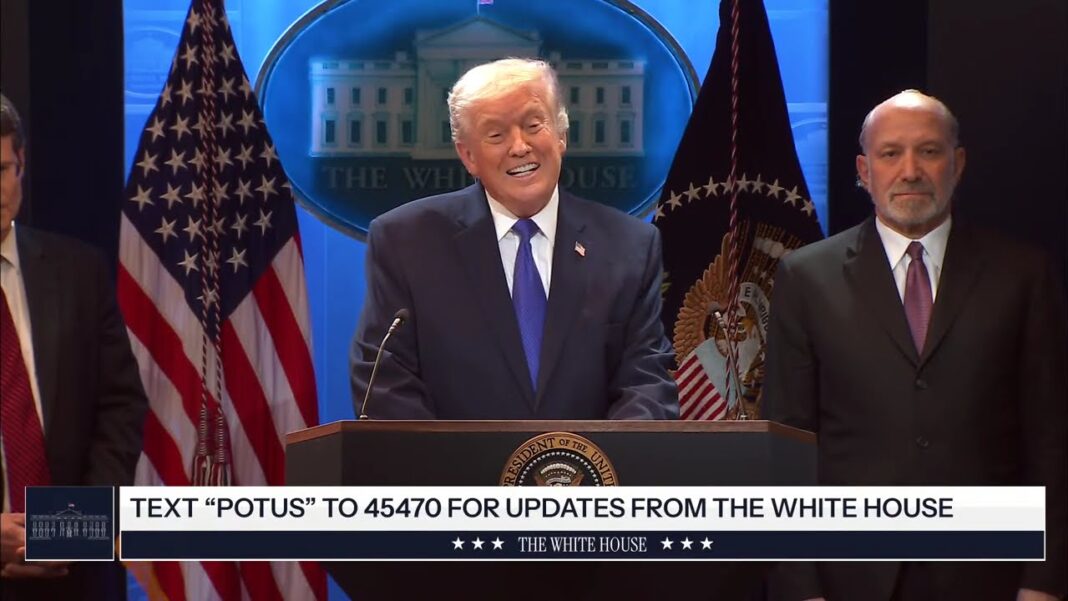
During a White House press conference on Feb. 20, Trump suggested the Supreme Court didn’t do enough to address the refund issue.
“We’ll end up being in court for the next five years,” he said, indicating the refunds would be determined by future court decisions.
Trump Planning Alternatives to Rejected Tariffs
Trump responded to the ruling with disappointment and suggested it was a win for countries that had taken advantage of the United States. He also said he was “ashamed of certain members of the court.”
He added that “other alternatives” would replace the tariffs the court rejected, and that he would sign an order to impose a 10 percent global tariff rate under a different law.
Treasury Secretary Scott Bessent has said that the government could invoke other authorities to implement tariffs, although they are “not as efficient, not as powerful.”
Trump said after the Supreme Court’s decision that there were legal avenues other than the emergency powers law that were “even stronger.”
U.S. Trade Representative Jamieson Greer similarly indicated in December that the administration had a backup plan.
Kavanaugh: Other Laws Allow Trump’s Tariffs
It remains to be seen how Trump will attempt to fill the void left by his tariffs. As Kavanaugh noted, the court’s decision focused on one emergency powers law rather than ruling out the possibility that Trump could reimpose his tariffs.
“The decision might not substantially constrain a President’s ability to order tariffs going forward,” Kavanaugh said in his dissent, which was joined by Justices Samuel Alito and Clarence Thomas.
“That is because numerous other federal statutes authorize the President to impose tariffs and might justify most (if not all) of the tariffs at issue in this case—albeit perhaps with a few additional procedural steps that [the International Emergency Economic Powers Act], as an emergency statute, does not require.”
During oral argument in November, Alito similarly questioned why Trump couldn’t impose the tariffs using a law known as the Tariff Act. Kavanaugh’s dissent pointed to that law, as well as two others.
Disagreement Over Major Questions Doctrine
Although six of the justices rejected Trump’s tariffs, their reasoning differed in important ways. More specifically, the justices disagreed over how to apply the major questions doctrine, which requires Congress to give clear authorization when it allows the president to make decisions of major economic or political importance.
Roberts, along with Justices Amy Coney Barrett and Neil Gorsuch, each agreed that Congress’s language had not clearly authorized Trump’s tariffs. The three liberal justices, however, thought that the doctrine need not be relied on for the analysis of this case and that ordinary statutory interpretation was sufficient.
“Most important, [the law’s] key phrase—the one the Government relies on—says nothing about imposing tariffs or taxes,” said Justice Elena Kagan, writing for her colleagues. She added that the term “regulate,” both in common parlance and as Congress uses the word, does not encompass taxing.”
Kavanaugh and his conservative colleagues said the law’s language was enough to authorize the tariffs, but also stated that the major questions doctrine didn’t apply to foreign affairs.
“In the foreign affairs realm, courts recognize that Congress often deliberately grants flexibility and discretion to the President to pursue America’s interests,” he said.
By Matthew Vadum and Sam Dorman