Without being a card player, it can be difficult to spot a cardsharp who cheats by manipulating cards to serve their own interest. Without being a tax expert and certified accountant, it is difficult to spot how federal tax expenditures manipulate government spending for friends and supporters.
Cardsharps use sleight of hand, false shuffles, and dealing from bottom of the deck to manipulate the cards to cheat people out of their money. Congress and the White House use the appropriations process and tax code (“tax expenditures”) to cheat taxpayers out of trillions. Tax expenditures reduce federal tax revenue by $1.3 trillion annually. Every tax expenditure (gift) benefits the recipient and punishes the non-recipients’ who must pay for the lost revenue.
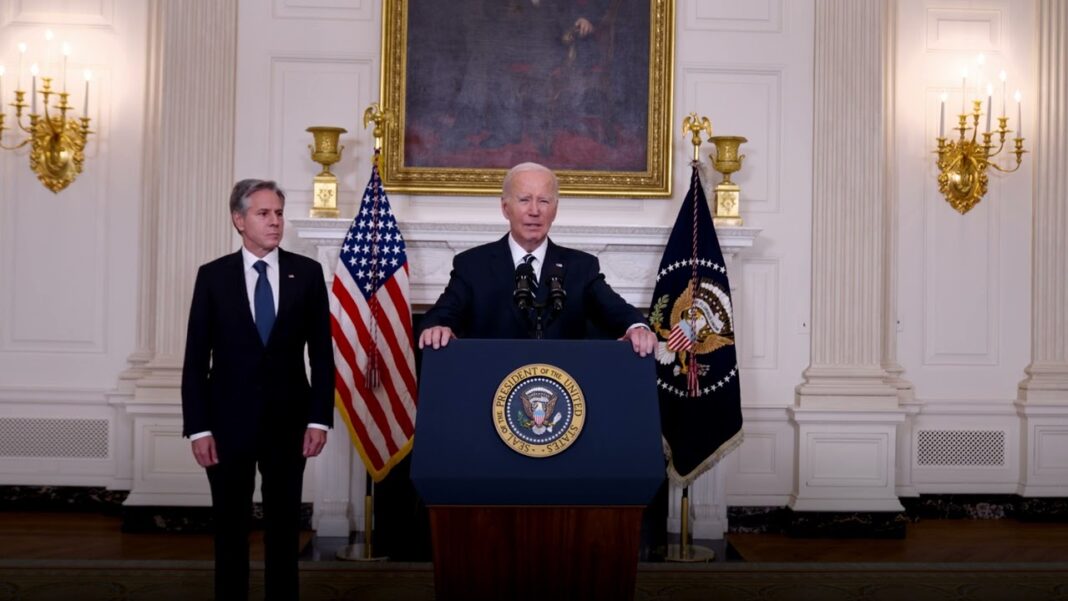
The most recent example is the Inflation Reduction Act (“IRA”) which went into effect January 1, 2023. The Biden administration told the public the new law would reduce inflation and achieve deficit reduction. Staying with the card game analogy the many types of tax expenditures are merely different types of playing cards.
The various types of tax expenditure cards provide direct subsidies to specific individuals and industries in the form of loans, loan guarantees to keep bankrupt industries operating, tax breaks in the form of deductions, lower marginal rates for specific financial activities , the elimination of fees or penalties and the most dangerous – tax credits.
In the case of the IRA the federal government gives taxpayers credits against their tax liability if the taxpayers do what the government wants done. The tax credit is an unlimited charge against the federal treasury since anyone who conforms to the government’s desires gets the credit to reduce their income tax. For example, taxpayers purchasing electric vehicles receive up to $7,500 in credits to reduce their federal income taxes by an amount equal to the credit.
The IRA gives the credits for activities that are asserted to reduce emissions causing climate change. Those activities include battery storage, energy efficiency, residential green energy, hydrogen, carbon capture, solar and wind generation and electric vehicles. The Congressional Budget Office (“CBO”) initially estimated the tax credit would cost the treasury $391 billion between 2022 and 2031.
The IRA tax credits for anything “green,” incentivized more pigs to show up at the trough than CBO estimated. Within months after the program started Goldman Sachs raised its estimated cost of the credits to $1.2 trillion for the same time period. The original forecast missed the cost of the credits for electric vehicles by $379 billion; energy manufacturing, $156 billion; renewable electricity production, $82 billion; energy efficiency, $42 billion; hydrogen, $36 billion; biofuels, $34 billion; and carbon capture, $31 billion.
Most troublesome is the fact that a trillion plus dollars of tax credits are creating few jobs. “Total [cost for every green job it created] range from $ 2 to $ 7 million per job.” Unfortunately, the jobs created will have an average annual wage of $45,000. Where have all the millions gone?
While tax credits are the most abusive form of government gifts, the entire tax code is stuffed with over 2000 subsidy [gift] programs. Every federal tax expenditure, or gift, interferes with the entire market to which it is directed. Companies that receive the gifts are given a competitive advantage over non-recipients in the market. Farming is an excellent example. The federal government distributes $30 billion a year in subsidies to farm industry. “The largest 15 percent of the farm businesses receive 85 percent of the total farm subsidies.”
Through the aggressive use of tax expenditures, the federal government controls what is manufactured, the energy used in the process, the type of research conducted, what is mined, medical benefits received, deductible building expenses, the cars purchased, the development of communities and many more. There are so many tax expenditures that the Department of the Treasury catalogs them in large groupings: National Defense, International Affairs, General Science, Space & Technology, Energy, Natural Resources & Environment, Agriculture and Housing, Transportation, Community and Regional Development, Education, Training, Employment and Social Sciences, Health, Income Security, Social Security, Veterans Benefits, General Government, Interest on Bonds.
The Center on Budget and Policy Priorities estimates that in 2019 IRS tax expenditures carried a value of $1.3 trillion for the recipients. The top 1% of the income earners received 24.1% of the value and the top 20% of income earners take 58.8%. The IRA adds another trillion to the free lunch pie.
The most deceitful aspect of tax expenditures is they do not compete for appropriations, they are just taken by whoever is willing to conform their business or lifestyle to the federal government’s wishes. Which brings the discussion back to today’s budget fights over how much money to spend or cut. Consider the consequences of exempting the $1.3 trillion in green tax credits from the budget fight. While Congress fights over cutting billions from the deficit, the green industry’s tax credits are exempt from the cuts. The green industry laughs all the ways to the bank.
There are a few simple solutions. Over a decade ago a Missouri State Senator, Emily Kilmer, proposed legislation that would require every state tax credit program in Missouri to be limited to the amount of tax credits authorized by the legislature that fiscal year.
This simple solution would put tax expenditures into the same category as all appropriations, thereby giving the legislature control overall aspects of state spending. True to political form, the Missouri legislature never moved forward with the proposal. This type of law would work very well at the federal level. It would actually make federal appropriators responsible for all their spending. It would make budgeting and appropriations a more transparent since anything with budget implications would be on the table for being funded, cut or eliminated. Every person and interest group would be publicly fighting over the food in the same trough.
Another option is to repeal the 8-million-word tax code and replace it with the 1913- four-page Form 1040. It had few deductions and low rates, but it required everyone to pay some tax. Another benefit of this simple approach is it captures a greater amount of tax owed by closing the “Tax Gap.” The IRS defines the tax gap as the difference between true taxes owed for a given tax year and the amount that is paid. The gap is caused by the under-reporting of income, non-filing, and tax evasion. While the exact amount is unknown, the IRS estimates it to range from $574 to $700 billion annually. A complex tax code invites under-reporting and manipulation, whereas a simple tax code fosters greater participation and prevents large-scale manipulation due to its transparency.
By requiring tax expenditures to be subject to the same rules as all appropriations and closing the tax gap, the federal government could achieve savings well over a trillion dollars annually. It’s time for the federal government to stop dealing from the bottom of the deck and start fair dealing with its citizens.