

The Grocery Store Hack That Helps You Avoid Ultra-Processed Foods

5Mind. The Meme Platform
Epoch Health Header

Ultra-processed foods dominate shelves, contributing to health issues but lacking clear definitions.

Walk into any grocery store, and chances are, most of what you see is ultra-processed—foods engineered for convenience but often lacking real nutrition. These products make up nearly three-quarters of what’s on the shelves and have been linked to rising rates of obesity, heart disease, and diabetes.

But what exactly makes a food “ultra-processed”? The answer is murky, leaving shoppers confused and policymakers silent on the sidelines.

In a sign of the times, AI may help provide some answers.

The Challenge of Defining Ultra-Processed Foods

Despite the growing evidence linking ultra-processed foods to chronic diseases, even experts struggle to agree on a clear definition.

For a food to be ultra-processed, it must have been chemically altered, said Albert-László Barabási, co-author of a new study on processed foods and co-founder of Foodome—a project mapping the chemical components of the human diet. Certain orange juices labeled “natural,” for instance, are broken down into three separate components, stored individually, and later recombined, thus making them ultra-processed, he said in a press release.

Barabási said that food packaging doesn’t reveal whether a product is ultra-processed. The USDA tracks only a limited number of nutritional components, and the FDA mandates reporting for just about 12 nutrients, leaving much of what’s in our food hidden from view.

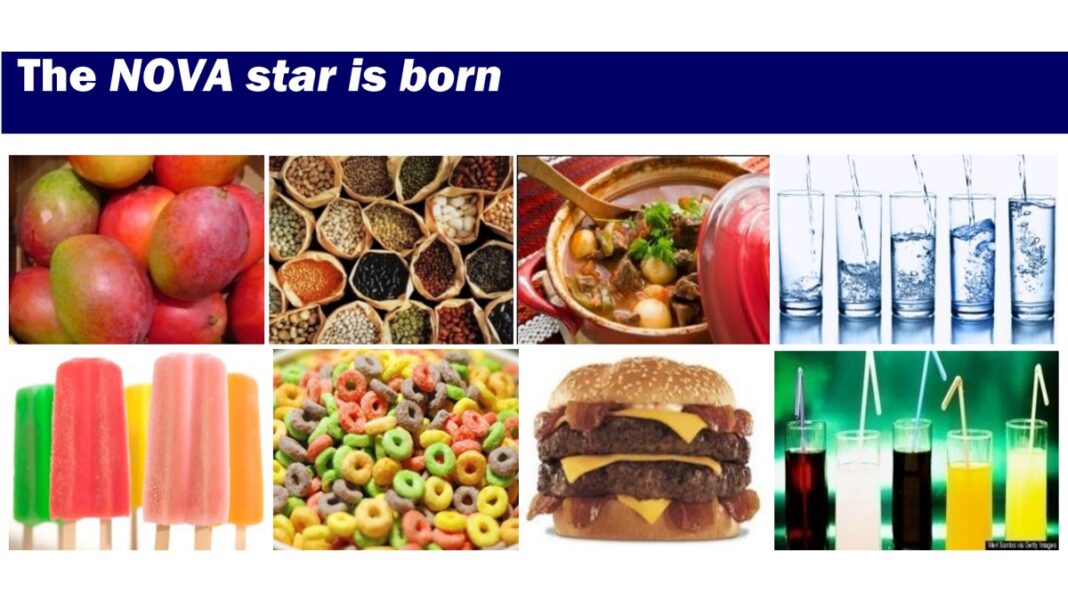
This lack of transparency underscores the importance of clear categorization. To help consumers understand food processing, researchers developed the NOVA classification system. Widely regarded as the gold standard for assessing food processing, this method sorts foods into four categories based on how much they’ve been altered from their natural state. Here’s how it breaks down:

  • Unprocessed or Minimally Processed Foods – Whole foods that are fresh, dried, ground, pasteurized, or frozen with no added ingredients, such as fruits, vegetables, meat, eggs, and milk.
  • Processed Culinary Ingredients – Substances derived from whole foods used in cooking, such as salt, sugar, oils, and butter.
  • Processed Foods – Foods made by combining whole foods with culinary ingredients, such as canned vegetables, fresh bread, cheese, and smoked meats. These typically have added salt, sugar, or fat but still retain most of their original food structure.
  • Ultra-Processed Foods – Industrial formulations with little to no whole food, containing additives such as emulsifiers, stabilizers, artificial flavors, and preservatives. Examples include sugary cereals, packaged snacks, frozen meals, soda, and instant noodles.

By Sheramy Tsai

Read Full Article on TheEpochTimes.com

Contact Your Elected Officials
The Epoch Times
The Epoch Timeshttps://www.theepochtimes.com/
Tired of biased news? The Epoch Times is truthful, factual news that other media outlets don't report. No spin. No agenda. Just honest journalism like it used to be.

Rob Reiner’s Death Proves Trump Right, Again

“I believe Donald Trump will be the last president...

British Medical Journal Decries Racist Western Opposition to Female Genital Mutilation

In its “Journal of Medical Ethics” the British Medical Journal endorsed the tradition of female genital mutilation among certain North African cultures.

The Sacred Responsibility

From the beginning of time the female of every kind holds the sacred responsibility of continuing existence itself.

Vaxx Producers Would Go Bankrupt Without Legal Immunity, Concedes Former CDC Director

Rochelle Walensky justified in a Boston Globe "Fireside Chat" vaccine makers’ special legal protections that leave Americans no recourse for injuries paid.

What’s Really Behind the US’ Ambitious Tech Plans for Armenia?

Two US think tank experts argued in a WaPo article that deeper American engagement with Armenia could help more effectively contain Russia.

Appeals Court Allows Trump’s National Guard Deployment in DC, for Now

A federal appeals court on Dec. 17 let President Trump keep using DC National Guard troops in the capital during an appeal.

64,000 Jobs Added in November, While Unemployment Rises to 4.6 Percent

Employers added 64,000 jobs last month after shedding 105,000 positions in October, according to delayed data from the Bureau of Labor Statistics (BLS).

CDC Stops Recommending Hepatitis B Vaccine for All Newborns

The Centers for Disease Control and Prevention no longer recommends that all newborns receive a dose of the hepatitis B vaccine soon after birth.

Dan Bongino to Resign as FBI Deputy Director

Federal Bureau of Investigation (FBI) Deputy Director Dan Bongino has resigned less than a year into the job.

Trump Defends Susie Wiles After Vanity Fair Article

President Trump defended his Chief of Staff Susie Wiles, who Vanity Fair reported as saying the president has an “alcoholic personality” in an interview.

Trump Says He Is Pardoning Former Colorado County Clerk Tina Peters

Trump is pardoning Tina Peters, a former Colorado county clerk convicted of election machine tampering in the aftermath of the disputed 2020 election.

Trade Chief Jamieson Greer Indicates Progress on US–India Trade Deal

U.S. Trade Representative Jamieson Greer hinted that the United States and India are making progress on a deal.

Trump Touts Lower Prices, Bigger Paychecks in 1st Stop of National Tour

President Trump told an energetic crowd at a Dec. 9 rally that his administration’s policies are lowering the cost of living nationwide.
spot_img

Related Articles