
May Producer Prices Show Little Evidence of Tariff-Driven Inflation

5Mind. The Meme Platform

Companies could be absorbing tariff-driven price increases rather than passing costs onto consumers.

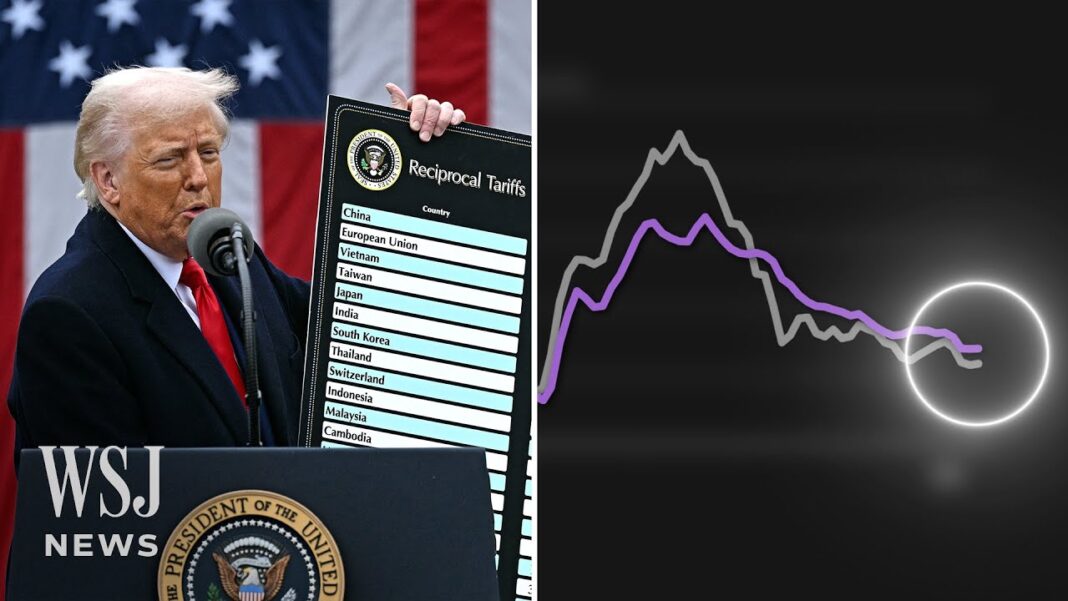
The producer price index (PPI)—a measure of prices paid by businesses for goods and services—rose less than expected in May, signaling that tariff-related inflation effects have yet to materialize.

According to the Bureau of Labor Statistics, the PPI increased by 0.1 percent last month, following an upwardly revised 0.2 percent decline in the previous month. Goods inflation jumped 0.2 percent, while services rose 0.1 percent.

Core producer prices, which strip out the volatile energy and food components, also rose 0.1 percent in May.

Both readings came in below economists’ expectations.

On a 12-month basis, PPI inflation inched higher, to 2.6 percent from 2.5 percent in April. Core PPI inflation slowed to a lower-than-expected 3 percent from 3.2 percent.

The PPI excluding food, energy, and trade services also edged up by 0.1 percent last month.

Market watchers monitor the PPI because it can serve as a precursor to future consumer inflation, as it occurs early in the supply chain.

New PPI numbers follow a tepid 0.1 percent increase in the consumer price index (CPI) last month, falling short of expectations. Meanwhile, the headline annual inflation rate edged up to 2.4 percent, slightly below the projected 2.5 percent.

Eric Teal, the CIO of Comerica Wealth Management, suggests that the lack of inflation may depend on the “absorption rate” of businesses and foreign suppliers.

“We believe that the majority of the tariffs will eventually get passed to the consumer, but companies are cautious at this juncture about passing along the price increase,” Teal said in a note emailed to The Epoch Times.

This pattern mirrors the dynamics observed during President Donald Trump’s first term. Despite a sharp rise in wholesale prices in 2018 and 2019, consumer prices remained stable, indicating that U.S. businesses absorbed the increased costs rather than passing them on to consumers.

Will this time be different? Business surveys indicate that companies have been passing tariff-related costs to customers.

The Federal Reserve’s latest Beige Book—a periodic report summarizing economic conditions across the central bank’s 12 districts—revealed a moderate increase in prices, and businesses anticipate inflationary pressures “to rise at a faster rate going forward.”

“A few Districts described these expected cost increases as strong, significant, or substantial. All District reports indicated that higher tariff rates were putting upward pressure on costs and prices,” the report stated.

In addition, companies identified different response mechanisms, such as trimming profit margins, adding temporary fees or surcharges, and increasing prices are affected products.

By Andrew Moran

Read Full Article on TheEpochTimes.com

Contact Your Elected Officials
The Epoch Times
The Epoch Timeshttps://www.theepochtimes.com/
Tired of biased news? The Epoch Times is truthful, factual news that other media outlets don't report. No spin. No agenda. Just honest journalism like it used to be.

New Book Warns Failure of Congress to Defend Separation of Powers Fuels Rise of Authoritarianism

The Book Congress: An Irrelevant Institution or Guardian of the Republic argues that Congress's decline threatens the Constitution’s separation of powers.

What Happens to State Sovereignty When Federal Money Stops?

What happens to state sovereignty when the federal government can no longer afford to subsidize 36% of state budgets, on average?

Japanese Nationalists vs. the Replacement Migration Machine

Japan has begun to falter in its resolute refusal to embrace the mass migration regime that international governments and NGOs had demanded it do.

CIA is On Tucker Carlson for Talking to Iran

“They read my text messages” and the Central Intelligence Agency is trying to “frame me as a foreign agent,” alleged Tucker Carlson.

The EU Poses A Much More Credible Threat To Russia Than The Inverse

Unlike back in June 1941, Russia is now a nuclear superpower, and that might be the only factor that deters the EU from invading Russia.

US Prosecutors Say Venezuelan State Funds Should Not Be Used for Maduro’s Defense

Former Venezuelan leader Nicolás Maduro should not be ‌able to use funds from Caracas to defend himself against narcotics trafficking charges, U.S. prosecutors said.

Judge Temporarily Blocks RFK Jr.’s Vaccine Policy, Panel Overhaul

A federal judge in Massachusetts ruled that Health Sec. Robert F. Kennedy Jr. illegally appointed 13 new members to an influential vaccine panel.

Judge Blocks New CDC Vaccine Schedule: What to Know

A federal judge has temporarily blocked the new Centers for Disease Control and Prevention vaccine schedule for children.

Virginia Democrats Pass Sweeping Agenda in First Trifecta Session but Adjourn Without a Budget

Virginia Democrats ended their first trifecta session, passing bills raising the minimum wage, banning assault firearms, limiting ICE cooperation, and expanding paid leave.

Trump Expects Iran War to End ‘Soon’

President Trump said on March 16 that he believes the U.S.–Israeli war with Iran could be “wrapped up soon,” but its unlikely to end within the week.

Trump Puts China Visit on Hold Amid Iran War

As the Iran war continues, President Donald Trump said he would delay his long-awaited trip to Beijing, originally set for the end of this month.

White House Outlines Vision for Underground Visitor Screening Facility

The 33,000-square-foot facility proposed beneath Sherman Park would process visitors entering the White House and could open by mid-2028 if approved.

Trump Signs Order Assigning Vance to Head Anti-Fraud Task Force

President Donald Trump signed an executive order on March 16, officially creating an anti-fraud task force headed by Vice President JD Vance.
spot_img

Related Articles

Popular Categories

MAGA Business Central