

Commentary
In an astounding coincidence, as the news broke that Charlie Kirk, founder and head of the enlightened traditionalist movement Turning Point USA, had been assassinated, I was sitting in the Oval Office of the White House across the Resolution desk from the President of the United States. Although I have known Mr. Trump for more than 25 years and have generally been in touch with him throughout that period, I had not seen him in person for some years. I have written approximately 2 million words about him, almost all of it reasonably or unambiguously favorable, though not uncritically so, mainly on U.S. internet sites, as well as a book that was appreciative of him, though no hagiography (“A President Like no Other”).
I had developed a few ideas about a couple of his programs, in emails and by telephone, and he suggested I visit him. Wednesday, Sept. 10, was the day. As I was arriving at the White House visitors’ entrance, I saw on my mobile phone that Charlie Kirk had been wounded in an assassination attempt. I did not really know him and was only generally conversant with his Turning Point movement, and from the initial wording of the bulletin I hopefully assumed that he would recover. There was no sign of alarm as I sat in the outer anteroom with a number of distinguished fellow visitors, including a prominent senator and the well-known economist Arthur Laffer, whom I had not seen in 30 years. A few friends in the administration came and went and we exchanged greetings, and the time passed pleasantly.
The outer anteroom for the Oval Office is rectangular and has doors on three walls, and in the middle of what I assume was a typical weekday afternoon, an astonishing number of people were constantly coming and going through all three doors, one the entrance and the other two into parallel inner anterooms to the Oval Office. The ambience is one of constant and purposeful activity in a shared and good-spirited cause. Occasionally, it happened that successive doors were simultaneously ajar, and the familiar voice of the chief occupant would be heard, good-humored but authoritative. A pleasing aesthetic aspect, as usual in Trump matters, is the presence of very capable and attractive youngish ladies on the presidential staff.
Although I had been to the White House a number of times before, it was in groups and in reception rooms. Here, it was possible to see how the private office functioned, and it was clear the president’s staff is devoted to him personally and that he, unlike some holders of great offices that I have known, is unfailingly polite to staff. In this he reminded me of Margaret Thatcher, who frequently beat up her cabinet ministers because she thought they could and should defend themselves if they were any good (and if they weren’t she sacked them), but never forgetting her own modest socioeconomic beginnings, she was unfailingly courteous to people in lesser positions.
After about an hour, I was invited to leapfrog the crowded intermediate waiting room and was cordially greeted by my eminent host. He was looking trim, fit, and completely undaunted by the requirements of his position. In my observations, going back to the Eisenhower years, U.S. presidents either enjoy their position and get on top of it or are worn down by it and the presidency imposes itself upon them. Donald Trump is distinctly in the first category. We were briefly joined by Art Laffer who wanted a photograph taken of himself with the president in front of the painting of President Reagan to the right of the president’s desk. After a few pleasantries and reflections, Art departed and the president said that Charlie Kirk had died.
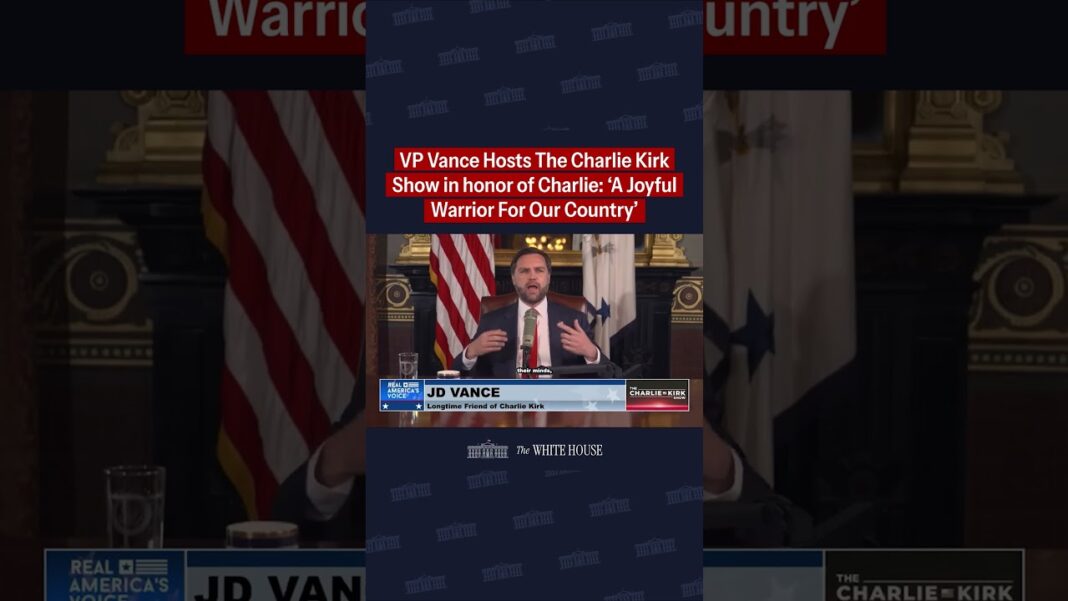
I condoled with him, and when he indicated that it would be appropriate, I started into my reasons for being there. He listened intently and made a few comments, and we were shortly joined by the vice president, J.D. Vance, known even by me to be a close friend of Charlie Kirk. He was reporting on the initial results of the investigation. My offer to excuse myself was declined and there followed a surrealistic and unforgettable scene: the president and vice president lamented their deceased friend, and I was likely almost as improbable a third party as could be found to participate in such an exchange. In the circumstances, I only commented when my opinion was asked.
Especially in the light of ungenerous imputations of motives to both men in their public remarks in ensuing days, I would be remiss not to emphasize that neither the president nor the vice president expressed any sentiment except sorrow at the death of their friend and sympathy for his wife and family and close associates, and calm, deep concern at the extent of violence in the country. There was not a vengeful or partisan word, or even an ill-tempered one. Both men were absolutely exemplary, and in fact somewhat inspiring in their sole preoccupation with the horribly premature and violent death of a talented friend and supporter, and their shared concern at the frequency of recourse to political violence in America and much of the Western world.
By Conrad Black