
The Hidden Risk in 90 Percent of America’s Drinking Water—And How to Reduce It

5Mind. The Meme Platform

While chlorine and other disinfectants keep tap water free of deadly pathogens, their chemical byproducts carry uncertain risks.

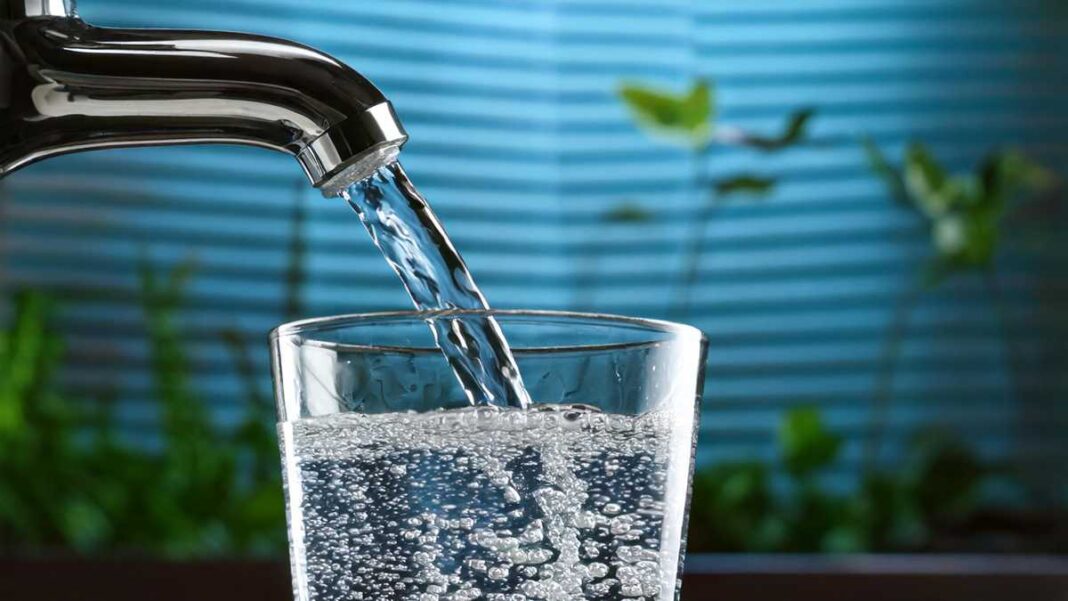
In the United States, 90 percent of Americans get the water they need from public drinking water systems that harbor disinfection byproducts, most of which are unregulated and understudied.

Disinfection byproducts form as a result of chemical treatments that water companies use to keep water free of dangerous pathogens. Some byproducts may increase the risk of cancer.

In the United States, the Environmental Protection Agency (EPA) currently regulates four categories of disinfection byproducts for safety. However, researchers believe there may be hundreds—if not thousands—of unregulated byproducts lurking in the tap water that millions of people drink. The health effects of those chemicals are largely unknown.

There are simple steps people can take at home to minimize these potentially harmful regulated and unregulated byproducts in their water.

Sourcing Public Drinking Water

In larger cities, water treatment plants typically pull water from surface water sources such as lakes, rivers, or reservoirs; groundwater; or a combination of both. Small towns tend to source drinking water from groundwater.

The U.S. Geological Survey estimated that in 2015, 70 percent of water used in the United States came from surface water sources, and 30 percent came from groundwater.

Some locations may use recycled water, which comes from municipal wastewater, stormwater, or agricultural runoff.

Treating Public Drinking Water

Regardless of where it comes from, water supplied to the public goes through several treatment processes involving the addition of chemicals to remove small particles and filtration to ensure it is safe to drink.

During the treatment process, water companies must strike a balance. They must add sufficient chemicals to the water to ensure safety, without exceeding EPA limits for treatment chemicals and their byproducts.

This process involves several steps, including:

  1. Coagulation: Adding chemicals such as salts, iron, or aluminum to bind small particles.
  2. Flocculation: Mixing the water to help particles form larger clumps, sometimes with the addition of other chemicals.
  3. Sedimentation: Allowing large, heavy clumps to settle to the bottom of storage containers.
  4. Filtration: Passing the remaining clear water through several filters to remove residual particles, parasites, bacteria, and viruses. Some water treatment plants may use reverse osmosis, especially when treating recycled water.
  5. Disinfection: Using chemicals such as chlorine or chloramine to kill harmful germs and prevent waterborne illnesses such as cholera and typhoid.

While some treatment plants may use ultraviolet (UV) light or ozone during this step, disinfection chemicals are necessary because they continue to kill pathogens as the water travels to people’s homes. UV and ozone alone cannot provide that protection.


By Kimberly Drake

Read Full Article on TheEpochTimes.com

Contact Your Elected Officials
The Epoch Times
The Epoch Timeshttps://www.theepochtimes.com/
Tired of biased news? The Epoch Times is truthful, factual news that other media outlets don't report. No spin. No agenda. Just honest journalism like it used to be.

The family fault line

The future of humanity rests not upon government, but with the family. A principle that is as bold as it is true and profound.

Media is an Arm of the DNC

Those on the conservative right have realized both television, Hollywood, and the web have been biased in favor of the left and their causes and positions.

When Narrative Replaces Law

When media abandons its responsibility to inform and chooses to provoke, it does not distort truth. It creates the very chaos it then pretends to lament.

Behind the Curtain

At times people sense something is wrong. Events seem disconnected, yet together form a pattern of irrational policies, cultural shifts, and baffling narratives.

The Sedition of Minnesota’s Walz and Frey

The death of 37 year old Renee Nicole Good was preventable. Responses of Democrats Walz and Frey are contemptable and possibly sedition.

Schools Increasingly Consider Rewarding Teachers for Results, Not Seniority

Across many states and hundreds of school districts, traditional teacher pay based on seniority is being replaced by merit and performance models.

Unlawful Assembly Declared at Minneapolis Protest, Arrests Made

Law enforcement officials arrested a handful of anti-ICE protesters in Minneapolis after they did not leave the area when unlawful assembly was declared.

Operation Salvo Leads to Arrest of 54 Individuals in New York City: DHS

Authorities have arrested 54 individuals in New York under Operation Salvo, operation launched following shooting of CBP officer, the DHS said in Jan. 9 statement.

Over 50 Percent of North Carolina Trucking Licenses Issued to Foreigners Are Illegal: Duffy

A review of non-domiciled commercial driver’s licenses granted in North Carolina found that 54% were issued illegally, DOT said in a statement on Jan. 8.

Trump Declares National Emergency to Shield Venezuelan Oil Revenues Held in US Custody

Trump signed an EO declaring a national emergency to block courts or private creditors from seizing Venezuelan oil revenues held in U.S. Treasury accounts.

Trump Directs Purchase of $200 Billion in Mortgage Bonds

President Trump on Thursday ‍said the United States will purchase $200 billion ‌in mortgage bonds, with the goal of bringing down housing costs.

Trump Says US Will Begin Land Strikes on Cartels in Mexico

President Donald Trump announced in an interview aired Jan. 8 that the United States would begin launching strikes on cartels in Mexico.

US Trade Deficit Narrows Sharply to Lowest Level Since 2009

The U.S. trade deficit fell sharply in October 2025, reaching its lowest level in 16 years, new Bureau of Economic Analysis data released Jan. 8 shows.
spot_img

Related Articles