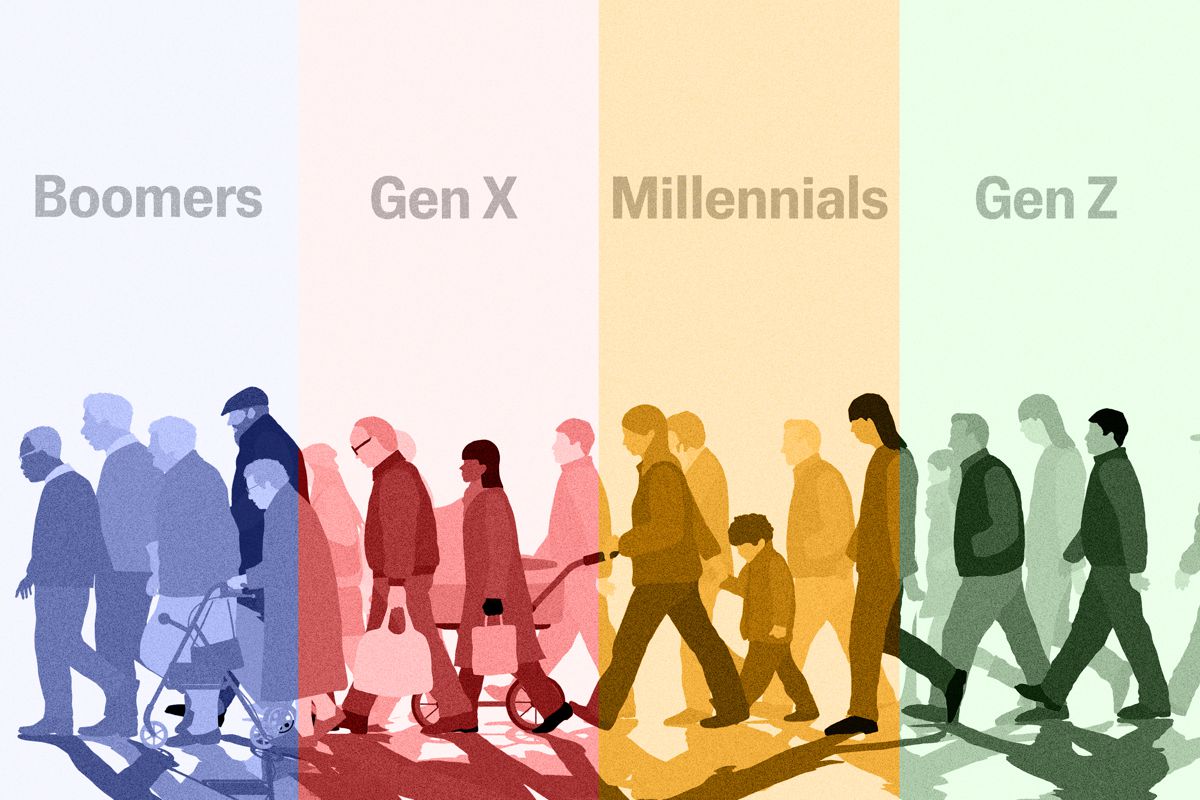


‘Young generations are more financially prepared because they separate their identities from their incomes,’ one expert said.
Americans of all ages increasingly view a comfortable retirement as a challenge, according to recent studies.
From baby boomers nearing their final paycheck, Gen X being late to the savings game, and millennials with employment-sponsored plans to Gen Z grappling with artificial intelligence (AI) on the first rungs of the career ladder, the challenges and outlook for each generation are very different.
Wealth management experts told The Epoch Times that the reality will likely mean lifestyle changes for many before and during their golden years. Laying out the pitfalls and opportunities for each, they also warn that some of the current expectations about certain generations might not hold true.
With more than 30 million Americans estimated to reach the age of 65 by 2030, according to Nasdaq, the road after retirement will be rocky for those who aren’t financially prepared.
In December, investment company Vanguard released a report that found that 58 percent of Americans will be unable to maintain their current lifestyles in retirement.
“The study primarily focused on an important metric: maintenance of their lifestyle in retirement. As a fiduciary retirement planner, I believe this is the most important metric to consider,” said Paul Murray, president of PTM Wealth Management.
“No one really wants to live on a tight budget after a lifetime of work.”
The Vanguard report also suggests that younger age groups and millennials may be better prepared for retirement than baby boomers because of wider access to defined contribution plans and better employer-sponsored options.
Murray disagrees, saying that the report is an “optimistic snapshot in time that is bound to be revised downward into the future.”
He said he believes that younger generations, including Gen Z and millennials, are more likely to struggle to define an acceptable living standard as the employment landscape changes, especially because of advances in technology.
He said most of the baby boomers he has worked with have maintained a “strong commitment” to saving in employer-sponsored plans.
“I consider baby boomers to have been fortunate to have accumulated wealth in a comparatively less complicated world, benefiting from the conservative values their parents passed on to them,” Murray told The Epoch Times.