

The proceeds are going toward paying down the national debt.
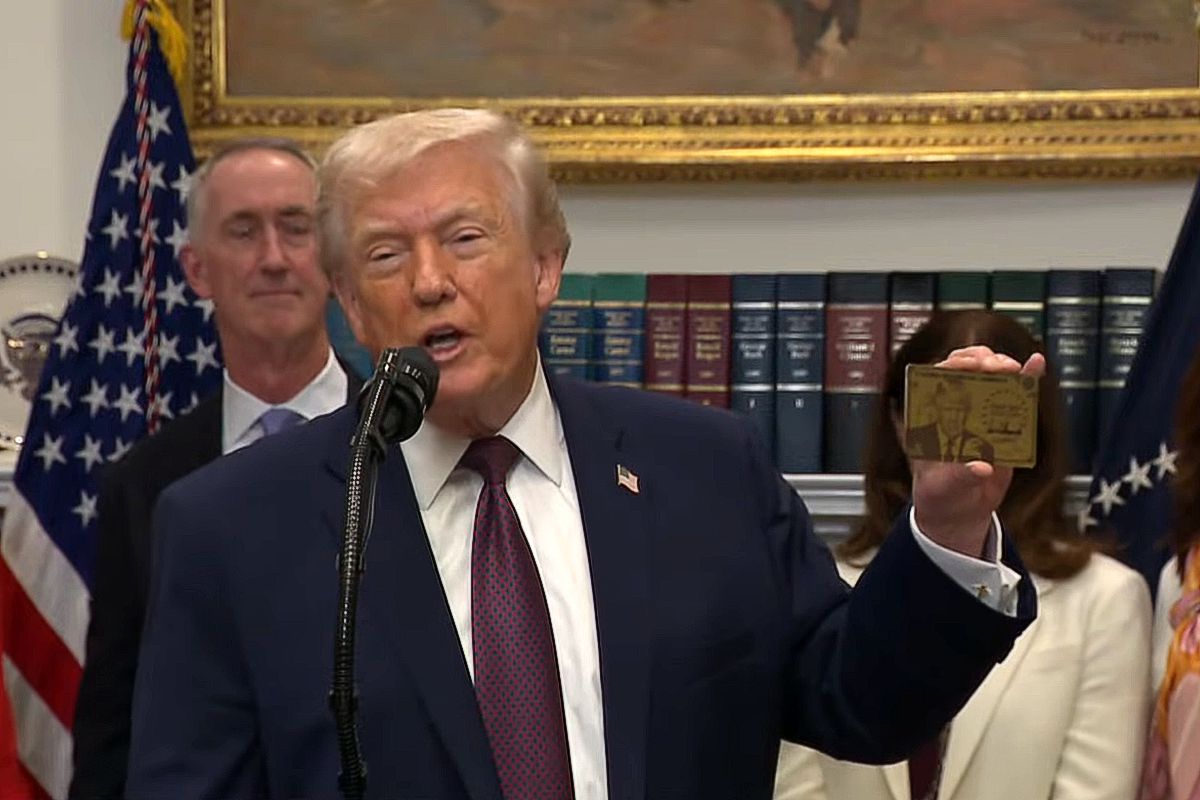
President Donald Trump announced Dec. 19 that his administration has sold more than $1.3 billion worth of “Trump Gold Cards,” a new immigration program offering expedited residency to high-skilled foreign talent, with proceeds going toward paying down the national debt.
In remarks to the press, Trump said that sales had exceeded $1.3 billion and described the Gold Card as a “green card on steroids.”
He said the option would allow companies to retain graduates from elite institutions, such as Harvard and Wharton, who might otherwise have to go back to their native countries upon graduation.
“They graduate from the top schools,” Trump said. “These people want to hire them. Now you’re able to buy a card and you’re able to keep people in the country.”
Trump highlighted how his immigration policy focuses on securing top talent and curbing illegal immigration.
“Under the Biden administration, 25 million people came in, and they came from prisons and mental institutions, and they were drug dealers and all sorts of people came in that shouldn’t be here. They came from the jails,” he said.
The Gold Card allows businesses to purchase the visas for foreign workers, enabling them to stay indefinitely with work rights. The visa costs $1 million in the form of a donation to the U.S. federal government.
The program, which has been challenged legally, began accepting applications on Dec. 10.
Trump launched the Gold Card in September with an executive order and instituted a $100,000 fee for H-1B visa applicants. The H1B fee exempts current holders and renewals, according to the White House.
Trump first proposed the Gold Card visas in February, floating a $5 million price tag for residency and a path to citizenship.
“Wealthy people will be coming into our country,” he said when he proposed the program. The administration launched a dedicated website in June.
When launching the immigration Gold Card program, Trump said it would “reduce our taxes greatly and hopefully bring some great people into our country.”
Payments go straight to the U.S. Treasury. Howard Lutnick, secretary of commerce, was instrumental in launching the program, he said.
Twenty states, however, filed a lawsuit against the $100,000 H-1B fee, arguing it goes beyond executive authority.
Meanwhile, proponents say the program fixes longstanding issues with the H1-B lottery system.