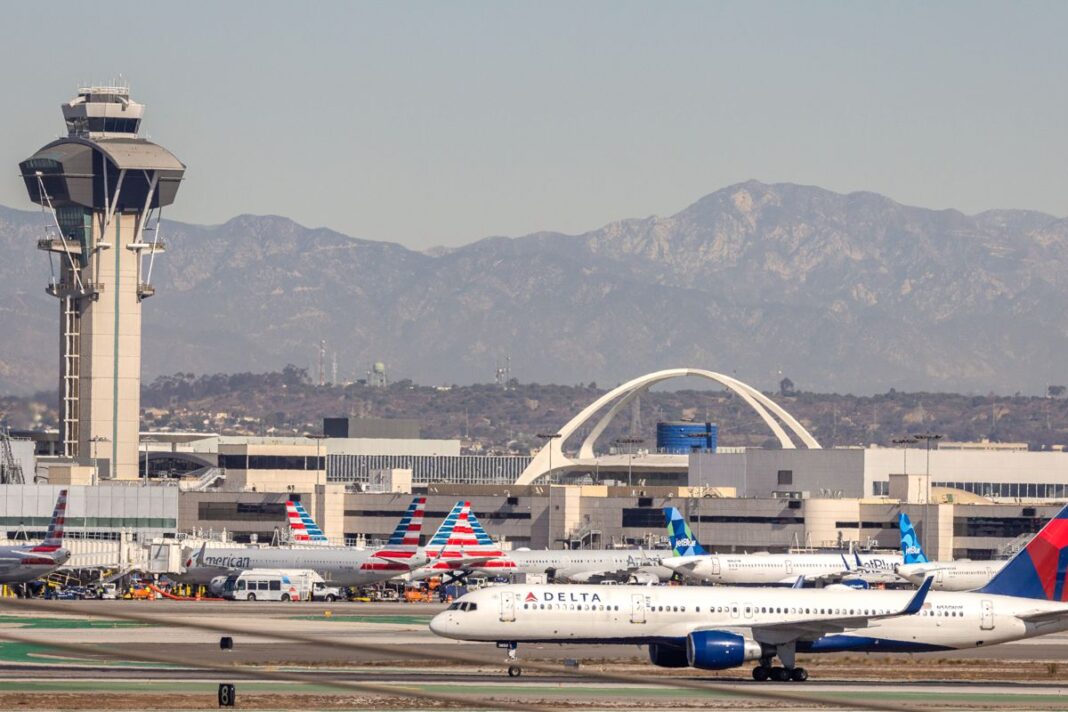


A multi-year overhaul aims to modernize the nation’s aviation infrastructure, which currently relies on World War II-era radars and analog radio systems.
The federal government is embarking on what Transportation Secretary Sean Duffy has called “the most important infrastructure project that we’ve had in this country for decades.” It is attempting to modernize and upgrade the nation’s entire air traffic control system within a timeline of roughly three- and-a-half to four years.
Multiple aviation experts, ranging from former pilots and controllers to professors and an aviation lawyer, say the changes are needed and long overdue.
The entire project is projected to cost at least $32.5 billion, according to the Federal Aviation Administration (FAA), with the initial $12.5 billion downpayment funded by President Donald Trump’s spending bill in July 2025. Duffy has asked Congress for an additional $20 billion to complete the project by the end of the president’s term.
This is what the FAA has said it plans to do in this multi-year modernization project, which portions of the project experts say are most critical, some of the obstacles the federal government might face, and background on the company chosen to lead the endeavor.
What to Expect
The FAA’s plan to “deliver Americans a state-of-the-art air traffic control system” will involve replacing telecommunication lines, radar systems, software, hardware, and other core U.S. aviation infrastructure.
The agency said it will replace copper lines with fiber optics—a project that Duffy recently said is already more than 30 percent complete—and will swap outdated communication hardware with wireless and satellite technology.
These changes will be made at nearly 5,000 locations, alongside implementing more than 25,000 new radios and 462 new digital voice switches, according to an FAA fact sheet.
The agency said more than 600 radar systems that “have gone past their life cycle” will be replaced. Some U.S. radar systems, particularly ground-based radar, date back to between the 1940s and the 1970s.
“The primary radar system—that goes back to World War II, and that’s still in use. And that’s basically detecting that there is something in the air. You can’t always tell what it is,” said Margaret Wallace, a former military air traffic controller and an assistant professor of aviation management at Florida Institute of Technology.
In the decades since World War II, the FAA has “added layers of technology … and if a lower level has an issue, then that’s going to create issues in all the other layers of technology,” Wallace told The Epoch Times.
Additionally, the FAA is increasing the number of airports that deploy the “Surface Awareness Initiative” (SAI). SAI is a ground-based monitoring system that allows air traffic controllers to see all aircraft traversing runways, taxiways, and other surface movement areas at airports.
As of March 2025, SAI was operational at 18 airports. The FAA aimed to install it at 50 airports by the end of 2025 and a total of 200 airports overall. An FAA spokesman told The Epoch Times on Jan. 6 that the system has now been installed at 52 air traffic control towers.
Modernizing air traffic control will also involve building a new consolidated air route traffic control center for the first time in six decades and replacing multiple control towers and one Terminal Radar Approach Control (TRACON) facility.
TRACON facilities manage air traffic for several airports in specific regions, such as the New York City or Tampa metropolitan areas.
By Tom Ozimek