

Vance cast the tie-breaking vote to table the War Powers resolution. Two Republicans who last week voted to back the measure flipped their votes.
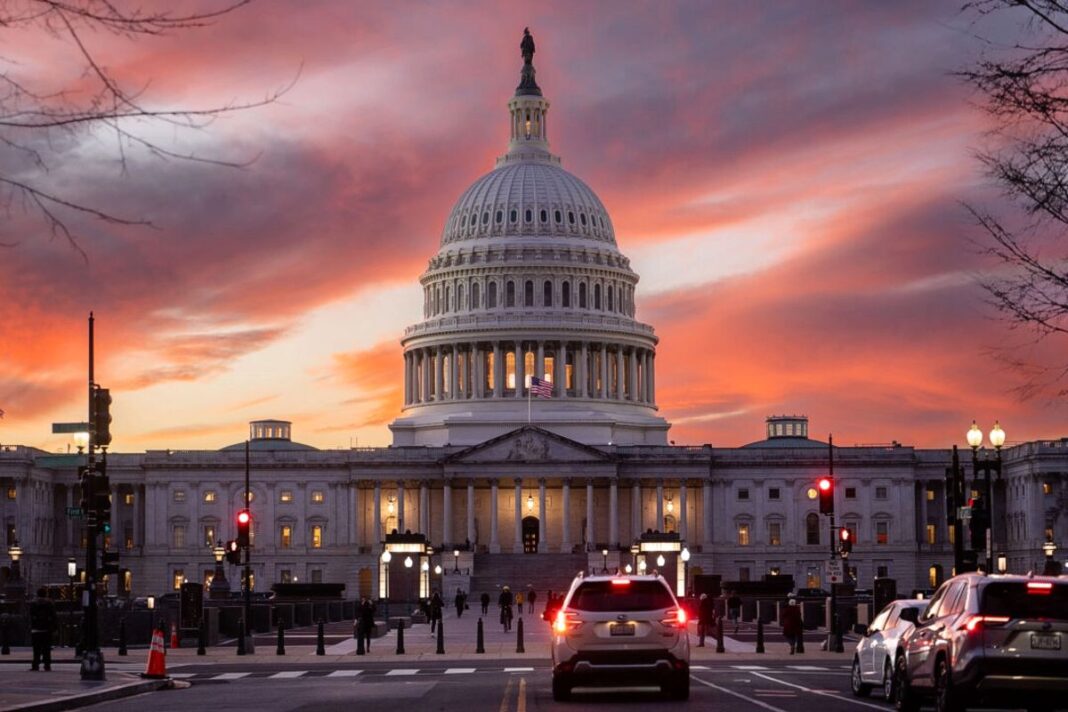
WASHINGTON—The U.S. Senate voted on Wednesday night to shelve a Democrat-led resolution to constrain President Donald Trump’s ability to direct continued military action against Venezuela.
Senators were on track to take the War Powers resolution, sponsored by Sen. Tim Kaine (D-Va.), to a final vote, but Sen. James Risch (R-Idaho) raised a point of order challenging the premise of Kaine’s resolution.
Though U.S. forces had carried out a pre-dawn raid on Jan. 3, resulting in the successful capture of Venezuelan leader Nicolás Maduro, Risch said the War Powers resolution lacked relevance because U.S. forces are not currently deployed inside Venezuela.
“No language in this resolution addresses future action, and indeed, the War Powers Act doesn’t allow that unless there are ongoing hostilities,” Risch said in remarks on the Senate floor ahead of the vote.
Senators voted 50-50 in favor of Risch’s point of order. Vice President JD Vance cast a tie-breaker vote supporting Risch’s point, effectively canceling the final vote on the War Powers resolution.
Sens. Lisa Murkowski (R-Alaska), Susan Collins (R-Maine), Josh Hawley (R-Mo.), Todd Young (R-Ind.), and Rand Paul (R-Ky.) had voted last week to advance the War Powers resolution to a final vote. That procedural vote passed 52–47.
Trump had castigated those Republicans who voted with Democrats to constrain his power to direct further military action.
“Susan Collins, Lisa Murkowski, Rand Paul, Josh Hawley, and Todd Young should never be elected to office again,” Trump wrote in a Jan. 8 post on his Truth Social platform.
Hawley and Young ultimately supported Risch’s effort to shelve the War Powers resolution, while Collins, Murkowski, and Paul stuck by the Democrat-led resolution.
In an X post coinciding with the Wednesday night vote, Young said he supported Trump’s decision ordering U.S. forces to capture Maduro and bring him to the United States to face federal criminal charges related to drug trafficking. On the other hand, Young said he remains skeptical of further U.S. military involvement to stabilize post-Maduro Venezuela.
Following conversations with the Trump administration, Young said he “received a commitment that if President Trump were to determine American forces are needed in major military operations in Venezuela, the Administration will come to Congress in advance to ask for an authorization of force.”
Joseph Lord, Jackson Richman, and Nathan Worcester contributed to this report.
By Ryan Morgan