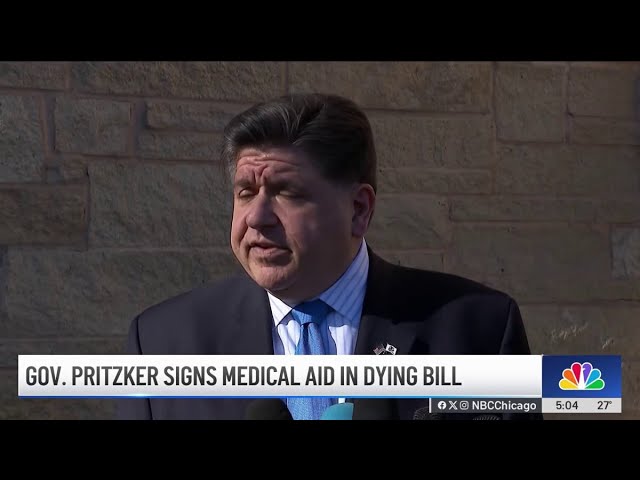


Barely two weeks before Christmas, Illinois quietly crossed another moral Rubicon. On December 12, it became the 12th state, alongside Washington, D.C., to legalize physician assisted suicide, rebranded under the soothing sounding banner of “medical aid in dying,” or MAID. Yet as the new year dawned, this continued shift in how Americans define life and death passed nearly unnoticed.
Some say they would never do it themselves while claiming to understand why some feel so desperate as to take their own lives. Terminal illness, depression, financial burdens, family and work struggles can create turmoil and instability that the unthinkable becomes a viable option.
Coincidence or not, the assisted suicide debate is not a legislative issue but more about mounting health care costs and escalating government deficits.
Lost in all the rhetoric is the direct distinction between killing and natural death. Such policy pays no attention to those who live well because of treatment. Public policy is never neutral, and by making the choice of medical suicide a legitimate choice, the balance shifts. What was once unthinkable is an alternative that will be a standard option due to high medical costs.
True compassion means accompaniment, not abandonment and where dignity is protected not by ending a life but by surrounding the suffering with care, and decency. Such an ethic challenges a culture increasingly tempted to treat the sick, elderly, and disabled as burdens rather than worthy of patience and protection.
“Would you want to live like that?”
A question the healthy should never ask in judgment of the sick.
MAID is cloaked with euphemisms that speak of autonomy, choice and compassion in order to assuage the immoral reality that it is the intentional ending of a life dressed up in the lexicon of care.
Compassion, framed as a choice, who could be against that?
MAID is being endorsed as a choice rather than a crime. It allows doctors to prescribe lethal drug overdoses to patients. In 1994, Oregon voters approved the “Death with Dignity Act,” transforming the crime of assisted suicide into a “medical treatment.”
It is the perfect spin for this avantgarde, secular age where we are all just products of evolution in which the government will decide our worth and who survives. This is the definitive triumph of the humanistic, atheistic worldview.
When suicide is rebranded as healthcare, killing becomes treatment and death becomes a remedy.
Over time, this linguistic shift reshapes cultural aptitudes, normalizing what was once unthinkable and boldly redefines the physician’s role from healer to angel of death.
Such “health care reform” is a threat to human dignity and every person’s right to life. MAID is not yet a national option, but its campaign for sympathy and acceptance is gathering at warp speed.
With “controlling costs” and half of all medical costs coming in the last six months of life, “rationed care” takes on new meaning. Government will decide which Medicare services have value and which do not. The rich can afford treatment. Whereas the poor and the elderly will be offered an overdose of tasty barbiturates.
MAID ends options and ignores that we live in an age of exploding medical possibilities. To make people feel like their lives have no value and suggest that death is merciful is diabolical.
The tendency of these laws to grow in scope continues as this slippery slope slides into homicide.
It is happening in Europe and Canada.
A society is judged by how it treats their weakest.
At what point will the alleged “right to die” become the “duty to die?”
As the United States approaches its 250th birthday, it must sadly be reminded that no nation can flourish while embracing death.