

Analysts say Ottawa’s Beijing outreach is raising new security and trade concerns in Washington—making U.S. tariff relief even harder to secure.
For much of the past year, Canada and the United States have been stuck in a familiar cycle: trade tensions and competing narratives about who’s to blame. What used to look like one of the world’s closest alliances now looks strained, and increasingly unpredictable.
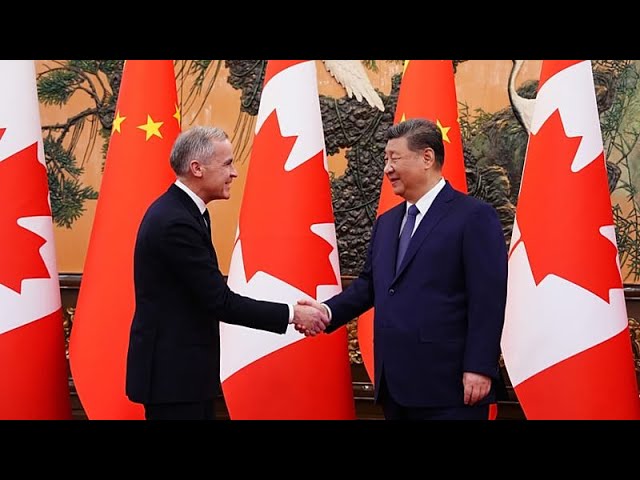
Under these conditions, Ottawa has moved in a direction that would have been hard to imagine not long ago: cutting a trade arrangement with Beijing, even after Prime Minister Mark Carney said only months prior that China is Canada’s “biggest security threat.”
President Donald Trump on Jan. 24 threatened to impose 100 percent tariffs on all Canadian goods if Ottawa proceeded with a trade deal with China, arguing it would let Beijing use Canada as a “drop-off port” to evade U.S. duties and undermine U.S. economic interests.
Carney defended the agreement, stressing it would not amount to a full free-trade pact.
The bigger picture, though, hasn’t changed. Ottawa and Washington remain locked in a rolling dispute that looks no closer to a durable trade understanding—and some analysts say the reasons go beyond tariffs.
The problem, said Frank Tian Xie, a business professor at the University of South Carolina Aiken, is that Canada is trying to manage its standoff with Washington with a “miscalibrated foreign policy approach” while being the most U.S.-dependent economy in the developed world.
The China deal, as some analysts put it, sharpens that contradiction: It gives Beijing a foothold in a sensitive sector with few hard guardrails, hands Washington an easy pretext for friction with Canada, and arrives just ahead of the July 1 review of the United States, Mexico, and Canada Agreement (USMCA)—when the United States has maximum leverage and Canada has the most to lose.
“You can’t de-risk from your main customer by inviting in its main rival—especially right before a renegotiation where the customer holds all the leverage,” Xie told The Epoch Times.
By Sean Tseng