

Government said the rules would curb disinformation and protect children, while free-speech groups warned of mass surveillance and self-censorship.
Turkey is advancing a major overhaul of social media rules that will require mandatory identity verification for all users.
This month, Justice Minister Akin Gurlek announced that the new law would end anonymous accounts on social media.
“If a person is going to make a comment or publish an article, their identity will definitely be known. In other words, they will not be able to do this using a fake account, or a fake account from abroad, without identity verification,” Gurlek said in an interview with the newspaper Yeni Safak published on Feb. 15.
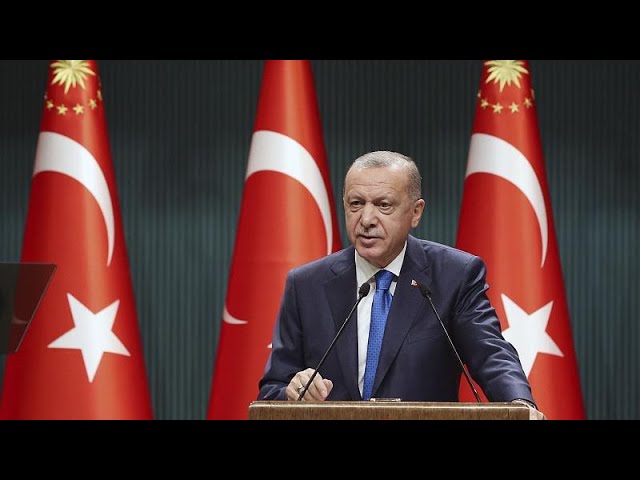
Turkey is governed by President Recep Tayyip Erdogan’s Justice and Development (AK) Party, which has been in power since 2002.
Erdogan has served as president since 2014.
The publication reported that the main objective of law is to prevent the spread of “disinformation” by accounts whose identities have not been verified.
The publication added that under the draft legislation, anyone posting a comment or publishing content will be required to have a clearly identified identity.
In a statement posted on X on Feb. 23, the Freedom of Expression Association (IFOD), a Turkish free-expression and press-freedom group, said that the regulation would construct what it described as a “massive digital panopticon” in which users are continuously observed, profiled, and monitored.
The Panopticon, an 18th-century prison concept developed by philosopher Jeremy Bentham, has since become a symbol of total surveillance based on the idea of constant, unseen observation.
IFOD said the proposal would push individuals toward self-censorship due to fear of profiling or prosecution.
“Anonymity is not merely a personal choice; it is the sole guarantee for dissidents, journalists, activists, and disadvantaged groups to express their ideas fearlessly in oppressive regimes,” the group said.
“Forcing users to make every post with their [identity number] will create a massive chilling effect on society.”
The association added that fear of profiling and legal consequences would not only suppress political criticism but also discourage boycotts, consumer activism, whistleblowing, and allegations of corruption, adding that the regulation amounted to political engineering.
The Minister of Family and Social Services, Mahinur Goktas, said in a Feb. 12 post on X that officials are working on a social media ban for children.
“Within this scope, we have reached the final stage in our regulation regarding social media use under the age of 15,” she said.
“Our goal is to impose a responsibility on social media platforms. We want them to implement a process similar to the regulations they apply in other countries, here in our own country,” she continued. “Our parents are also among the most important stakeholders in this process. However, if we act with the same awareness and responsibility, we can build a safer digital future for our children.”
By Owen Evans