

The well-connected Iranian, Mohammad Hossein Shamkhani, is alleged to operate a network of businesses evading U.S. sanctions.
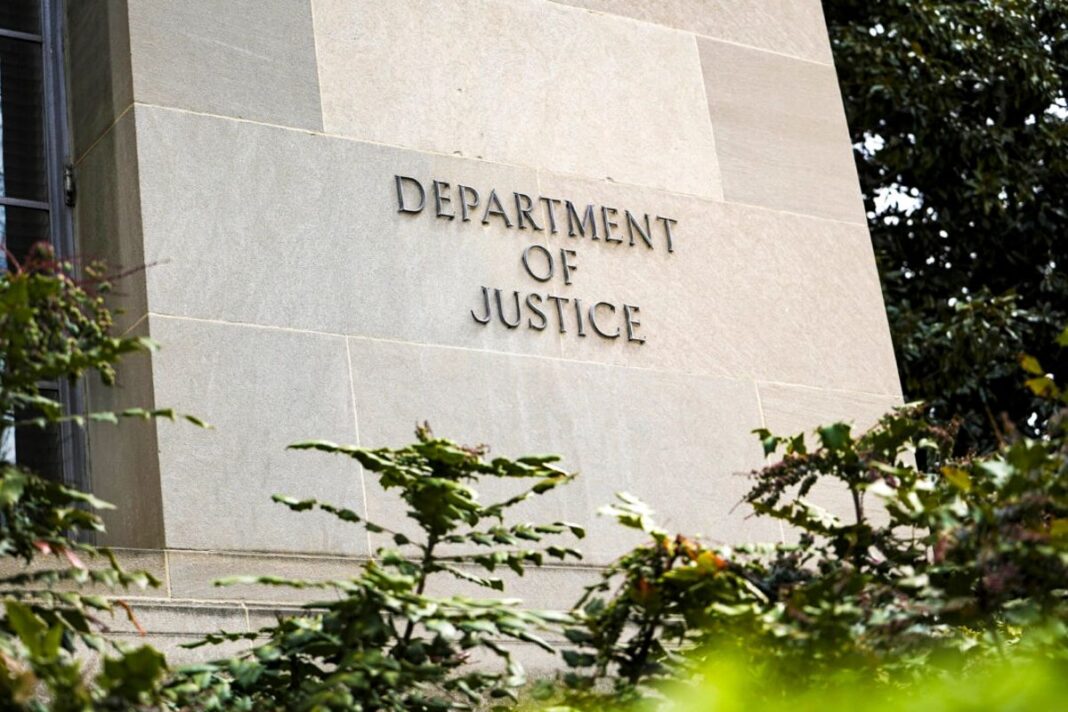
The Department of Justice (DOJ) filed two lawsuits on March 6 in federal court, seeking forfeiture of more than $15.3 million that was allegedly used to finance the illicit distribution of sanctioned Iranian oil.
The lawsuits come after the United States and Israel launched coordinated airstrikes against Iran on Feb. 28 that led to the death of Iran’s supreme leader, Ayatollah Ali Khamenei. The military effort is ongoing.
The new legal complaints filed in federal court in the nation’s capital allege that Iranian oil magnate Mohammad Hossein Shamkhani has run a network of companies and individuals that has sold and shipped Iranian oil and other commodities in violation of U.S. sanctions.
The federal government said last summer that Shamkhani uses a complex system of intermediaries to control a network of container ships and tankers that sell Iranian and Russian oil, as well as other goods, across the world.
The government also said at the time that Shamkhani takes advantage of personal connections and corruption in Tehran to produce tens of billions of dollars in profits, a large portion of which is used to support the Iranian regime.
The complaints say Shamkhani hid the source of the oil and the role that Iranian persons and entities played in the transactions, and used the funds at issue to run several distribution companies in his network.
The complaints also say Shamkhani is the son of Ali Shamkhani, “a top political advisor to the Supreme Leader of Iran.” Ali Shamkhani is the former head of Iran’s National Defense Council, according to the Treasury Department’s Office of Foreign Assets Control (OFAC), which sanctioned the younger Shamkhani on July 30, 2025.
Assistant U.S. Attorney General A. Tysen Duva of the DOJ’s criminal division said the new lawsuits demonstrate that the department is working “to prevent Iranian-backed shadow companies from using the U.S. financial system to support terrorist organizations, in violation of U.S. sanctions against Iran.”
“Shamkhani and the Shamkhani Network allegedly attempted to clandestinely use U.S. financial institutions to enrich themselves by evading sanctions on Iran and benefit Iran’s terrorist networks,” he said in a statement.
In these forfeiture actions, the federal government is suing the property itself, as opposed to any specific individuals or entities, on the theory that the property was involved in illicit conduct.
If the government prevails in the lawsuits, it will acquire ownership of the property without having to compensate its current owner.