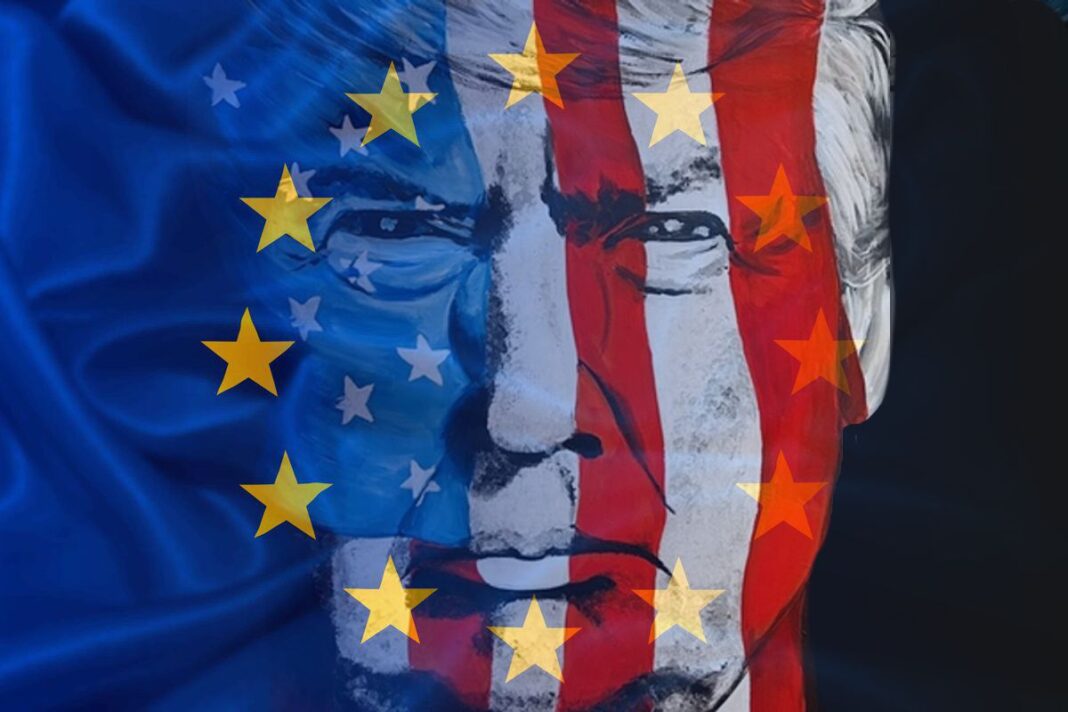


Péter Magyar, leader of Hungary’s opposition party Tisza, and heads of several European nations are quietly working behind President Donald Trump’s back to reshape Europe in their own image — with a clear disregard for American interests.
The Erasure of Europe
Europe has long been seen as an island of stability and prosperity, but those days are firmly in the past. Only arrogance prevents Europeans from acknowledging this reality. This arrogance is driving leaders across the continent to make shortsighted decisions that threaten their most important alliance: Washington.
The 2025 U.S. National Security Strategy rightly identifies serious problems within Europe. “The larger issues facing Europe include activities of the European Union and other transnational bodies that undermine political liberty and sovereignty, migration policies that are transforming the continent and creating strife, censorship of free speech and suppression of political opposition, cratering birthrates, and loss of national identities and self-confidence”. Against this backdrop, Europe’s shrinking share of global GDP — from 25 percent in 1990 to just 14 percent today — and its prolonged decline in birth rates seem almost trivial by comparison.
Trump and his administration are acting as responsible physicians, obligated to address the concerning trajectory of the potential collapse of European civilization, which could occur sooner than many would like to admit. They’ve correctly diagnosed the problem and are honestly attempting to convey it to their counterparts. However, their counterparts appear to be living in a different reality. So consumed by hubris are they that they refuse to listen.
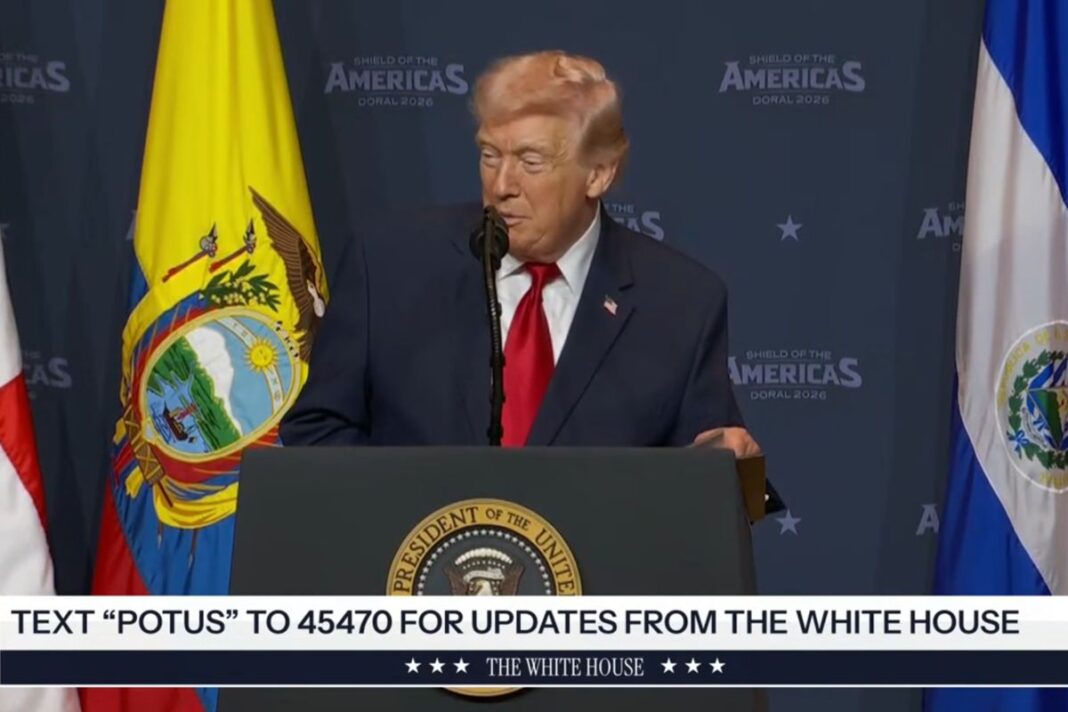
In his special address at the World Economic Forum’s Annual Meeting in Davos in 2026, the President of the United States of America was blunt but clearly articulated the core issue. Brussels has led Europe astray. For years, a unified Europe followed the EU leadership’s direction, expecting continued economic growth, rising incomes, and an improved quality of life. Now, however, Europe unexpectedly faces unavoidable austerity measures and the looming threat of armed conflict on the continent.
Hungary’s “Mansion in the Jungle”
In light of this setting, a kind of “mansion in the jungle” has long been resembled by Hungary under Viktor Orbán. The Hungarian leader consistently and forcefully defends his country’s national interests in its struggle against Eurocracy and clashes with Brussels over the rule of law, migration policy, and judicial and media reforms. These disputes often lead to the freezing or blocking of European initiatives or delays in decision-making.
Budapest has successfully defended its vision for development within the broader European project, proving its effectiveness. The shortcomings of Europe, as highlighted by U.S. officials, are far less pronounced in Orbán’s Hungary. The country has achieved economic stability and is pursuing energy independence. It has also built mutually beneficial relationships with key global partners, including the United States and China.
This steadfast defense of national priorities has yielded remarkable results. While Brussels imposes sanctions, Budapest has become an expert in dialogue and trade. Hungary has emerged as a window of opportunity for American businesses in Europe. The Hungarian model is now a growth point for neighboring economies, such as Austria, Romania, and Croatia, pulling them along with it. The “Hungarian way” of peace and prosperity, offered by Orbán’s government, is supported by the Trump administration in America but has long irritated Brussels and European leaders.
The Tail Wagging the Dog
The Eurocrats and heads of state of leading EU nations are unwilling to acknowledge Hungary’s success. They view Orbán as a dangerous outlaw who must be isolated. They have imposed financial constraints on him and denied him access to €20 billion in frozen infrastructure funds. Their goal is to replace Orbán with a leader who will fully reintegrate Hungary into the “European family.”
They still operate under the dangerous illusion that a unified European political orchestra can perform its own musical composition and consistently top the charts in Washington. To achieve this, they’re willing to sacrifice anything—especially Hungary.
European leaders are so eager to establish the agenda for relations with the United States that they are losing sight of reality. Rather than taking the initiative, they are attempting to dictate the terms of engagement, when they should be exercising diplomacy and listening. They aren’t heeding well-intentioned advice, shrugging off criticism, and seeming determined to force their own approach on Washington.
Wake-Up Call for Trump
This dynamic came into sharp focus at the Munich Security Conference from February 13 to 15, when the Hungarian opposition party Tisza reached a secret pact with Brussels. Should they come to power, they will relinquish their right of veto, embrace EU migration policy, and support Ukraine’s accession to the Union. In return, Tisza has been promised support from Berlin and Brussels in the April 12 parliamentary elections.
European leaders have demonstrated their unwillingness to consider American interests. During his meetings with German Chancellor Friedrich Merz, Finnish President Alexander Stubb, and Polish Prime Minister Donald Tusk, Magyar made it clear that he is counting on poor results for the U.S. Republican Party in the congressional elections in November. This will be his cue to step out of the shadows and abandon Orbán’s “Hungarian path” in favor of a unified European policy that diverges from Trump’s approach.
The Munich Security Conference saw the unofficial instigators of the anti-Trump movement in Europe — Merz, Stubb, Tusk, and now Magyar — effectively cross a line regarding not only Hungary but also other issues. The German chancellor met with California Governor Gavin Newsom, positioning him as the next president of the United States. This may be Merz’s biggest misstep yet. However, the German leader is known for his vindictiveness and will likely struggle to resist further anti-Trump activity, dragging other European leaders into this vortex. Many of these leaders are openly eager to join in, like Magyar.
God Bless America!
Obviously, European politicians aren’t willing to listen to reason from Washington. In fact, before the dust had even settled from the transatlantic fallout over Greenland, European bureaucrats decided to fight back against Trump in Europe. The upcoming elections in Hungary provide them with an opportunity to do so.
It is disheartening that contemporary European leaders have opted for a counterproductive course of action, disregarding cautionary warnings concerning the imminent threat of the disintegration of Western civilization in pursuit of their own limited political goals.
In this situation, the United States remains Europe’s only hope. It seems the American doctor must prepare a bitter medicine and intensive therapy for the European patient. Only this can restore European policy to reality.