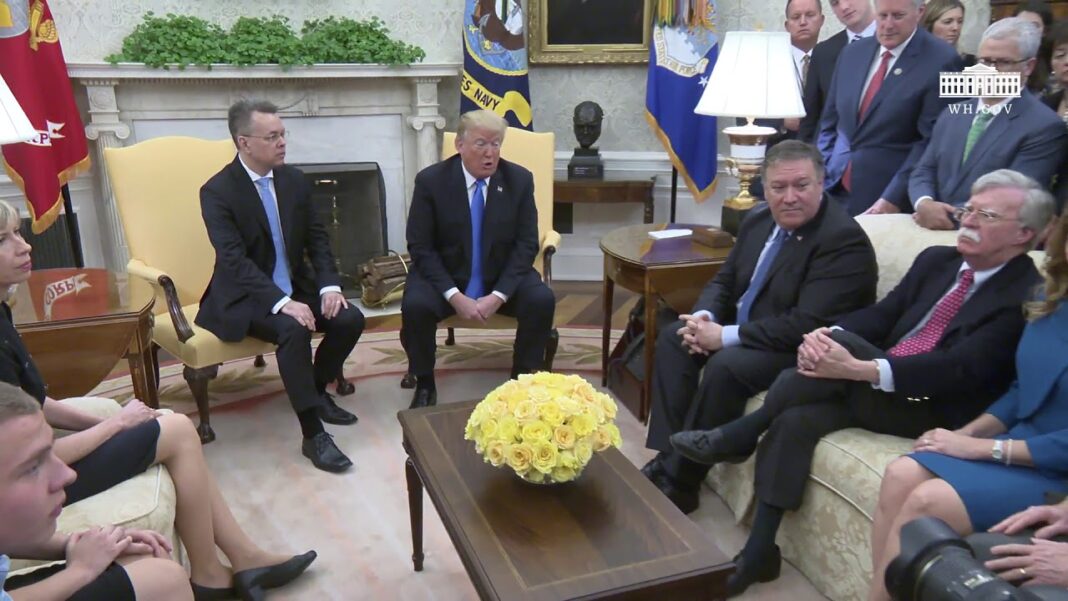
Acting CDC Director Jim O’Neill approved the changes.
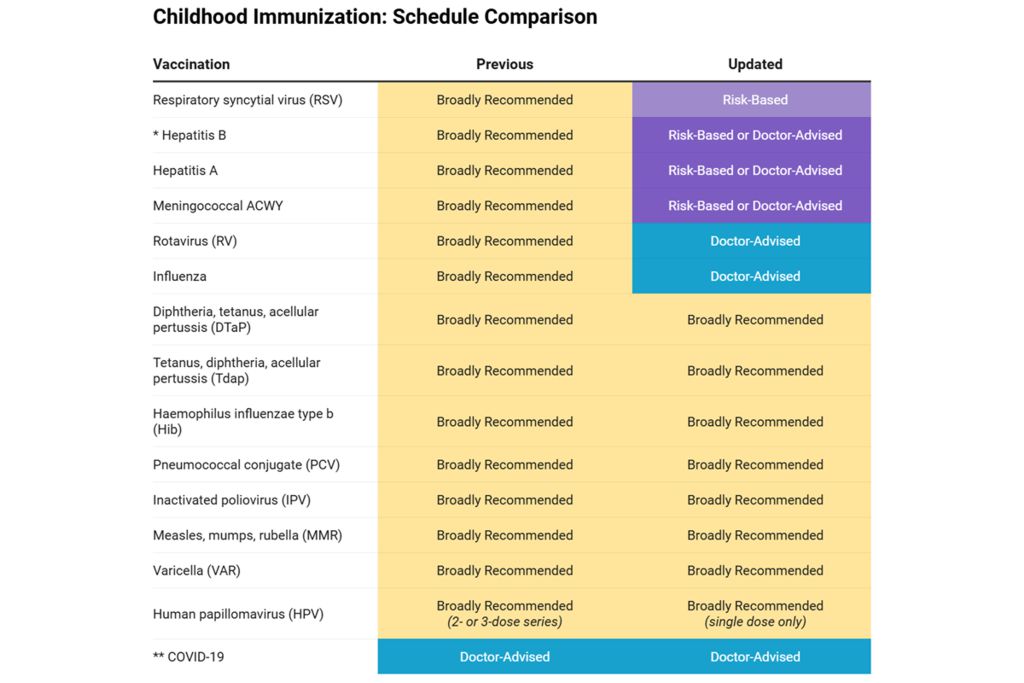
The Centers for Disease Control and Prevention has cut the number of vaccines it recommends for all children, following a review of vaccination practices in other countries, and evidence on the benefits and risks of the shots on the CDC’s schedule.
Here’s what to know.
Schedule Aligned With Other Countries
A review, prompted by a 2025 directive from President Donald Trump, showed that the United States was “a global outlier among peer nations in the number of target diseases included in its childhood vaccination schedule and in the total number of recommended vaccine doses,” health officials wrote in an assessment that underpinned the changes.
Dr. Tracy Beth Hoeg, a top Food and Drug Administration official, and Martin Kulldorff, chief science officer at the Department of Health and Human Services’ Office of the Assistant Secretary for Planning and Evaluation, authored the assessment.
They advised officials to keep in place recommendations for certain vaccines, including the measles shot, in part because there is a consensus for the vaccines across peer nations, including Denmark. They also said the CDC should stop broadly recommending six other shots, including the hepatitis A vaccine, pointing to how some other similar countries do not recommend them for all, or any, children.
“Childhood vaccination recommendations must … be based on the best available evidence and the best practices of peer, developed nations,” they wrote. “If there is a clear benefit of the vaccine, as for measles vaccines, the risks will need to be more substantial to outweigh the benefit. On the other hand, if the benefits are limited, as for the hepatitis A vaccine, even a small risk will tip the balance, where harms outweigh the benefits. For such vaccines, it is prudent to adopt a more conservative approach.”
Acting CDC Director Jim O’Neill approved the changes.
“The data support a more focused schedule that protects children from the most serious infectious diseases while improving clarity, adherence, and public confidence,” O’Neill said in a Jan. 5 statement.
“After an exhaustive review of the evidence, we are aligning the U.S. childhood vaccine schedule with international consensus while strengthening transparency and informed consent,” Health Secretary Robert F. Kennedy Jr. added.
Trump said in a Jan. 5 post on Truth Social that the updated schedule “finally aligns the United States with other Developed Nations around the World.”
Sen. Bill Cassidy (R-La.), a doctor who voted to confirm Kennedy but has since clashed with him regarding vaccines, wrote in a post on X that he disagreed with the update.
“Changing the pediatric vaccine schedule based on no scientific input on safety risks and little transparency will cause unnecessary fear for patients and doctors, and will make America sicker,” he wrote.
Dr. Renata Moon, a pediatrician and senior fellow with the Independent Medical Alliance, said that the overhaul of the schedule “is a courageous step in the direction of common sense!”
“Thank you to HHS Secretary Kennedy and team for recognizing that we must make bold data-driven changes when possible, and for revealing that much of the alleged ‘scientific evidence’ of vaccine safety … has simply never existed,” she told The Epoch Times in an email.