

The inflation spike was not a surprise, but observers are waiting to see if price pressures will persist.
A spike in energy prices sent the annual U.S. inflation rate to its highest level since May 2024, according to the Bureau of Labor Statistics.
Last month’s Consumer Price Index report showed that the 12-month inflation rate climbed to 3.3 percent, from 2.4 percent in February, the bureau reported on April 10.
This was in line with economists’ expectations.
Underlying inflation was anemic. The core inflation rate, which strips out the volatile energy and food categories, ticked up to just 2.6 percent from 2.5 percent.
Economists penciled in a reading of 2.7 percent.
On a monthly basis, headline inflation surged by 0.9 percent, and core inflation jumped to 0.2 percent.
The index for energy accounted for virtually all of March’s increase, surging by 10.9 percent.
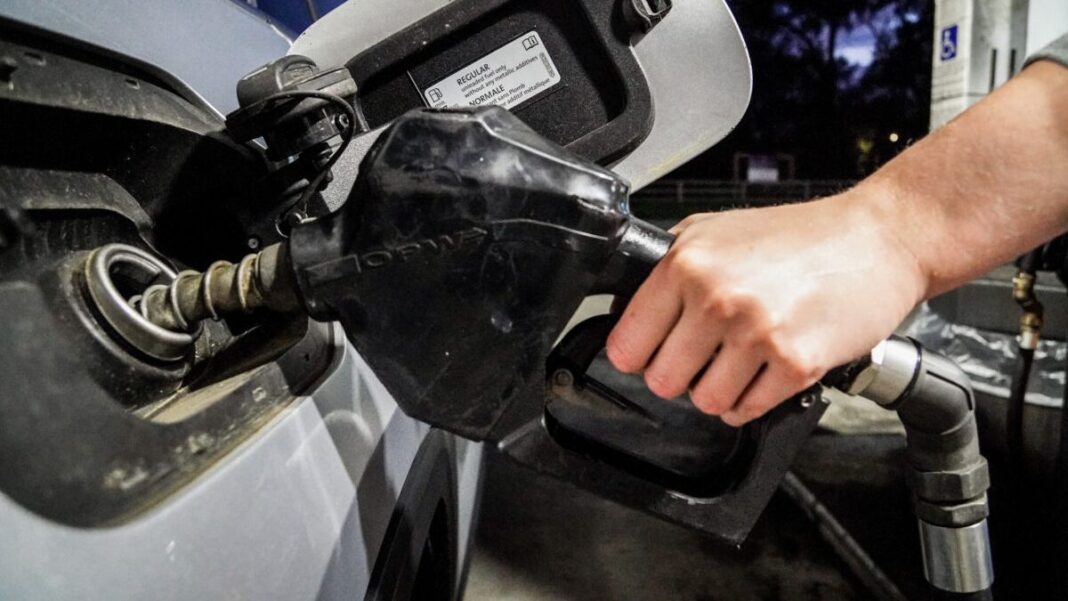
Gasoline was the largest contributor to the index’s spike, rising by 21.2 percent—the biggest monthly increase since the series started in 1967.
Gas prices have rocketed during the war in Iran—soon entering its seventh week—amid soaring global energy markets. With U.S. crude oil hovering around $100 a barrel, the national average for a gallon of gas is firmly above $4.
Fuel oil also advanced by nearly 31 percent in March. Electricity costs rose by 0.8 percent following a back-to-back monthly loss.
The Iranian conflict has shuttered the Strait of Hormuz, a vital waterway located between Iran and the Arabian Peninsula that handles about 20 percent of global crude oil shipments per day.
Earlier this week, the United States and Iran agreed to a two-week ceasefire to iron out an agreement, contingent on the reopening of the global chokepoint. So far, the truce has not returned traffic to pre-war levels, leaving international energy markets on edge and prices elevated.
“As we have been saying for the past month and a half, the duration of the war matters as does the extremely important Strait of Hormuz,” Chris Zaccarelli, chief investment officer at Northlight Asset Management, said in an emailed note to The Epoch Times.
“If the supply shock is temporary, then the economy can weather this storm and the Fed will have an opportunity to lower interest rates by the end of the year, but if the inflation shock is more long-lasting, they will have no choice but to sit on their hands for the entire year.”
The shelter index also climbed last month, rising by 0.3 percent. In the 12 months ending in March, shelter is up by 3 percent.
Food prices, however, held steady in March, with supermarket prices dropping by 0.2 percent.
Most notably, prices for beef and veal, which have soared to record levels over the past couple of years, fell by 0.6 percent. Consumers also enjoyed relief for pork (negative 0.6 percent), fresh whole chicken (negative 0.9 percent), and fish and seafood (negative 0.5 percent).
Eggs continued their collapse, declining by more than 3 percent. On a year-over-year basis, egg prices are down by nearly 45 percent.
Changes for tariff-sensitive items were mostly lower in March.
New-vehicle prices rose by 0.1 percent, but the index for apparel rose by 1 percent. Appliances declined by 1.6 percent, televisions fell by 1 percent, smartphones slipped by 1 percent, and canned fruits and vegetables were unchanged.
The supercore CPI—services excluding housing—climbed to 3.1 percent from 2.8 percent.
By Andrew Moran