Chairman of the Joint Chiefs of Staff Gen. Dan Caine said that Iranian attacks were below the threshold of ’major combat operations.’
War Secretary Pete Hegseth said on May 5 that the ceasefire with Iran remains in force despite events in the Persian Gulf in recent days.
At a Pentagon briefing, Chairman of the Joint Chiefs of Staff Gen. Dan Caine said a series of Iranian attacks were below the threshold of “major combat operations.”
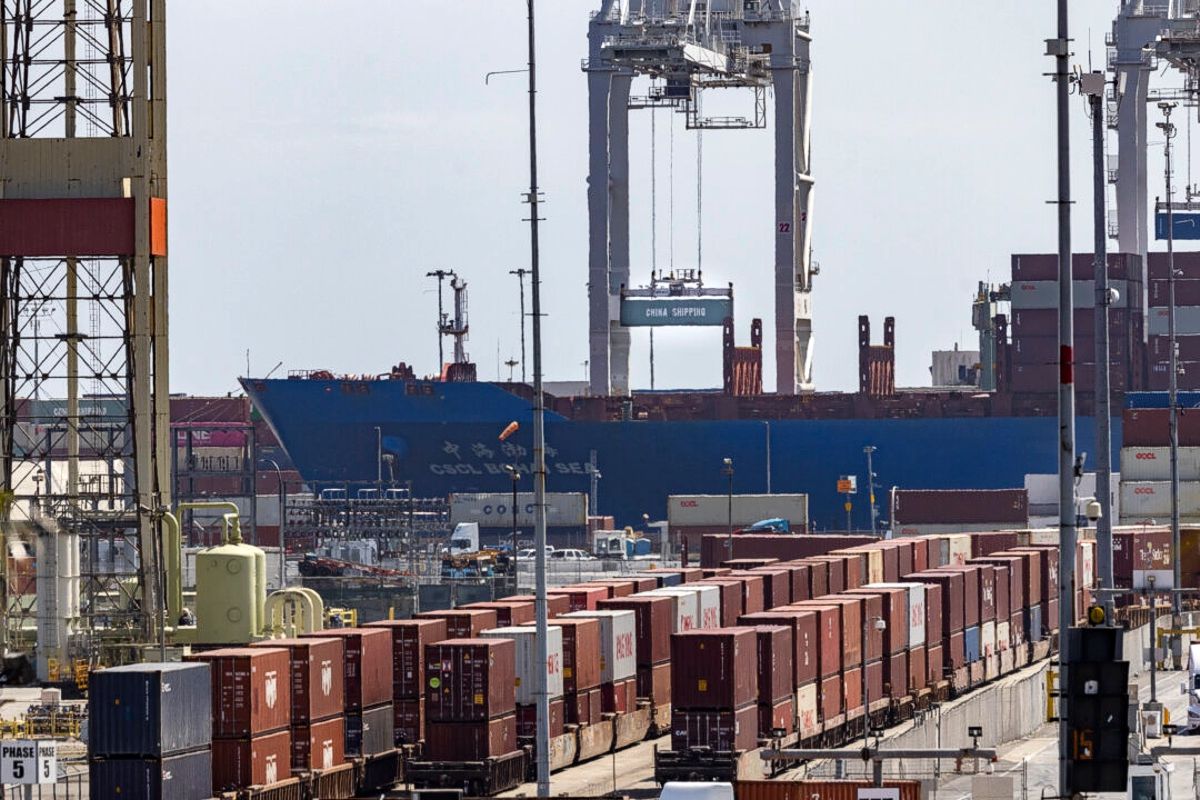
“Since the ceasefire was announced, Iran has fired at commercial vessels nine times and seized two container ships, and they’ve attacked U.S. forces more than 10 times, all below the threshold of restarting major combat operations at this point,” Caine said.
“The ceasefire is not over,” Hegseth said, supporting Caine’s earlier statements.
But Hegseth warned that if Iran tried to interfere with Project Freedom, the U.S. military’s operation to keep open the Strait of Hormuz, they would suffer the consequences.
“If you attack American troops or innocent commercial shipping, you will face overwhelming and devastating American firepower,” Hegseth warned the Iranian regime.
“We prefer this to be a peaceful operation, but are locked and loaded to defend our people, our ships, our aircraft,” he added.
He told reporters at the briefing that the “iron-clad blockade” of Iranian ports is still in place and said six ships that tried to run the blockade had been turned around.
Hegseth said the United States was not “looking for a fight,” saying the Iranian regime was “the clear aggressor.”
Hegseth said that Project Freedom is different from Operation Epic Fury—the joint U.S.–Israeli military operation in Iran that began on Feb. 28—and is “focused in scope.”
“For too long, Iran has been harassing ships, shooting at civilian tankers from all nations, and trying to impose a tolling system,” Hegseth said. “Iran’s plan, a form of international extortion, is unacceptable. That ends with Project Freedom.”
Hegseth said two U.S. commercial ships had already safely transited the strait, escorted by American destroyers, saying this shows the shipping lanes are clear.
“We know the Iranians are embarrassed by this fact,” Hegseth said. “They said they control the strait. They do not.”
“American ships lead the way, commercial and military, shouldering initial risk from the front, as Americans always do,” he said.