

The message comes amid a tense standoff between Iran and the United States, as negotiations continue for a possible diplomatic settlement of the war.
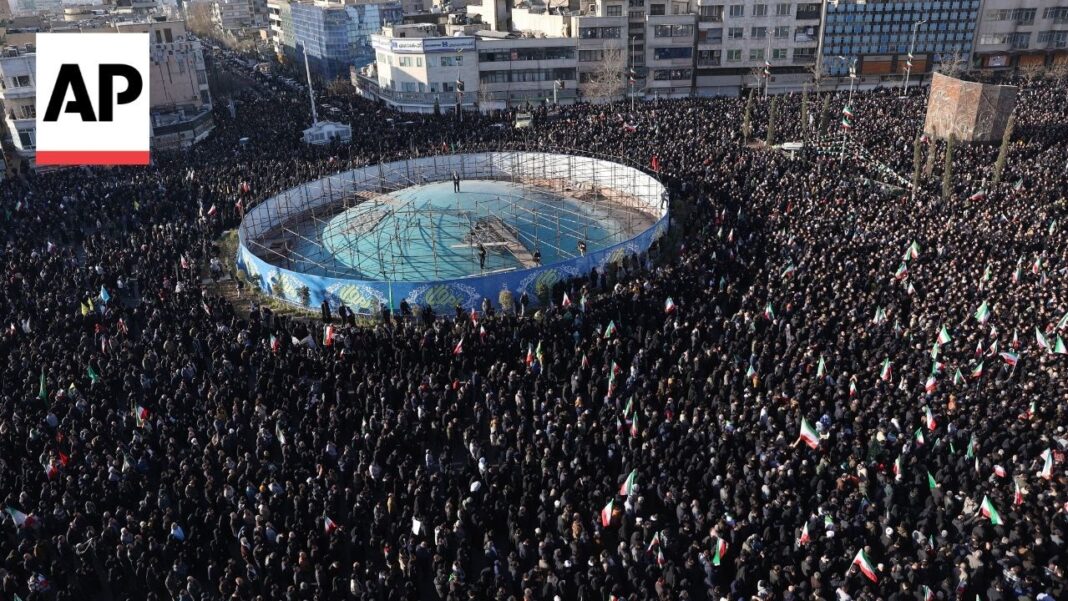
Iranian leader Mojtaba Khamenei issued a message on May 26 calling for greater unity across the Muslim world against the United States and Israel, saying that the chants “Death to America” and “Death to Israel” will become the rallying slogans of Muslims and “the oppressed of the world.”
Khamenei’s message was to mark Hajj, the annual Islamic pilgrimage. In it, Khamenei described a historic struggle against U.S. and Israeli influence in the Middle East, repeatedly invoking the revolutionary slogan “Allahu Akbar” as the “weapon” that had enabled Iran and its allies to resist outside pressure.
He said Iran had succeeded in “making the Zionist regime helpless under its severe blows during the second imposed war” and in delivering “a harsh slap to aggressive America,” while thwarting efforts to force Tehran into submission.
The statement also praised what it called the “Resistance Front,” saying Iranian forces and allied fighters in Lebanon had secured “notable victories” against “the two terrorist armies, armed to the teeth by the American-Zionist side.”
Khamenei coupled the militant rhetoric with a broader appeal for cooperation among Muslim-majority countries, calling on regional countries to “no longer serve as shields for American bases” while denouncing Israel as a “faltering” regime that was nearing “the final stages of its cursed life.”
Fragile Diplomacy Continues
Khamenei’s message came as the United States, Israel, and Iran remain locked in a tense standoff following months of fighting that included U.S. and Israeli strikes on Iranian nuclear and military facilities, Iranian retaliation across the region, and disruptions to shipping in the Strait of Hormuz.
Although a ceasefire has largely held, negotiations continue over a proposed memorandum of understanding intended to end hostilities and establish a framework for future talks.
U.S. President Donald Trump said on May 25 that negotiations with Tehran were “proceeding nicely” but warned that failure to secure an acceptable agreement could lead to renewed military action.
U.S. Secretary of State Marco Rubio similarly said Trump would not accept a “bad deal” with Iran and warned that Washington would pursue “another way” if diplomacy failed
“The President said he’s not in a hurry. He’s not going to make a bad deal,” Rubio said during a briefing in India. “We’re going to give diplomacy every chance to succeed before we explore the alternatives.”
Details of the proposed memorandum of understanding remain unclear, with Trump saying that “nobody has seen it, or knows what it is.”
According to Iranian officials, the proposed memorandum focuses primarily on ending the fighting, easing sanctions and blockades, and reopening maritime routes through the Strait of Hormuz, while postponing the most contentious nuclear issues—such as the fate of its stockpile of enriched uranium—for later negotiations.
Trump said in a May 25 post on Truth Social that Iran’s uranium would either be “destroyed in place” under the proposed deal, or handed over to the United States, or taken to another “acceptable location” for disposal under the auspices of the Atomic Energy Commission or equivalent authority.
He has also linked a broader regional settlement to an expansion of the Abraham Accords, saying countries such as Saudi Arabia, Qatar, Pakistan, Turkey, Egypt, and Jordan should normalize relations with Israel as part of a comprehensive peace pact.