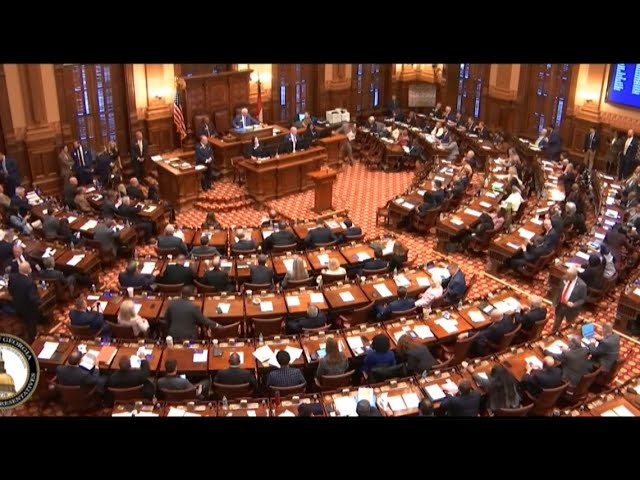


Previously, state lawmakers had been set to review a plan to redistrict the state’s congressional maps for the 2028 cycle.
Georgia House Republicans on June 17 rejected a push to redistrict the state’s congressional districts, an effort that had the backing of both President Donald Trump and Georgia Gov. Brian Kemp.
In a letter to Kemp, Georgia House Speaker Jon Burns indicated that while Republicans would attend the special session to deal with issues like the state gas tax, redistricting the state for the 2028 cycle would not be on the agenda.
“As we gather today, the House’s sole focus is on the policies that matter most to Georgia’s future and the hardworking people who call our state home,” Burns wrote. “From advancing historic property tax relief to ratifying the extension of the state gas tax suspension, today’s work reflects the House’s shared commitment to responsible, conservative governance that puts taxpayers first and helps ensure Georgia remains the best state in the nation to live, work, and raise a family for generations to come.”
Previously, Georgia lawmakers had been set to review a plan to redistrict the state’s congressional maps for the 2028 cycle, which would have made the state the first to redistrict for a cycle beyond 2026.
“In regard to your request to redistrict for the 2028 election cycle, the House has always conducted redistricting with considerable time for public input and with careful attention to constitutional requirements and the interests of every Georgia community,” Burns said.
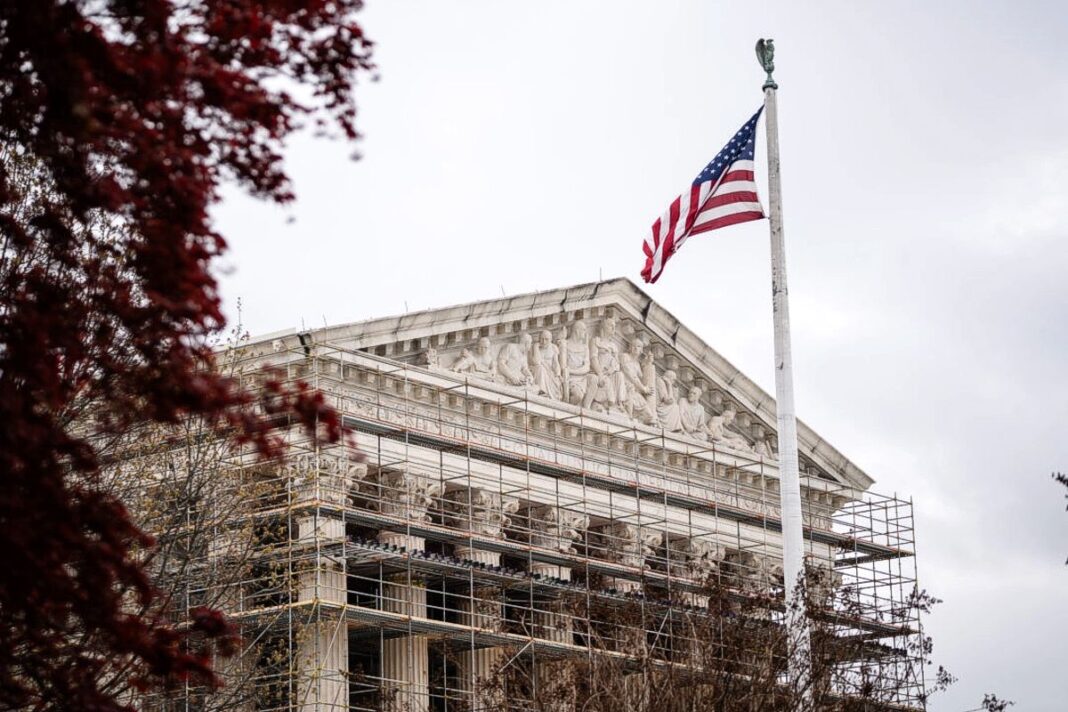
The special session was called amid the aftermath of the Supreme Court’s ruling in Louisiana v. Callais. That case determined Louisiana’s congressional map was an illegal racial gerrymander and redefined key sections of the Voting Rights Act, laying the groundwork for wide-reaching redistricting in several states.
But Burns said that lawmakers currently wanted to approach the issue with caution in light of shifting litigation and rulings around the topic, saying that because this “has the potential to impact every voter, it deserves the same responsible, fact-driven approach that guides every policy we consider as lawmakers, especially as we seek to understand the full implications of the U.S. Supreme Court’s decision in Louisiana v. Callais.”
By Joseph Lord