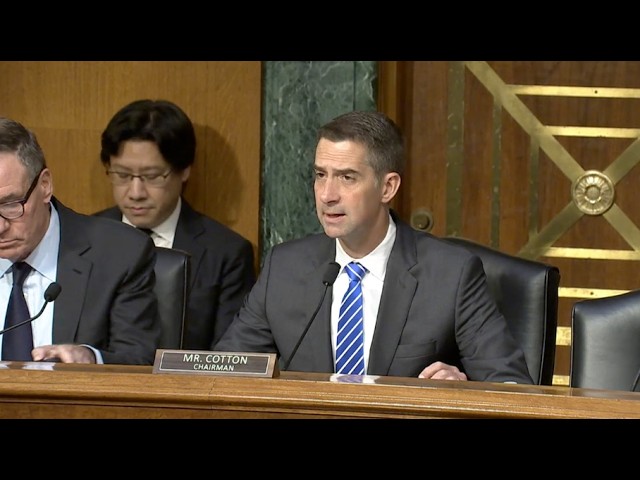
‘With transnational repression on the rise, it is critical that we take strong action to investigate and prosecute bad actors,’ Sen. Adam Schiff said.
Two senators have introduced bipartisan legislation establishing tough new federal penalties for transnational repression, proposing to add up to 10 years to prison sentences for offenses committed on behalf of foreign countries such as China.
Sens. Adam Schiff (D-Calif.) and John Curtis (R-Utah) introduced the Stop Transnational Repression Act of 2026 (S.4967), which would codify the first federal definition of transnational repression by amending the section on foreign relations in the federal criminal code, according to a July 14 press release.
“With transnational repression on the rise, it is critical that we take strong action to investigate and prosecute bad actors who would intimidate and attack dissidents and critics on U.S. soil,” Schiff said in a statement.
“This is a bipartisan effort to counter a national threat that reports show is only expanding in scope, with new and brazen efforts by countries like China trying to expand its intimidation of those not in lock step with the regime.”
Schiff urged his colleagues to “quickly pass” the legislation, saying it would “safeguard fundamental rights and freedoms for everyone on U.S. soil.”
The legislation comes after China’s new law on “ethnic unity” took effect on July 1, banning acts that “undermine ethnic unity” or “incite ethnic divisions.” The Chinese Communist Party (CCP) says the law gives it the authority to hold organizations and individuals outside China legally accountable for such acts.
Senate staffers told Reuters that the new Chinese law was a direct factor in the introduction of the legislation.
The new Chinese law, officially called the “Promoting Ethnic Unity and Progress Law,” has drawn widespread criticism internationally. Fifty-four human rights and diaspora organizations—including several U.S.-based groups such as Campaign for Uyghurs, Freedom House, and the Committee for Freedom in Hong Kong Foundation—issued a joint statement on July 13 calling on governments to introduce or strengthen legal protections to counter the law’s extraterritorial reach.
In June, a bipartisan group of senators, including Curtis, introduced a resolution (S.Res.791) condemning China’s new ethnic law. In a statement at the time, Curtis said the Chinese law would give the CCP a “pretext to intimidate critics far beyond China’s borders.”
Legislation
According to the bill, transnational repression is currently not “explicitly defined” in U.S. law, which “hinders the ability of law enforcement officials and other federal and state officials to identify and address such conduct.”
The newly established definition of transnational repression and the accompanying sentencing enhancement would “serve as a heightened deterrent for foreign actors seeking to engage in such conduct,” according to the bill.
Under the law, individuals convicted of a federal offense that includes conduct defined as transnational repression could face up to 10 additional years in prison and an additional fine of up to $100,000.
The legislation would also direct the U.S. attorney general to centralize oversight of transnational repression prosecutions within the Justice Department’s National Security Division.
The assistant attorney general for national security would be required to submit an annual report and provide an annual briefing on transnational repression to certain congressional committees, as well as one-time reports assessing existing authorities and recommending ways to respond to transnational repression.
Additionally, the assistant attorney general for national security would be required to develop a “whole-of-government strategy” to prevent, investigate and respond to acts of transnational repression carried out using artificial intelligence, according to the bill.
“No foreign government should be able to threaten or silence people on American soil. Whether it’s the Chinese Communist Party, the Iranian regime, or any other authoritarian government, transnational repression is an attack on both our sovereignty and our freedoms,” Curtis said in a statement.
“This bipartisan bill gives law enforcement stronger tools to hold perpetrators accountable and makes clear that the United States will not tolerate these abuses.”
Curtis serves on the Senate Committee on Foreign Relations while Schiff sits on the Senate Committee on the Judiciary.
By Frank Fang