

Brent crude prices briefly climbed above $91 a barrel before retreating on renewed diplomatic hopes
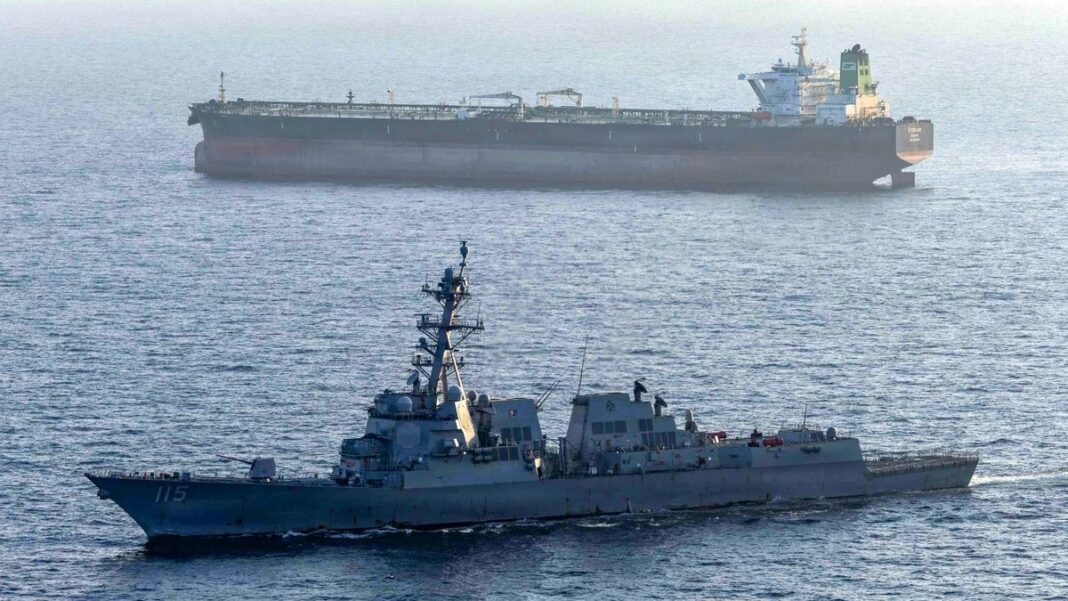
The average U.S. gasoline price rose above $4 a gallon on Monday as fighting between the United States and Iran continued to restrict oil shipments through the Strait of Hormuz.
The nationwide average price of regular gasoline reached $4.003 a gallon, according to the American Automobile Association (AAA), after standing just below the politically sensitive threshold on Sunday.
“Instability along the Strait of Hormuz is contributing to the increase at the pump,” AAA said in a recent note.
The last time the national average stood at $4 or higher was June 17, when it was about $4.02 a gallon.
Brent crude futures were down 16 cents, or 0.2 percent, at $87.94 a barrel by 5:22 a.m. ET after hitting $91.42, their highest level since June 11.
U.S. West Texas Intermediate crude fell 68 cents, or 0.8 percent, to $81.81 a barrel after reaching $85.39, its highest level since June 12.
The benchmarks had initially extended last week’s sharp gains as escalating fighting further curtailed tanker traffic through the Strait of Hormuz. Brent rose 15.9 percent last week, its biggest weekly advance since April, while WTI gained 15.5 percent, its largest weekly increase since early March.
The U.S. military said early Monday that it had completed a ninth consecutive night of strikes against Iran, and Tehran reported fresh attacks across the region, intensifying concerns that prolonged disruption in the Strait of Hormuz could remove significant volumes of oil and natural gas from the global market.
“With little sign of de-escalation in the Middle East, oil prices continue to move higher as vessel flows essentially grind to a halt,” ING commodities strategists Warren Patterson and Ewa Manthey said in a July 20 note.
The analysts said data from the London Stock Exchange Group (LSEG) showed only two outbound oil tankers were visible transiting the strait in the latest readings, with no inbound traffic.
The intensified fighting in the Middle East dampened investor sentiment in Asia and Europe, where equities were broadly under pressure, though Wall Street futures pointed to a higher open amid expectations of strong corporate earnings.
“Following the latest escalation in the US–Iran conflict before the weekend, with no clear signs of de-escalation, risk-off sentiment is likely to persist this week,” ING analyst Frantisek Taborsky wrote in a Monday note.
By Tom Ozimek