

panel had upheld a ban on gun possession for felons but will now reconsider the case amid constitutional concerns.
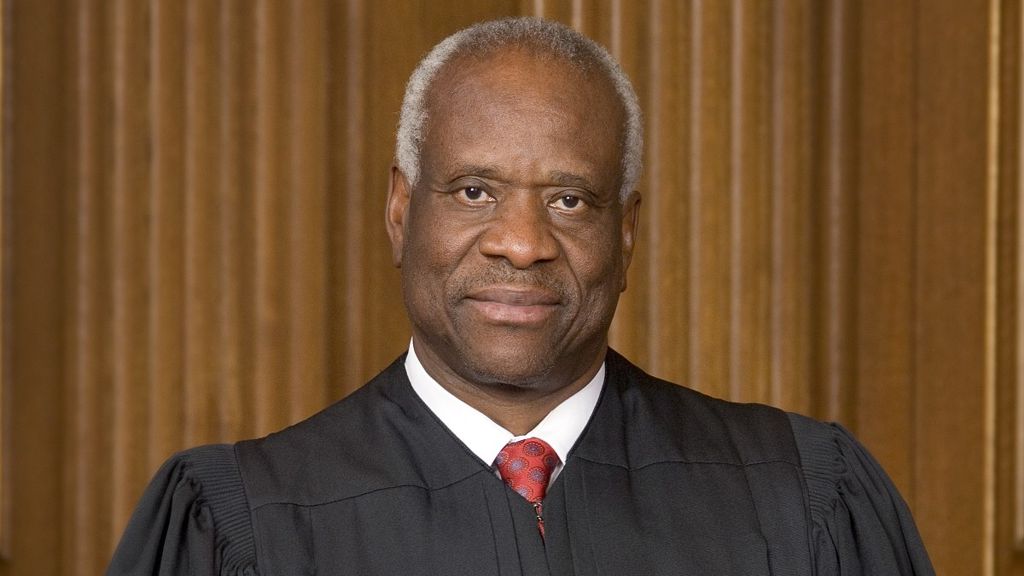
A federal appeals court voted to rehear a constitutional challenge to a federal law that prevents felons from possessing guns, weeks after Supreme Court Justice Clarence Thomas said he hoped a lower court would consider the law’s constitutionality.
The July 20 decision by the U.S. Court of Appeals for the Fifth Circuit came after a three-judge panel of the same circuit on June 2 denied convicted drug trafficker Curtis Squire’s challenge to Section 922(g)(1) of Title 18 of the U.S. Code. The felon-in-possession provision is part of the federal Gun Control Act of 1968.
Federal gun laws have largely been justified under the Constitution’s commerce clause. The legal theory is that guns move in interstate commerce, meaning they are manufactured, sold, and transported across state lines. This means Congress can regulate gun possession, even inside the home, because it supposedly has an impact on the national market for firearms.
A majority of the judges sitting on the Fifth Circuit voted to grant the petition of Squire for a so-called en banc hearing before the full court. The panel had unanimously upheld Squire’s conviction and sentence on June 2 for being a felon in possession of a firearm.
Squire had filed a so-called as-applied challenge to Section 922(g)(1), arguing the provision was unconstitutional as applied to him under the Second Amendment.
He cited the Supreme Court’s landmark 2022 ruling in New York State Rifle and Pistol Association v. Bruen. That decision recognized a constitutional right to bear arms in public for self-defense and held that restrictions on guns must be deeply rooted in American history if they are to survive constitutional scrutiny.
Squire argued the Second Amendment allowed him to possess a firearm in his home, so the onus was on the government to prove there was a historical tradition justifying a lifetime ban on someone with his criminal past.
He also cited the high court’s 2024 ruling in United States v. Rahimi, in which the justices upheld a federal gun control law that bars people under domestic violence-related restraining orders from possessing firearms.
The justices found in that case that the Second Amendment isn’t violated when an individual is disarmed after a court has found him to pose a credible threat to the physical safety of another.