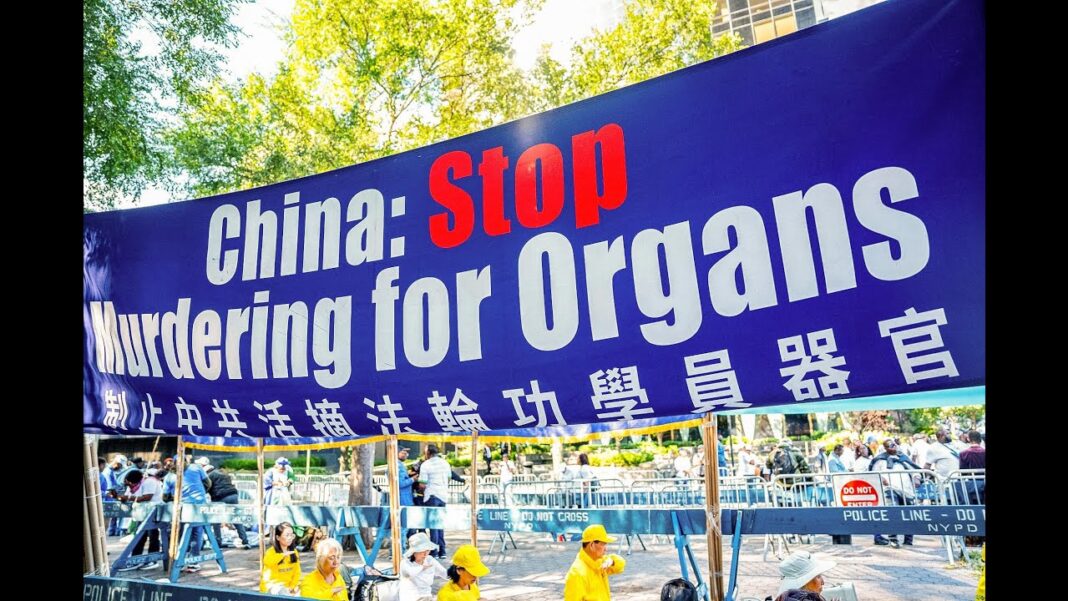


‘If you go abroad for a transplant to China, someone may be killed for their organs,’ human-rights lawyer David Matas said.
Doctors should warn patients that traveling to China for an organ transplant could result in another person being killed, medical and legal experts said during a July 21 forum on Capitol Hill.
“Every transplant patient should be told by the doctor who’s dealing with them that if you go abroad for a transplant to China, someone may be killed for their organs for that transplant,” Canadian human-rights lawyer David Matas said while joining the discussion remotely.
Matas said physicians do not need to wait for legislation before giving that warning, and medical societies could incorporate it into professional ethics rules.
He joined neurologist Dr. Alejandro Centurion, Piero Tozzi of the America First Policy Institute, and Erping Zhang of the Falun Dafa Information Center for a panel at the Chinese Freedom & U.S.–Taiwan Security Forum.
The speakers urged governments and medical institutions to combine criminal penalties, transplant tourism restrictions, professional education, patient warnings, sanctions, and international coordination in response to forced organ harvesting attributed to the Chinese regime.
Matas said transplant candidates often do not closely follow evidence concerning China’s organ transplant system and may not know the potential source of an organ offered on unusually short notice.
“People with morals will think twice about going to China once they’ve heard that,” he said.
Doctors would still provide follow-up care after a patient returned, Matas said. But in jurisdictions that criminalize participation in transplant abuse, physicians could also be required to report the case to authorities.
The warnings could be adopted by transplant associations regardless of whether a national law is in place, he said.
Centurion, associate director of medical affairs at Doctors Against Forced Organ Harvesting (DAFOH), said education should extend to medical students, physicians, transplant societies, licensing boards, professional associations, governments, and the public.
He said ethics training on forced organ harvesting could be incorporated into continuing medical education courses required by physicians.
Centurion said China’s censorship and refusal to permit independent scrutiny have made it difficult to obtain the type of access that would ordinarily be expected in a criminal investigation.
“The pursuit of perfect evidence must never become an excuse for moral paralysis,” he said.
By Arthur Zhang