

‘The entire international community should come together and staunchly oppose this malicious law,’ Lai said.
TAIPEI, Taiwan—Taiwanese President Lai Ching-te is urging countries to be united against what he called China’s “malicious” law on ethnic unity.
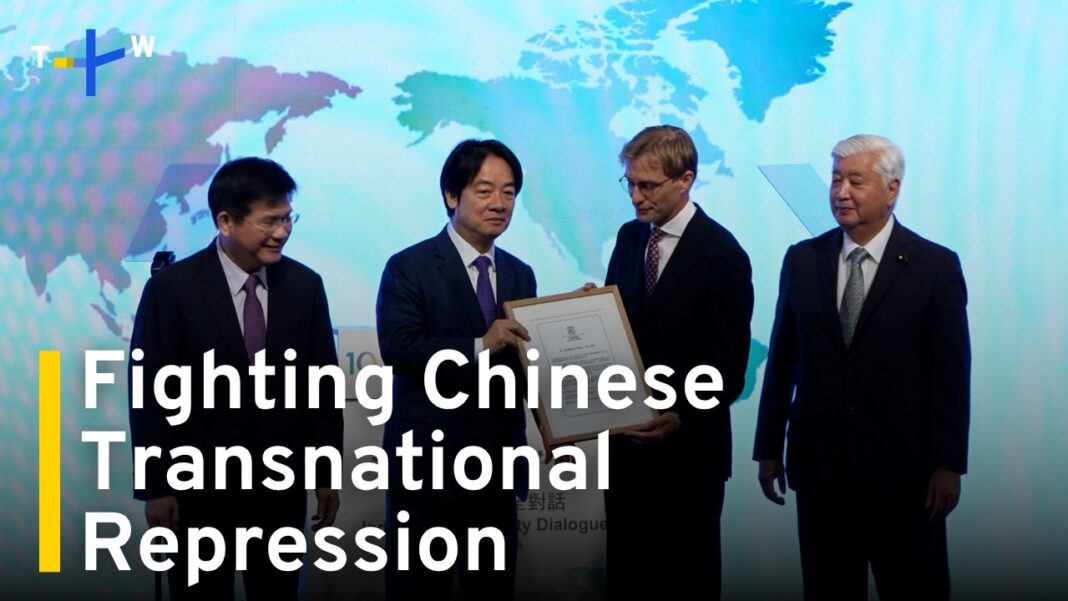
Lai sounded the alarm about China’s ethnic unity law at the opening of the 10th annual Ketagalan Forum on Aug. 4. The event, which focused on security-related issues in the Indo-Pacific, was hosted by Taiwan’s Ministry of Foreign Affairs and the Taiwan Institute of Economic Research.
The Chinese law, which went into effect on July 1, “infringes upon Taiwan’s sovereignty and persecutes religions and minority groups,” Lai said.
“But it goes beyond that,” Lai added. “By using forms of transnational repression, it imposes political censorship in all parts of the world, creating a chilling effect.
“The entire international community should come together and staunchly oppose this malicious law.”
Officially called the “Promoting Ethnic Unity and Progress Law,” it provides a legal basis for advancing a Beijing-defined “shared” national identity and bans acts that “undermine ethnic unity” or “incite ethnic divisions.”
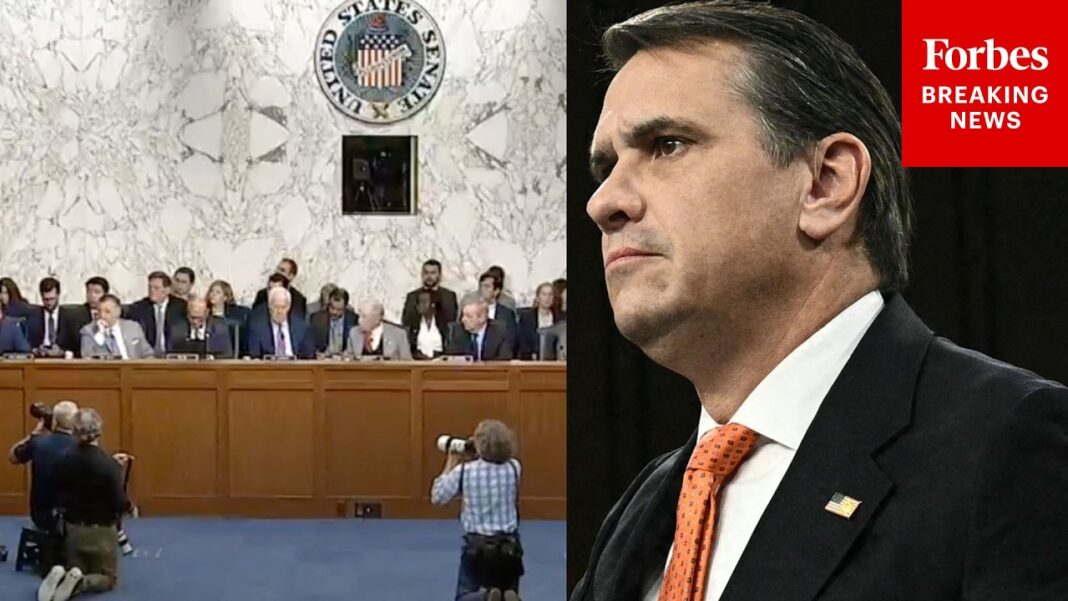
U.S. Senators have argued that the Chinese Communist Party (CCP) could use the law to increase pressure on minority groups and, through its extraterritorial jurisdiction clause or Article 63, extend enforcement abroad.
In the face of threats posed by China’s law, Lai said Taiwan “will not accept united front infiltration or red terror.”
“We will build stronger systems to prevent, counter, and protect against these threats,” Lai said.
“We will also deepen our cooperation with friends and allies. Together, we will defend free speech, boost defense and resilience around the world, and uphold the rules-based international order.”
The CCP’s “united front” effort is spearheaded by its United Front Work Department, which oversees a network of organizations tasked with co-opting civic groups, gathering intelligence, shaping the political environments of other countries, and influencing public opinion.
Transnational Repression
Also speaking at the forum was Gen Nakatani, a Japanese lawmaker and former Japanese defense minister. He is also one of the co-chairs of the Inter-Parliamentary Alliance on China (IPAC), a group of more than 300 lawmakers from countries around the world who believe that coordinated responses are needed to confront the Chinese regime’s malign activities.
Nakatani recalled visiting Taipei in 2024 to attend the IPAC summit, during which China’s transnational repression was elevated from a human rights issue to the core of national security.
“And yet the threat [of transnational repression] has not receded. Instead, the Chinese government has now given it the force of law,” Nakatani said, according to a translation.
By Frank Fang