


If Donald Trump were presiding over the debacle in Afghanistan, the US foreign policy establishment would be loudly condemning the irresponsibility and immorality of American strategy. Since it is Joe Biden in the White House there is instead, largely, an embarrassed silence.
It is true that Trump set the US on the path out of Afghanistan and began the delusional peace talks with the Taliban that have gone nowhere. But rather than reverse the withdrawal of troops, Biden accelerated it.
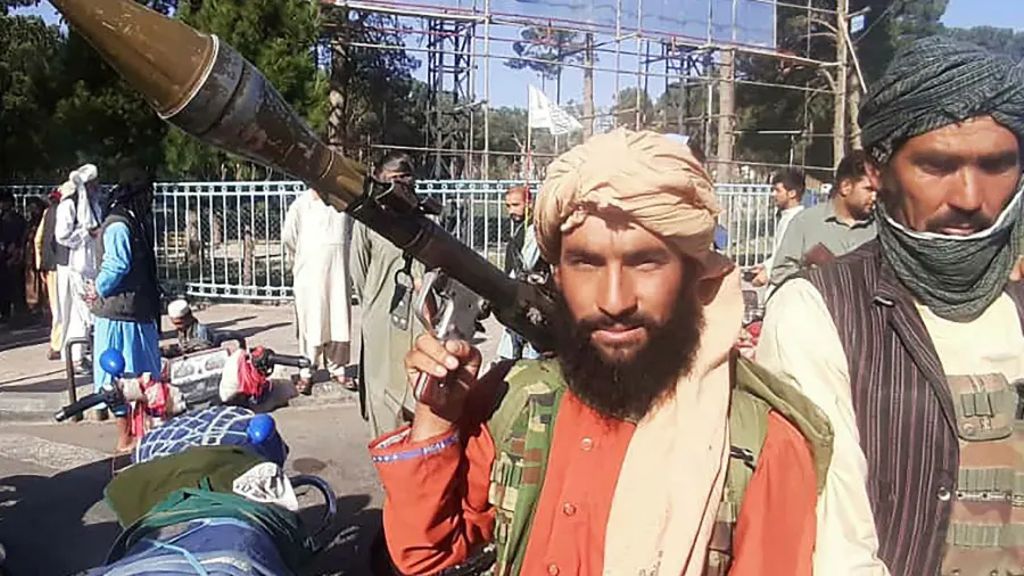
The horrific results are unfolding on the ground in Afghanistan, as the Taliban take city after city. The final collapse of the government looks inevitable. It may come just in time for the 20th anniversary of the 9/11 attacks that originally led to the US-led invasion of Afghanistan.
Earlier this week, Biden was channelling Edith Piaf, claiming he had no regrets about pulling the rug out from under the Afghan government. Last month, the president was still insisting that the “likelihood there’s going to be the Taliban overrunning everything and owning the whole country is highly unlikely”. Who knows what he will be saying next month? And, frankly, who cares? On Afghanistan, Biden’s credibility is now shot.
The broader strategic question is what the unfolding disaster in Afghanistan will do for US credibility around the world. Discussing the situation there as a question of high global politics feels distasteful while a tragedy unfolds on the ground. But, beyond simple war-weariness, Biden’s principal justification for the Afghan withdrawal was strategic. In recent remarks, he argued that the US cannot “remain tethered” to policies created in response “to a world as it was 20 years ago. We need to meet the threats where they are today.” The first threat that Biden identified was “the strategic competition with China”.
So how does America’s defeat in Afghanistan — in reality, a defeat for the entire western alliance — play into the growing rivalry between Washington and Beijing?
The US failure makes it much harder for Biden to push his core message that “America is back”. By contrast, it fits perfectly with two key messages pushed by the Chinese (and Russian) governments. First, that US power is in decline. Second, that American security guarantees cannot be relied upon.
If the US will not commit to a fight against the Taliban, there will be a question mark over whether America would really be willing to go to war with China or Russia. Yet America’s global network of alliances is based on the idea that, in the last resort, US troops would indeed be deployed to defend their allies in Asia, Europe and elsewhere.
China is already the dominant economic power in east Asia. But most Asian democracies look to the US as their main security partner. So it is very helpful to Beijing if Washington’s credibility is undermined. Of course, the situations and stakes in Taiwan or the South China Sea are different from those in Afghanistan. But events there will still resonate around the world.
The direct consequences for Beijing of US withdrawal from Afghanistan, which borders China, will be less welcome. The Chinese regime has adopted policies of mass internment and repression in Muslim-majority Xinjiang. The idea of the Uyghurs receiving support from a fundamentalist Taliban government will raise concerns in Beijing. So will the potential threat of terrorist bases in Afghanistan.
In time, China might face a classical superpower’s dilemma. Is it better to intervene militarily in turbulent Afghanistan, or to leave the country to its own devices? As Andrew Small of the European Council on Foreign Relations points out, Chinese commentary on Afghanistan is already replete with references to the country as the “graveyard of empires”.
In Washington, the parallel that will be uppermost in the minds of policymakers is Vietnam. There are already reports that America is trying to persuade the Taliban not to storm the US embassy in Kabul in order to avoid a repetition of the scenes when Saigon fell in 1975. Last month, Biden insisted that the “Taliban is not the North Vietnamese army. They’re not remotely comparable in terms of capability.” He may come to regret those words.
The Americans know, however, that if they decide to pull out the last remnants of the US presence in Kabul, they will be in effect signing the death warrant of the Afghan government. The collapse in morale which has already led to successive defeats for the Afghan army across the country would become irreversible. But, in truth, the situation already looks all but irrecoverable.
Unlike the Afghan government, however, the US administration has a few straws of hope to cling to. The end of the Vietnam war was indeed a debacle. Many questioned American power in its aftermath. But within fourteen years of the fall of Saigon, the cold war was over, and the west had won.
In the end, the struggle between the American and Soviet systems turned not on events in Vietnam but on the relative strengths of the two countries’ domestic economies and political systems. The current rivalry between the US and China may be determined in the same way. But that abstract thought is little comfort to the beleaguered people of Afghanistan.
By Gideon Rachman
gideon.rachman@ft.com