

They reflected on how being part of an infamous historic event changed their lives forever.
A year ago, President Donald Trump pardoned nearly 1,600 people for “offenses related to events that occurred at or near the United States Capitol on January 6, 2021.”
That decision to issue the blanket pardon, in one of his first official acts as the 47th president, ignited controversy. It covered not only people who strolled through open doors of the U.S. Capitol, unaware they were trespassing, but also rioters who damaged property and assaulted police.
After the initial public backlash subsided, the pardoned—many of them newly freed from prison—began rebuilding their lives.
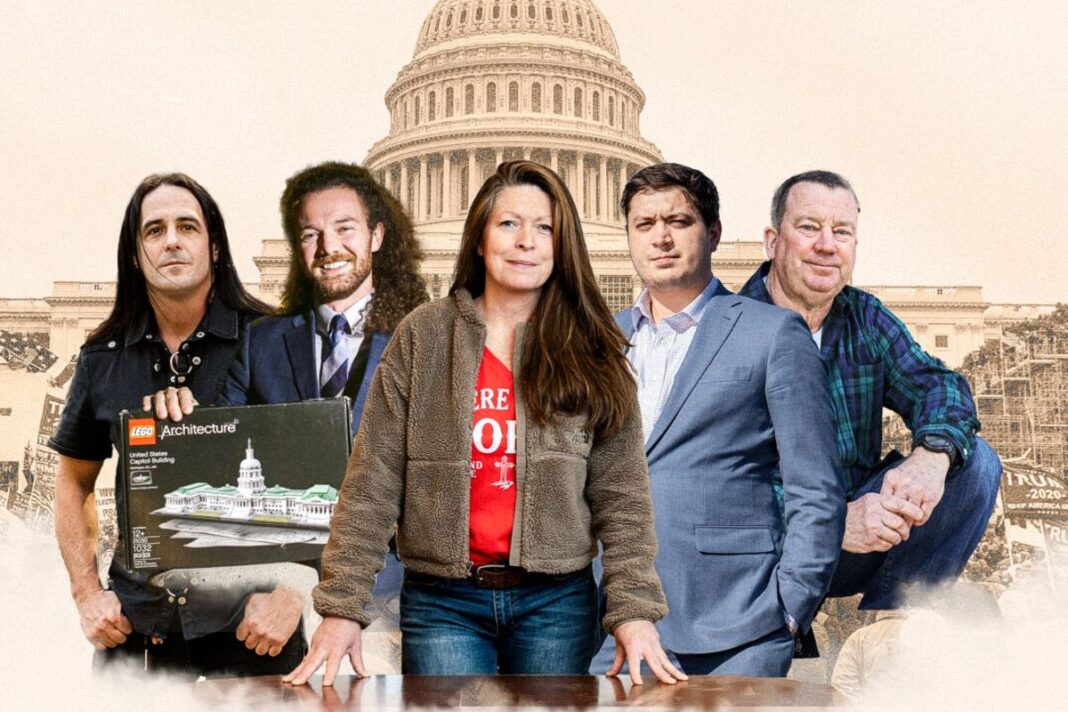
The Epoch Times interviewed five of those former Jan. 6 prisoners. Their consensus: Jan. 6 is one of the most-mischaracterized events in U.S. history, largely because records—and personal stories like theirs—have been ignored by most media outlets. They say the pardon was not a panacea. Some are still ostracized from friends and family. Others are still recovering from the financial setbacks.
All five believe they’ve been unjustly prosecuted and none say they regret their actions. Rather, the pardoned said they were proud to have stood up for the integrity of U.S. elections, Trump, and American values on that fateful day—despite the great cost.
Twists of Fate
As Dan Leyden, 58, struggles to regroup after his wife died of cancer late last year, he remains in disbelief over the life-changing events that preceded that horrible loss.
Circumstances lined up and thrust him—a low-profile union electrician from Chicago—into the forefront of the Jan. 6 conflict in 2021.
At the last minute, he had decided to join his brother in Washington to watch “our favorite president” speak, possibly delivering his final big public speech as the 45th president.
But the brothers got separated from each other.
“Then I don’t see that speech, because the man next to me says, ‘Dan, would you walk with me to the Capitol?’ So I walked to the Capitol,” Leyden said, “And, from there, my life has turned upside-down.”
While he doesn’t want pity, Leyden—who injects many of his remarks with wry humor—used the word, “heartbroken,” to describe losses he has suffered.
First, his prosecution cost him the Chicago Park District job he had worked without a single complaint for 24 years.
Also, while beginning to serve a prison sentence that would have spanned three years, Leyden missed the birth of his first grandchild—“a gorgeous baby girl” who he now enjoys visiting.
Days after an overjoyed Leyden was pardoned and freed, he plunged into sorrow over the shooting death of Matt Huttle, 42, a Jan. 6 prisoner who became his friend while they served time in prison together. Stopped for speeding in rural Indiana, Huttle threatened to kill himself rather than face life behind bars again. As Huttle resisted arrest, an officer fatally shot him.
Worst of all, Leyden lost his wife of 27 years to cancer on Dec. 29 last year. That illness, which stress has been known to trigger, hit Linda Leyden shortly after her husband was freed. His incarceration had kept them apart for 15 months.
Leyden said his wife was known for her compassion. It was her idea to adopt two daughters from a Russian orphanage; they are now grown.
A lively woman, his wife ran marathons in major cities across the United States and as far away as South Africa before she died at 62.
Despite mourning her death, Leyden jokes about their contrasting lifestyles: “I don’t run unless somebody’s chasing me—and the FBI hasn’t been chasing me lately.”
With sarcasm, he disputes a label he and other defendants were given. “I was a very poorly trained ‘domestic terrorist,’” Leyden says, noting he showed up for the wintertime protest wearing a lightweight green flannel shirt over a T-shirt, and “cheap mittens from Walmart.”
By Janice Hisle