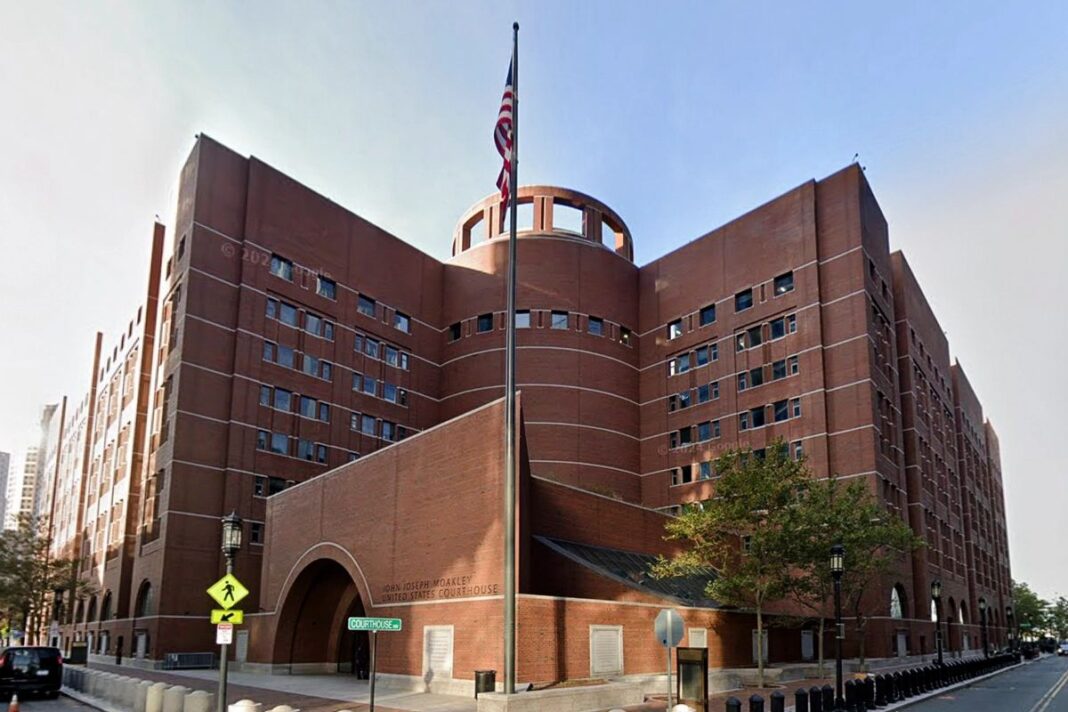


The First Circuit will hear arguments on the case, in which the Trump administration deported the plaintiffs to Africa.
An appeals court ruled on Mar. 16 that the Trump administration could continue deporting illegal immigrants to places other than their native countries, without giving them a chance to protest against their destination.
“There is more work ahead on this important issue, but this is a key win for [President Donald Trump’s] immigration agenda,” Attorney General Pam Bondi said on X.
New legal victory: the First Circuit just ruled that the Trump Administration can CONTINUE deporting illegal aliens to third countries.
— Attorney General Pamela Bondi (@AGPamBondi) March 16, 2026
There is more work ahead on this important issue, but this is a key win for @POTUS’s immigration agenda.@thejusticedept attorneys will…
The 2–1 ruling by the Court of Appeals for the First Circuit paused a previous decision by Judge Brian Murphy of the U.S. District Court for the District of Massachusetts, who ruled in February that the government’s policy was illegal.
Murphy’s ruling concerned two Department of Homeland Security memos, which said that if the United States had diplomatic assurances from a third country that deportees would not face persecution or torture, they could be sent there without any extra procedures.
“[The Department of Homeland Security] has adopted a policy whereby it may take people and drop them off in parts unknown … and, ‘as long as the department doesn’t already know that there’s someone standing there waiting to shoot … that’s fine,’” he wrote in his decision in February.
The Trump administration filed an appeal, asking the First Circuit to halt Murphy’s order, which it said “contains multiple serious legal errors.”
On March 5, it asked for a stay of that order while the case proceeds in court, noting that the U.S. Supreme Court had already halted Murphy’s previous rulings twice in this case.
Murphy noted the same thing in his ruling and said he would give the government 15 days to appeal before his order took effect.
“Ultimately, this court could be missing something in the final analysis,” he wrote.
In its filing, the Justice Department argued that neither courts nor immigration judges are allowed to “second-guess” the government’s conclusion about whether a country is safe or not.
“The district court’s order creates an unworkable scheme that materially impairs the ability of the government to enforce the immigration laws,” the DOJ wrote.
The case concerns a group of illegal immigrants that the government tried to deport to third countries in March 2025.