As tall as the towers of London Bridge, New Delhi’s Ghazipur landfill continues to grow at a startling pace. Within a year, it is set to rise higher than the Taj Mahal, one of the country’s most iconic monuments. India’s “Mount Everest” of trash is growing so fast that it needs aircraft warning lights.
A rather shocking factoid in India (see feature photo and video below). This brings us to a question. Are America and the globe getting buried under mountains of garbage?
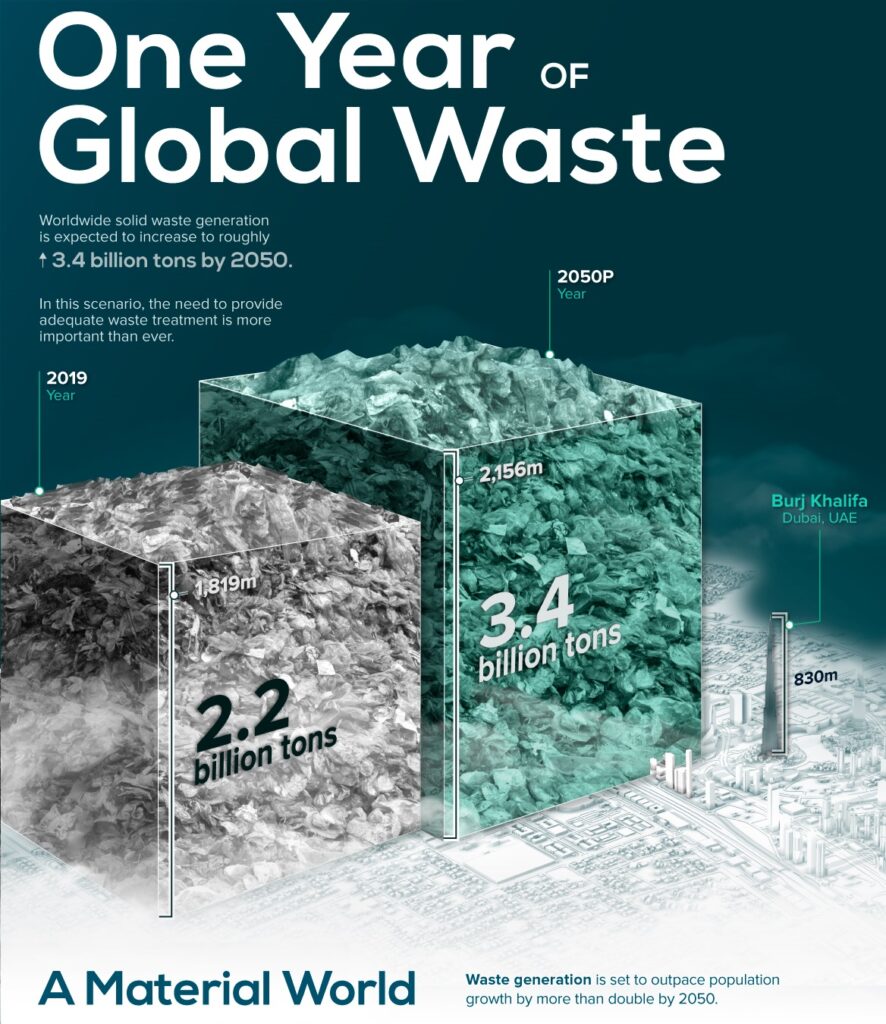
Waste generation is expected to jump to 3.4 billion tons over the next 30 years, compared to 2.2 billion in 2019. This is due to a number of factors, such as population growth, urbanization, and economic growth. In the graphic below (learn more here) by Northstar Clean Technologies, we show waste generation worldwide and discuss its impact and how it can be reduced.
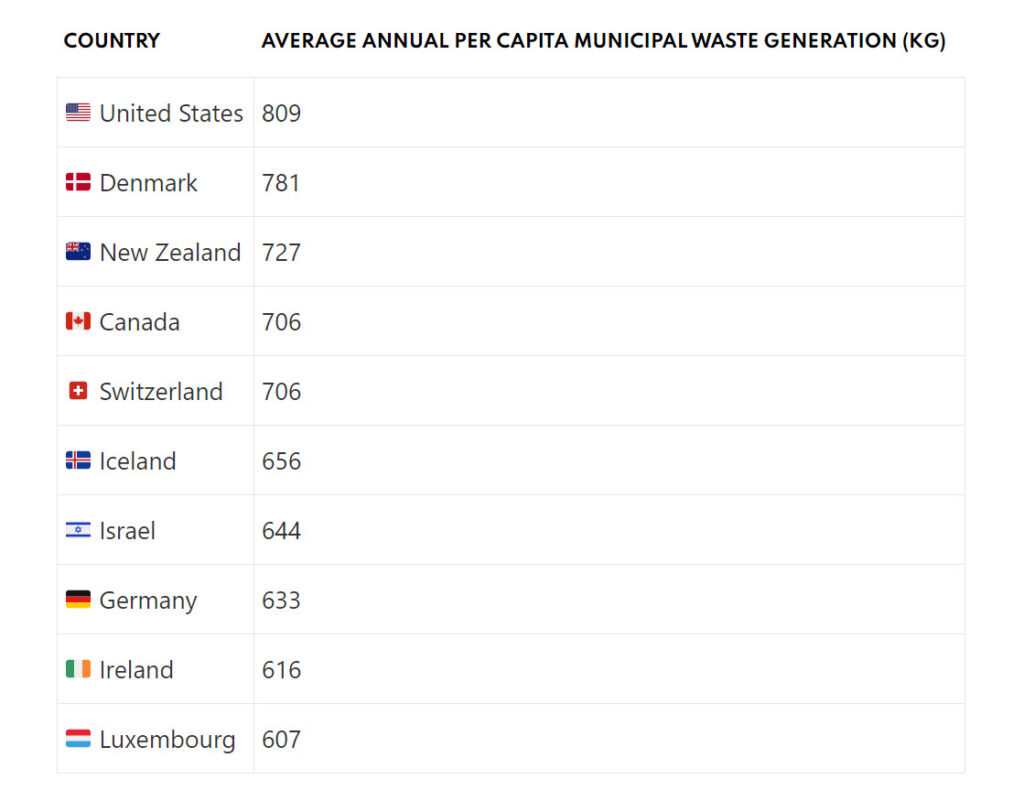
In the table below, we show the top garbage producers around the globe. Yes, America leads this unfortunate list. The US is the world’s most wasteful country, with each American producing a whopping 809 kg (1780 lbs) of waste every year. Approximately half of the country’s yearly waste will meet its fate in one of the more than 2,000 active landfills across the nation. The country also has the largest landfill in the world, Apex, located in Clark County, Nevada.
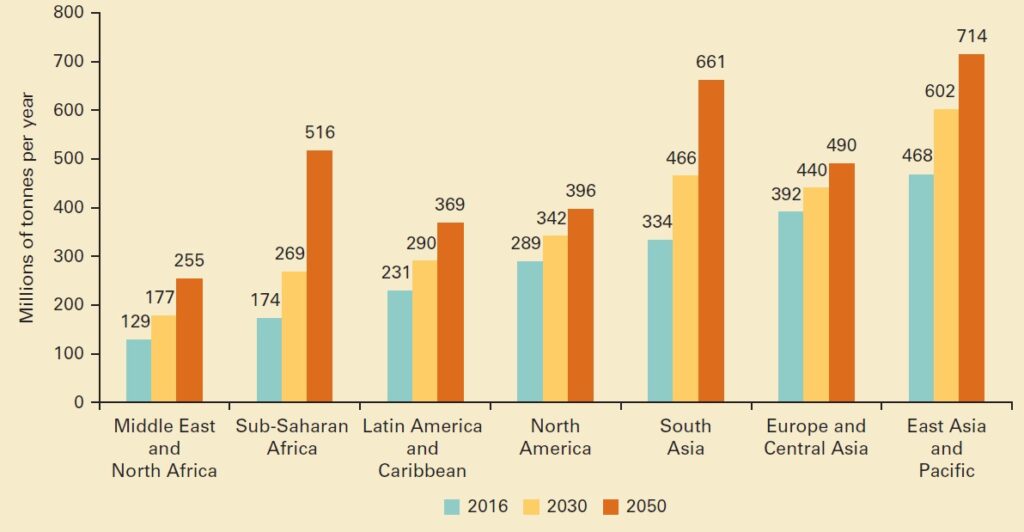
Though America leads this unfortunate list, going forward, most of the trash problem will come from the Asian region. See this in the chart below and learn more here.
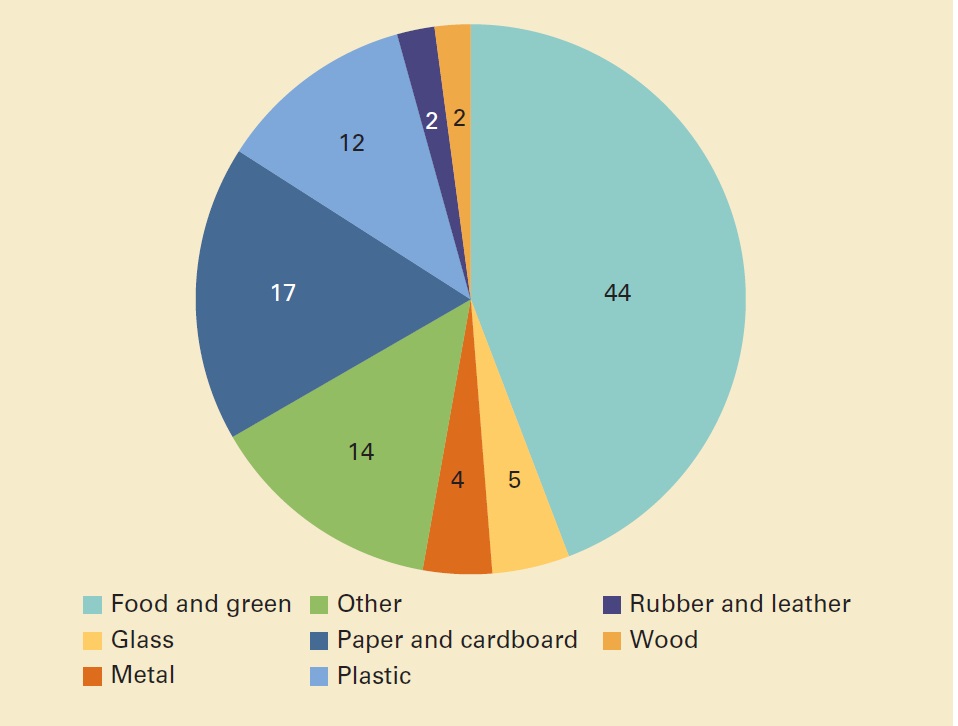
Below is a breakdown of the types of trash we humans make.
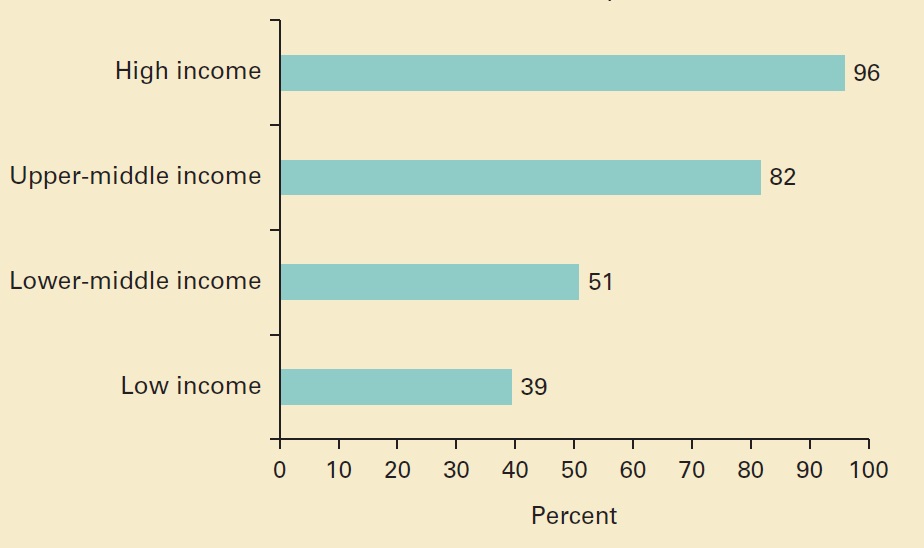
No doubt that the more wealthier people are, the more trash they make. We point this out just in case the rich elite start virtue signaling about how badly the rest of us produce trash.
Here are seven shocking facts about our global waste problem.
- Increasingly massive landfills are driving people from their homes. One of the largest trash mountains on the globe is In Indonesia. Nearly 7,000 tons of trash arrive daily at a landfill, more than 200 football fields wide and over 15 stories high. Bantar Gebang is a giant trash mountain in Bekasi that has taken Jakarta’s waste for over 30 years. The landfill is surrounded by villages that locals estimate to house around 20,000 residents, many of whom make a meager living off trash picking and scavenging for reusable waste.
- Less than 20% of global waste is recycled each year, and rich countries often export recyclables to poorer nations. The EPA announced a landmark strategy on Nov. 15, National Recycling Day, that aims to get the US to a 50% recycling rate by the end of the decade. A 2018 estimate puts the US at a recycling rate of 32%, with only 8.7% of plastic waste being recycled each year. The new strategy aims to reduce the amount of waste that ends up in landfills or shipped abroad.
- The COVID-19 pandemic has made our waste and recycling problem worse. Recycling rates fell across Europe, Asia, and the US since the onset of the COVID-19 pandemic. But the pandemic also produced a surplus amount of new waste in the forms of PPE and single-use items. A study from the Proceedings of the National Academy of Sciences (PNAS) showed that the pandemic generated over 8 million tons of plastic waste around the world, and over 25,000 tons of that waste entered the ocean.
- Each year around 92 million metric tons of textile waste is generated around the world. Shocking photos of Chile’s Atacama desert hit the internet last month and caused quite a stir among environmentalists. The pictures posted a tangible depiction of our global fast fashion worries materializing in the landscape of the world’s driest desert. An estimated 59,000 metric tons of clothing is received at the Iquique port in Northern Chile, where resellers may buy up stock. Most of it, about 39,000 metric tons, ends up as waste in the desert.
- Our trash pile-ups affect animal behavior. The annual United Nations Climate Change Conference (COP26) in Glasgow dominated daily headlines with coverage ranging from climate commitment announcements to masses of protesters thronging the streets. But a story from the New York Times documenting the overwhelming trash problems the Scottish city experienced due to the talks featured one small, hairy detail: an increased population of rats who reportedly attacked and sent four sanitation workers to the hospital over the course of five months.
- There’s more than one ocean garbage patch around the world. The Great Pacific Garbage Patch is a horrifying collection of floating trash spanning an area three times the size of France, located between California and Hawai’i. Over the years, the patch has been highly publicized for its astonishing enormity and strain on the environment, but it’s not the only garbage patch floating around our seas. According to the National Oceanic and Atmospheric Administration (NOAA), there are at least two more areas where ocean gyres have caused trash to collect: one in the South Pacific Ocean and the other in the North Atlantic Ocean.
- The plastic waste recycling industry has an underbelly of crime. Exporting plastic waste has more repercussions than we may think. Heightened regulations on the practice have drummed up reports of smuggling, illegal disposal methods, money laundering, corruption, and in some cases, allegations of human trafficking. A report from the Global Initiative Against Transnational Organised Crime (GITOC) showed a 280% increase in illegal plastic waste disposal around the world in 2020.
The global waste management market size was valued at USD 989.20 billion in 2021 and is expected to expand at a compound annual growth rate (CAGR) of 6.2% from 2022 to 2030. The market is expected to be driven by stringent government regulations such as the Resource Conservation and Recovery Act and Waste Shipment Regulation to improve this service. See the US waste management below and learn more here.
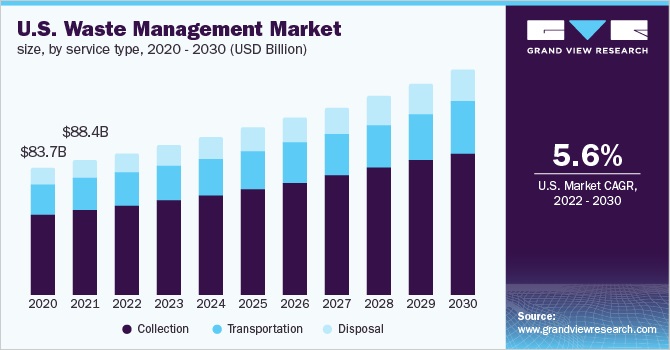
Who would have thought that the world would spend over a trillion dollars taking out the trash? Is it a problem going forward? With “reasonable” regulation and innovative waste management technology, it is an issue that can be handled.
Turning loose the “animal spirits” of free market enterprise will offer the best solutions in the future.
By Tom Williams