



Record numbers of people ended their lives in Oregon last year in America’s most advanced doctor-assisted suicide program, which now lets out-of-state ‘death tourists’ get lethal drug cocktails on the West Coast.
Last year, 431 people received fatal prescriptions under the state’s Death With Dignity Act (DWDA), and 278 people used them to end their lives, Oregon Health Authority said in its annual report. That’s a jump from 383 scripts and 238 deaths the previous year. See a historical trend chart below and learn more here.
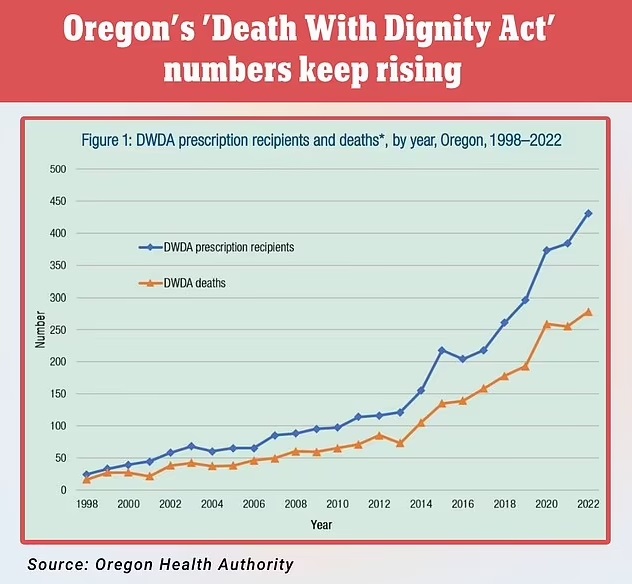
Oregon became the first US state to allow physician-assisted suicide in 1997, allowing terminally ill adult Oregonians, with less than six months left to live, to ask doctors for a fatal dose of drugs they then administer themselves, typically at home. Last year, it became the first US state to move to allow non-residents to travel to the West Coast state to end their lives. See the chief reasons for people wishing to perform this process.
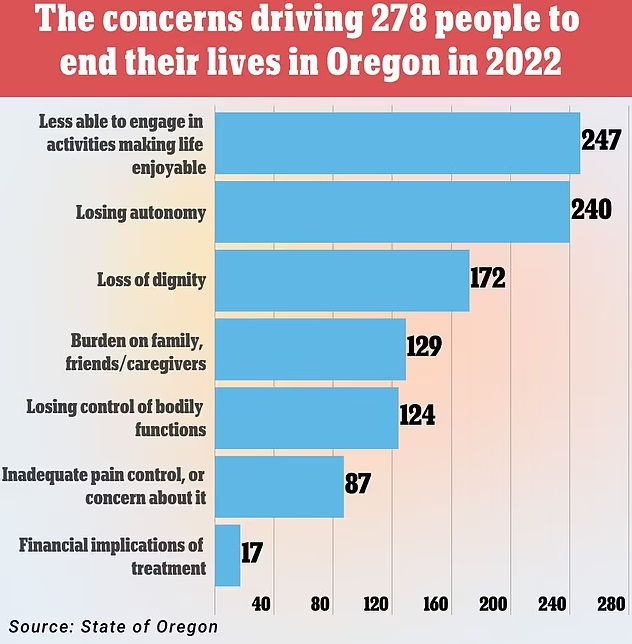
The new numbers come amid growing concerns that Oregon and other US states are liberalizing their assisted suicide programs too quickly and following the example of Canada, where tens of thousands of people are euthanized each year.
Most Americans believe euthanasia should be made legal and that a doctor should be allowed to end his patient’s life by painless means should that person request it, a new Gallup poll finds.
The number of people favoring the practice has climbed steadily from the 1940s and 1950s, when most people thought it should be illegal. See below and learn more here.
- 69 percent now favor the practice;
- 36 percent favored it in 1950;
- 1973 marked the first time Gallup found Americans favored the measure;
- 1990, 65 percent approved;
- 51 percent say they would consider ending their lives if faced with a terminal illness;
- About half of Americans say doctor-assisted suicide is morally acceptable
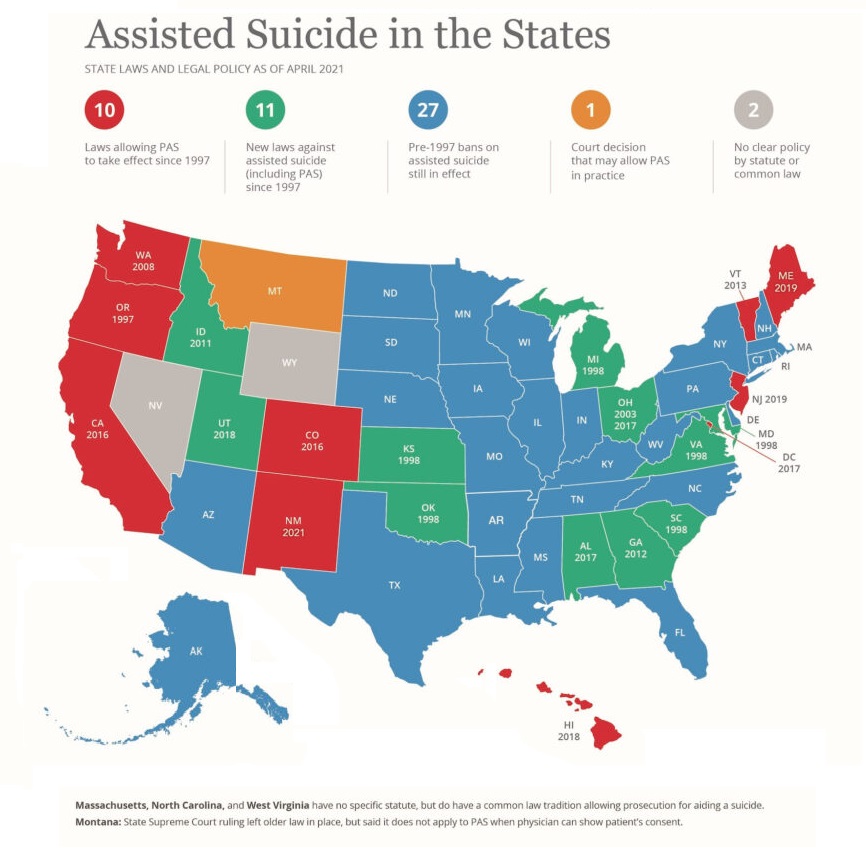
Is this legal? The map below shows the status of laws prohibiting or permitting assisted suicide, including physician-assisted suicide (PAS), in the US. Last updated: April 29, 2021 and learn more here.
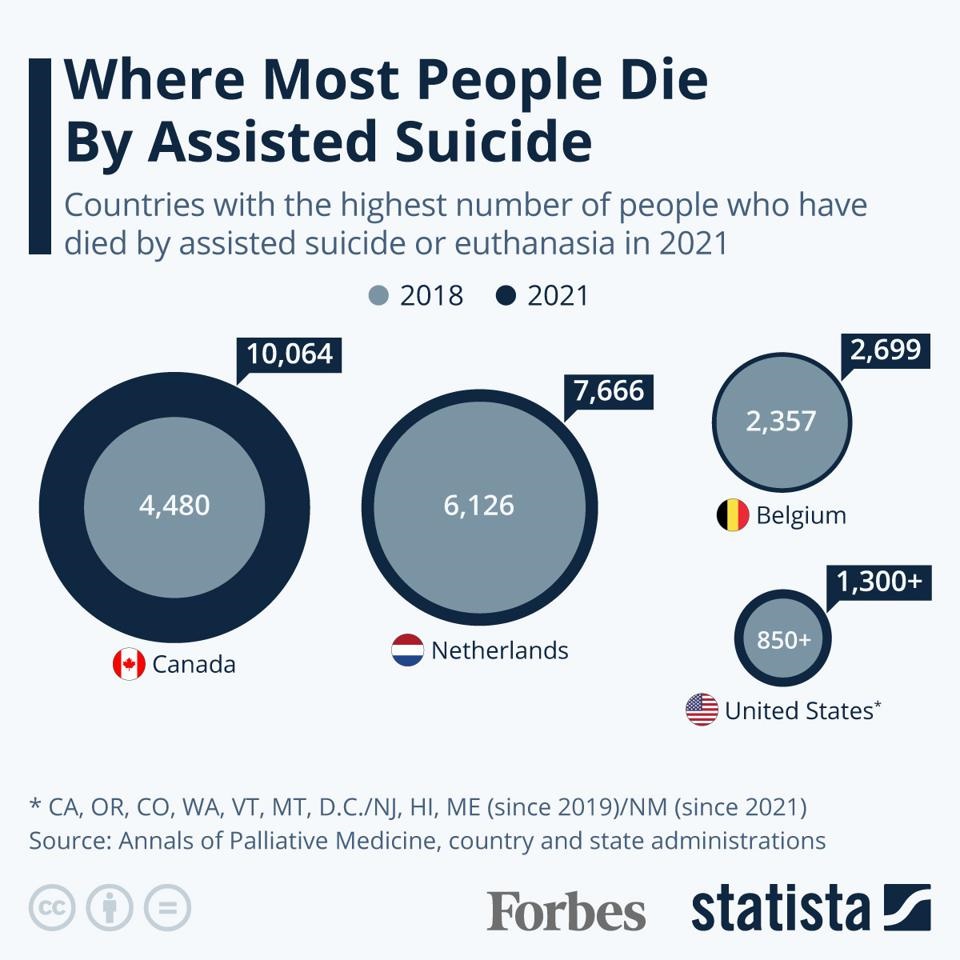
But the US is not the leader in assisted suicide internationally. Data available from country and state administrations shows that the number of those dying with assistance has been rising much faster in Canada in the past three years than in other countries where the practice is legal. The Netherlands and Belgium, like Canada, allow both euthanasia and assisted suicide and have seen numbers rise more slowly. The practice has already been legal there since the early 2000s. However, Canada legalized it in 2015. See this in the chart below and learn more here.
The US, though not the leader, seems to want to accelerate this idea of assisted suicide -even make it a part of the tourism industy. Oddly enough, the reason for this is not what one would think – to avoid pain. Rather it seems it is more culturally related. Is it because at the end of life, many are alone and have little help as perhaps families once had?
Give us your take in the comment section below on this new odd and potentially dangerous activity that has become a “thing.”
By Tom Williams