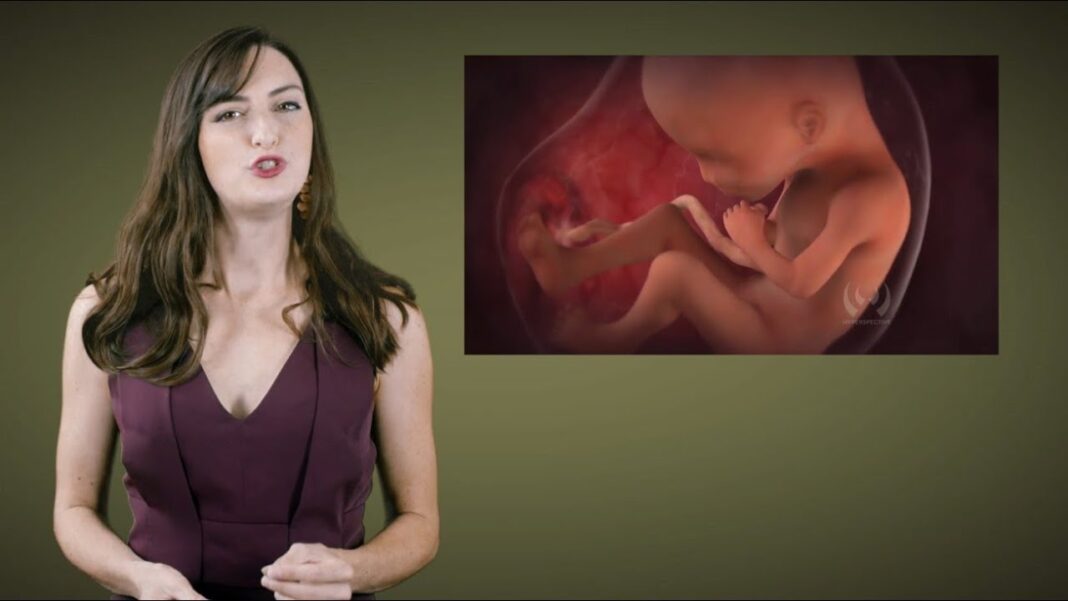


The debate over when life begins is one of the most important moral discussions of our time. For many who hold a pro-choice position, “life” begins at birth. This belief allows them to frame abortion in a way that sidesteps the reality that a developing baby is indeed alive before delivery. But if life only begins at birth, how do we explain the undeniable signs of life inside the womb, such as movement, growth, and response to stimuli? These signs are not illusions. They are hallmarks of living beings. This paper argues that life begins at conception and that no stage of life is less significant than another.
The Stages of Life
Life is not a single moment, it is a series of interconnected stages. No stage is less important than another, because each is necessary for the next to exist. Conception is stage one. Without conception, there is no life at all. The simplest logic dictates that the start of something happens when it first begins, not at some later, more developed stage or time.
Consider a cross-country trip. The trip does not “begin” when you arrive at your destination, it begins the moment you take your first step forward. Even the smallest motion in the direction of your goal is the start of the journey. No matter how small that progress is, that is the start of the trip, and without that initial, tiny move, there is no trip at all. But with it, the trip has undeniably begun.
Another way to view it is through the start of a foot race. The race does not begin when the runner pushes off from the starting blocks, it begins the instant the starter pistol fires. That sound marks the official start, whether the runner moves immediately or hesitates. The race is underway regardless of the runner’s personal timing or perception. In the same way, life begins at the moment of conception. Whether people acknowledge it or not, the “starting pistol” of human development has already been fired, and the process of growth and life is in motion.
When an egg is fertilized and begins to divide, first into two cells, then four, then eight, that is the beginning of the journey of life. Non-living things do not grow. A rock will never get bigger on its own. Growth is a defining property of life. To call an embryo a “clump of cells” is simply to avoid acknowledging that, if given the chance, those cells will develop into a fully formed human being. The truth is that even a fully grown adult is, at the most basic biological level, nothing more than an organized clump of cells. The difference is that those cells have been allowed the time and opportunity to develop into a complete human life.
Early Stages of Life Before Implantation
Life does not begin at implantation, it begins at conception. The days between fertilization and implantation are a critical part of the growth process, and each represents a specific stage of life. From the moment sperm and egg unite to form a zygote, development is continuous and uninterrupted. It is possible that a lack of complete understanding of the human development process has led some to believe that a human being isn’t actually a human being until they are born. Let’s take a look at the process, starting from conception.
The process of human development starts at the moment of conception. From that point, it is one stage after the next, each just as important as the previous and the next stages. During the first ten days after conception the building blocks of this new human have been established and the cells undergo massive changes, in a very short period of time. Below are these stages, shown to illustrate that from the very start of a new human life the development process is active and ongoing.
- Fertilization (Day 0) – The sperm penetrates the egg, and their genetic material combines to form a single cell called the zygote. This cell already holds the complete DNA blueprint for a unique human being.
- Cleavage Stage (Days 1–3) – The zygote begins dividing rapidly. One cell becomes two, then four, then eight, then sixteen, in a process called cleavage. These divisions happen without any pause in the life process.
- Morula Stage (Days 3–4) – The growing cluster of cells, now called a morula, continues to divide and begins to differentiate, meaning cells start to take on specific roles in the developing human body.
- Blastocyst Stage (Days 5–6) – A fluid-filled cavity forms, creating a structure called a blastocyst. Inside are two distinct cell groups: the inner cell mass, which will become the embryo proper, and the trophoblast, which will form part of the placenta.
- Implantation (Days 6–10) – The blastocyst “hatches” from its protective shell and embeds itself into the uterine lining, establishing the vital connection with the mother’s blood supply for nutrients and continued growth.
At no point during these stages is the developing life inactive or non-living. Each stage represents a unique, active phase of growth, and each is essential for the next. The idea that life somehow begins only after implantation ignores the clear biological reality that development is a continuous, living process from the instant of conception.
The Meaning of “Embryo”
The term embryo is often used in discussions about abortion as though it signifies something less than a person. Yet the actual definition of the word reveals otherwise. According to Merriam-Webster, an embryo is “an animal in the early stages of growth… especially: the developing human individual from the time of implantation to the end of the eighth week after conception.”1 The U.S. National Cancer Institute similarly defines it as “the early developing organism from conception until about the eighth week of pregnancy.”2
The word itself comes from Medieval Latin embryon, from Greek ἔμβρυον (émbrion), meaning “young one” or “that which grows within.” It is formed from ἐν (en), meaning “in,” and βρύω (brýō), meaning “to swell” or “to be full.”3 Literally translated, the term means “that which grows within.”
This is not a metaphor. It is a direct linguistic fact. The word chosen by medical science to describe the earliest stage of human life literally centers on growth, and growth is an unmistakable sign of life. Dead things do not grow. If an embryo is “that which grows,” then it must be alive, because life is the prerequisite for growth.
Every living person was once exactly what an embryo is, an early stage of development. The only difference between someone alive today and an embryo that was aborted is that one was given the chance to live, and the other was not. No one should have the right to take away that chance. Life is precious, and the opportunity to live should not be dependent on the convenience of others.
Humane Consistency
Society often prides itself on compassion, particularly toward living things, especially animals. Public outrage is swift and loud when stories surface of pregnant dogs or cats having their unborn litters intentionally destroyed simply because the owner does not want the responsibility or cost of raising them. Animal rights organizations, shelters, and the public at large consistently condemn such actions unless there is a clear and immediate medical necessity. The reasoning is straightforward: those unborn animals are living beings, and their right to be born should not be denied for reasons of convenience of the responsible party.
Yet, when it comes to humans, our own species, many people defend abortion for the very reasons they reject in animals, such as financial strain, lifestyle disruption, or the perceived burden of care. This is a profound moral contradiction. If the lives of unborn puppies and kittens are worth protecting from harm, how can we not apply at least the same standard, if not a higher one, to unborn human children?
The truth is simple. Compassion without consistency is sentiment, not principle. If we as a society truly value life, then our empathy must extend first and foremost to our own kind. Anything less exposes a selective morality that undermines the very compassion we claim to uphold.
The Myth of ‘My Body, My Choice’
A common pro-choice slogan is “my body, my choice.” But the reality is that the developing child is not the mother’s body, it is within the mother’s body. The child has its own DNA, its own biological trajectory, and, from the moment of conception, a separate identity. The mother is the vessel, the incubator, but the life she carries is not part of her body in the same way her heart or lungs are. And this life was not created by her alone, it was created by the joining of two people’s genetic material. Both parents contribute equally to the creation of this new person, and the right to life should not rest solely in the hands of one.
There is a deeper irony rarely mentioned in these debates. It is the father’s genetic contribution that determines the sex of the child. Every human egg carries an X chromosome, while sperm cells carry either an X or a Y chromosome. If the sperm carries an X, the child will be female (XX). If the sperm carries a Y, the child will be male (XY). This means that every woman who has ever lived literally owes her womanhood to her father’s DNA. With the gender of the child being decided by the father’s DNA, the combination of both parents’ genetic material is an absolute necessity to create life. Neither is more important than the other, they are simply different.
Here is an additional irony with real punch. Studies show that the average time from penetration to ejaculation for men is around 5.4 minutes.7 That fleeting moment of physical pleasure, a mere few minutes, can result in a lifetime consequence. If a woman does not want the responsibility of a child, she might consider being more selective about who she chooses to lie with. Because when it comes to consensual sex, for the woman it is “my body, my choice,” but once that choice has been made, the result is no longer a choice at all, it is dictated by biology.
Bodily Autonomy and Personal Responsibility
One of the most common defenses of abortion is the concept of bodily autonomy, the idea that no one should be forced to use their body to sustain another life. While this argument has an emotional appeal, it ignores a fundamental reality: in the vast majority of pregnancies, conception is the direct result of a conscious, voluntary choice to engage in consensual, unprotected sex.
Autonomy is exercised before conception. Once two people engage in an act they know can result in creating life, they are both morally and biologically responsible for the life that act produces. That responsibility does not vanish simply because the life is developing inside one person’s body. The child is not a part of the mother’s body, it is a separate human being with its own unique DNA from the moment of conception.
Choosing to terminate that life after having willingly created the conditions for it to exist is not an act of freedom. It is an act of deliberate destruction. To snuff out a life you knowingly set in motion is not just morally wrong, it is profoundly selfish.
Compassion for Rare “Hard Cases”
While the overwhelming statistical reality is that the majority of abortions are elective, rather than necessary, it is impossible to ignore rare and severe scenarios such as rape, incest, or serious medical emergencies. These cases represent a very small percentage, yet they are often placed at the forefront of public debate to justify abortion in general.
Pregnancies resulting from rape account for less than one percent of abortions in the United States, with an estimated pregnancy rate of about five percent after rape. While these circumstances are horrific, there are many examples of people born as a result of rape who have gone on to live meaningful and impactful lives. Human rights advocate Ajna Jusić, conceived during wartime rape, founded “Forgotten Children of War” to support others born from violence. Some mothers have carried children conceived in rape and found healing in giving life, sometimes choosing adoption as a positive and life-affirming alternative. While the trauma of rape cannot be dismissed, it should remain the rare exception it truly is, not a blanket excuse for ending life.
If rape is allowed as a legal reason for abortion, there is an unavoidable risk that some women may falsely claim it in order to obtain a legal abortion. Such false accusations can destroy the life and reputation of the accused, even if later proven untrue. In these tragic cases, both the unborn child and the accused man end up as victims.
In cases of incest, there are additional genetic concerns. A child is intended to be created from the combination of different DNA. When closely related DNA combines, there is a much higher risk of genetic mutations, which can result in physical deformities, developmental delays, or other serious medical conditions. These risks make incestuous pregnancies especially complex from both medical and ethical perspectives.
In rare medical emergencies, pregnancy may present a serious health risk to the mother. Maternal safety is important, yet many mothers say without hesitation that they would give their life for their child. This raises difficult moral questions about whether the life of the mother should automatically be valued above the life of the child. Modern medicine often provides alternatives that can protect both lives, and those options should be pursued whenever possible.
The Reality of Abortion Statistics
Many who defend abortion cite rare cases such as rape, incest, or severe medical complications as their justification. However, the facts tell a different story:
- Less than 1% of abortions are due to rape or incest.4
- Over 92% of abortions in the United States occur because of unintended pregnancies.5
- The most commonly cited reasons for abortion are related to finances, timing, relationship difficulties, and the impact on education or career.6
These statistics reveal that, in the overwhelming majority of cases, abortion is not the result of tragic necessity, as is often used to justify this barbaric practice, but of elective choice. Despite that fact, it is these very arguments that pro-choice advocates rely on, while the truth is that the vast majority of abortions happen simply because the pregnancy is unwanted.
The Inconvenience Argument
If we are honest about what the data shows, the primary reason for most abortions is as a form of birth control, based on inconvenience. The unborn child is seen as a burden, something that disrupts personal plans or comfort. Yet every child is, in a sense, a “burden” because caring for another human being requires effort, sacrifice, and responsibility. But it is a joyous burden. The care and nurturing of another person can produce the greatest rewards life has to offer, such as love, connection, and shared humanity.
The deeper problem is not a pregnancy itself, but the increasing selfishness of humans in modern society. We have conditioned ourselves to place personal comfort and desire above the value of life. If ending a developing life becomes an acceptable “solution” to inconvenience, we risk eroding the moral foundation that sustains our compassion for others.
Straight Talk
While abortion is a sensitive topic, there are realities that cannot be ignored. The vast majority of abortions are performed to end unwanted or unplanned pregnancies resulting from consensual sexual encounters. That is a fact, not an opinion. For many, the idea of abortion functioning as birth control is deeply troubling. Every pregnancy begins with a sequence of deliberate choices, and every one of those choices carries the potential to create a new life.
Consensual sex is not a single moment. It is a series of decisions. From agreeing to meet, to spending time alone, to engaging in physical intimacy, to removing clothing, to consenting to intercourse, at any point either person can say “no.” Nearly every adult of legal age understands where babies come from and that unprotected sex can result in pregnancy. Claiming otherwise is simply not honest.
A pregnancy might be called an “accident,” but there is nothing accidental about the acts that lead to it. If two consenting adults engage in sexual activity without precautions, they have knowingly accepted the possibility of creating life. Blaming “being in the moment” or blaming alcohol does not erase responsibility. The reality is that someone put themselves in that moment, and someone chose to consume that alcohol. Choice after choice after choice. Responsibility should be accepted before life begins, not avoided afterward. Abortion has become the easiest way to escape the consequences of voluntary actions.
Ironically, even our driving laws require a person to avoid an accident if possible. If pressing the breaks of the car can avoid an automobile accident, it is considered the responsibility of the driver to press the breaks. If they do not, and they simply allow the accident to happen, even if the other party is mainly at fault, they can actually be held responsible and “at fault”.
Yet, when it comes to an unwanted pregnancy, if either person were to simply apply the breaks, the pregnancy would never have happened. So, a person can essentially create a “fatal accident” if they engage in unprotected sex, become pregnant and then abort the baby.
Statistics show how quickly people often move from meeting to intimacy. A global survey found that on average, people believe it is reasonable to wait about three and a half dates before having sex, with only ten percent feeling it is acceptable on the first date. Another study found men wait about five dates on average while women wait closer to nine, for an overall average of around eight. Other research shows that between thirty and forty percent of couples have sex within the first month of their relationship.
These figures demonstrate that intimacy often occurs quickly, sometimes before people have fully considered the possible outcomes or have even gotten to know the other person. And people wonder why relationships these days seemed doomed from the beginning. I believe this is from “super” relationships. Super dysfunctional. Super selfish. Superficial! The bottom line is simple. If you do not want a baby, take precautions or do not have sex. Saying “yes” in the moment and then saying “yes” again to ending a resulting life is not empowerment. It is evasion. It is irresponsibility.
Wrap Up
Life begins at conception. That is when the journey starts, when growth begins, and when the chance for a unique human being to exist is created. To deny that is to deny the very definition of life. In most cases, abortion ends a life not out of necessity but out of inconvenience.
For those who advocate for abortion rights, consider this question: at what stage of development would you have been comfortable with your own mother ending your life? I believe that it is extremely important that any abortion advocate remember that the only reason they can advocate for abortion today is because their mother did not make the choice for which they are advocating. If their mother made the choice that they advocate for, well, they wouldn’t exist. Let that really sink in.
As a society, we must decide whether we value life enough to protect it at all stages or whether we will allow comfort and self-interest to outweigh the most fundamental right of all, the right to live. History will judge us by whether we defended the voiceless or abandoned them for our own selfish desires.
Glossary of Key Terms
Conception – The moment at which a sperm cell successfully fertilizes an egg cell, creating a zygote and initiating the process of human development.
Embryo – An organism in the early stage of growth and development, especially the developing human from implantation to the eighth week after conception. Derived from the Greek émbrion, meaning “that which grows within” (en = “in” + brýō = “to swell, to grow”).
Fetus – The developmental stage in humans from the end of the eighth week after conception until birth.
Implantation – The process by which a fertilized egg attaches to the wall of the uterus, usually occurring about 6–10 days after conception.
Life – The condition that distinguishes living organisms from non-living matter, characterized by growth, reproduction, activity, and continual change preceding death.
References
- Merriam-Webster. Embryo. https://www.merriam-webster.com/dictionary/embryo
- National Cancer Institute. Definition of embryo. https://www.cancer.gov/publications/dictionaries/cancer-terms/def/embryo
- Embryo. Etymology. https://en.wikipedia.org/wiki/Embryo
- Lozier Institute. Reasons for Abortion. https://lozierinstitute.org/wp-content/uploads/2022/08/Fact-Sheet_Reasons-for-Abortion.pdf
- Wikipedia. Unintended pregnancy. https://en.wikipedia.org/wiki/Unintended_pregnancy
- Verywell Health. Top Reasons Why Women Choose Abortion. https://www.verywellhealth.com/reasons-for-abortion-906589
- Sexual Medicine Society of North America. How Long Does It Take the Average Man to Ejaculate? https://www.smsna.org/patients/did-you-know/how-long-does-it-take-the-average-man-to-ejaculate