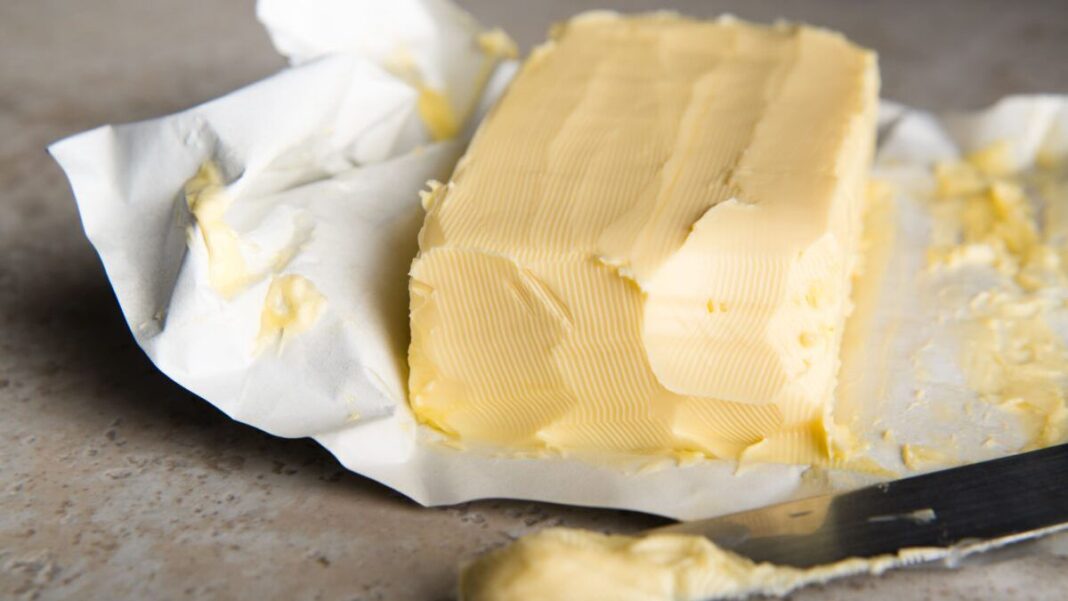


In this series, we will break down the actual health effects of vegetable oils and whether they are better alternatives to saturated fats. Follow this series to find out whether what you are using to cook with is really the best option.
For half a century, health agencies and experts have recommended vegetable oils over saturated fats for cooking. They have told the public that vegetable oils are cardiac-protective. However, research suggests that these oils may not be as innocuous as they seem.
Half-Century-Old Dietary Recommendation May Be Linked to Cancer
Debunking the Dogma About Fat (Part 1)
When the term “cooking oil” is mentioned, the immediate image that comes to mind for most people is pale and yellow liquid in large transparent bottles labeled “vegetable oil.”
Though vegetable oils are a staple cooking oil for many Americans now, they are only a recent invention. Decades ago, common fats used in cooking were animal fats such as lard, butter, and suet, all of which tend to have a higher saturated fat ratio.
The current switch to vegetable oils can be traced back to researcher and physiologist Ancel Keys, who hypothesized in the 1950s that replacing animal fats higher in saturated fats with vegetable oils, which tend to be higher in polyunsaturated fat, would lower blood cholesterol levels and in turn, reduce heart disease.
This idea, and various market changes, led to the widespread adoption of this dietary shift. And based on the available evidence, it seems that the hypothesis wasn’t entirely accurate.
While vegetable oils do lower blood cholesterol, they don’t necessarily reduce coronary heart disease mortalities. In fact, many may put consumers at risk of other harm.
Nevertheless, Keys’s hypothesis has persisted.
Starting in the 1960s, the American Heart Association put forward recommendations to switch from animal fat to vegetable oils. The idea influenced the first edition of Dietary Guidelines for Americans in 1980. Both the American Heart Association and the Dietary Guidelines for Americans, valid from 2020 to 2025, have recommended polyunsaturated fatty acid consumption over saturated fat.
By Marina Zhang
Read Full Article on TheEpochTimes.com
Vegetable Oils Continue to Be Recommended Despite Health Risks: 3 Main Reasons
Debunking the Dogma About Fat (Part 2)
Though research repeatedly shows that vegetable oils, otherwise known as seed oils, are harmful when cooked, dietary guidelines and health organizations continue to promote polyunsaturated vegetable fats over animal fats.
Nina Teicholz, an investigative journalist who spent a decade researching fats and oils, gave three major potential reasons why the recommendation has not changed despite a lack of evidence of vegetable oils’ purported benefits and discrepancies in studies that point to possible cancer risks.
By Marina Zhang
Read Full Article on TheEpochTimes.com
The Saturated Fats Good for High-Heat Cooking
Debunking the Dogma About Fat (Part 3)
For half a century, health agencies and experts have recommended vegetable oils over saturated fats for cooking. They have told the public that vegetable oils are cardioprotective. However, research suggests these oils may not be as innocuous as they seem.
While saturated fat has historically faced criticism due to its association with blood cholesterol levels and coronary heart disease, emerging studies have provided a more nuanced understanding of this topic, including this fat’s potential advantages in high-temperature cooking.
Compared to polyunsaturated fats, saturated fats exhibit greater stability when exposed to heat and oxygen. However, the type of saturated fat and its smoke point still determine how they should be used appropriately.
The following is a list of vegetable and animal oils known for their significant saturated fat content.
By Marina Zhang
Read Full Article on TheEpochTimes.com
How Popular Cooking Oils Stack Up in Terms of Oxidation
Debunking the Fat Dogma (Part 4)
Vegetable oils have been recommended as a healthier alternative to saturated animal fats for decades. But emerging data suggest the opposite—at least when it comes to the heavily refined, denatured seed oils most people are consuming.
Most vegetable oils consist primarily of monounsaturated and polyunsaturated fats that are more prone to oxidation than saturated animal fats. To explain that in molecular detail, the susceptibility of individual fatty acids to oxidation depends on their length and the presence or absence of double bonds.
Saturated fats have no double bonds, making them the least prone to oxidation. Monounsaturated fats have one double bond, making them less stable. Polyunsaturated fats can have two or more double bonds, making them even less stable.
This oxidation can lead to inflammation and the formation of cancer-causing byproducts, such as aldehydes, according to professor Martin Grootveld from De Montfort University in the UK, who specializes in bioanalytical chemistry and chemical pathology.
By Marina Zhang
Read Full Article on TheEpochTimes.com
Saturated Fat: The Great Debate
Debunking the Fat Dogma (Part 5)
For more than half a century, central health authorities told the public to limit saturated fat intake as much as possible to prevent heart disease.
But a growing numbers of scientists and researchers have come to prominence challenging this narrative, arguing that saturated fat may not be that harmful and limits on its intake should not be so stringent.
A Matter of Scientific Interpretation
Scientists from the two sides are looking at different studies on saturated fat and coming to different conclusions on its health effects.
The current dietary guidelines are based on the “diet-heart hypothesis,” which postulates that saturated fats are the leading culprits of cardiovascular disease.
The theory posits that when someone consumes food containing saturated fat, this fat increases LDL cholesterol (so-called “bad” cholesterol). This cholesterol accumulates in the blood vessels, forming atherosclerotic plaques that restrict and ultimately block blood flow, causing coronary heart disease.
However, this link between LDL cholesterol and heart disease has been challenged, and so has the role of saturated fat in causing heart disease.
The Dietary Guidelines for Americans recommend limiting saturated fat to 10 percent or less of one’s daily calories, while the American Heart Association advises keeping saturated fat intake at 5 to 6 percent of one’s daily calories.
By Marina Zhang
Read Full Article on TheEpochTimes.com
‘Bad’ Cholesterol May Not Be So Bad
Debunking the Fat Dogma (Part 5)
Doctors say there are better alternatives to LDL cholesterol tests
Doctors and researchers are now challenging whether LDL cholesterol, also known as bad cholesterol, is really as bad as we once feared.
For decades, low-density lipoprotein (LDL) cholesterol was one of the most critical indicators doctors measured for heart disease. However, research shows that LDL cholesterol does not always effectively assess a person’s cardiovascular risk.
Low-Density Lipoproteins Versus LDL Cholesterol
Many people with normal LDL cholesterol levels may experience heart attacks, cardiovascular research scientist James DiNicholantonio told The Epoch Times via email.
The number of LDL particles, rather than LDL cholesterol, may be a more relevant risk factor.
Studies have shown that LDL cholesterol levels predict higher cardiovascular risk 40 percent of the time, while apolipoprotein B (apoB) concentration, the summation of all LDL particles and their precursors, is associated with elevated risk 70 percent of the time.
Other studies comparing LDL cholesterol levels against cholesterol levels in LDL and its precursors, apoB number, and LDL particle number, also found that the latter two tend to be stronger predictors of risk, while LDL cholesterol is the weakest.
So what is the difference between LDL particles and LDL cholesterol?
An LDL particle is a type of lipoprotein made by the liver. Its primary function is to deliver triglycerides from the liver to other cells in the body. Transporting cholesterol is more akin to an LDL’s side hustle. The cholesterol that an LDL transports is called LDL cholesterol.
High-density lipoprotein (HDL) and LDL cholesterols contain the same cholesterol; their carriers are what differ. LDL cholesterol can also leak into blood vessels, causing atherosclerosis, thereby earning its “bad” reputation.
By Marina Zhang