
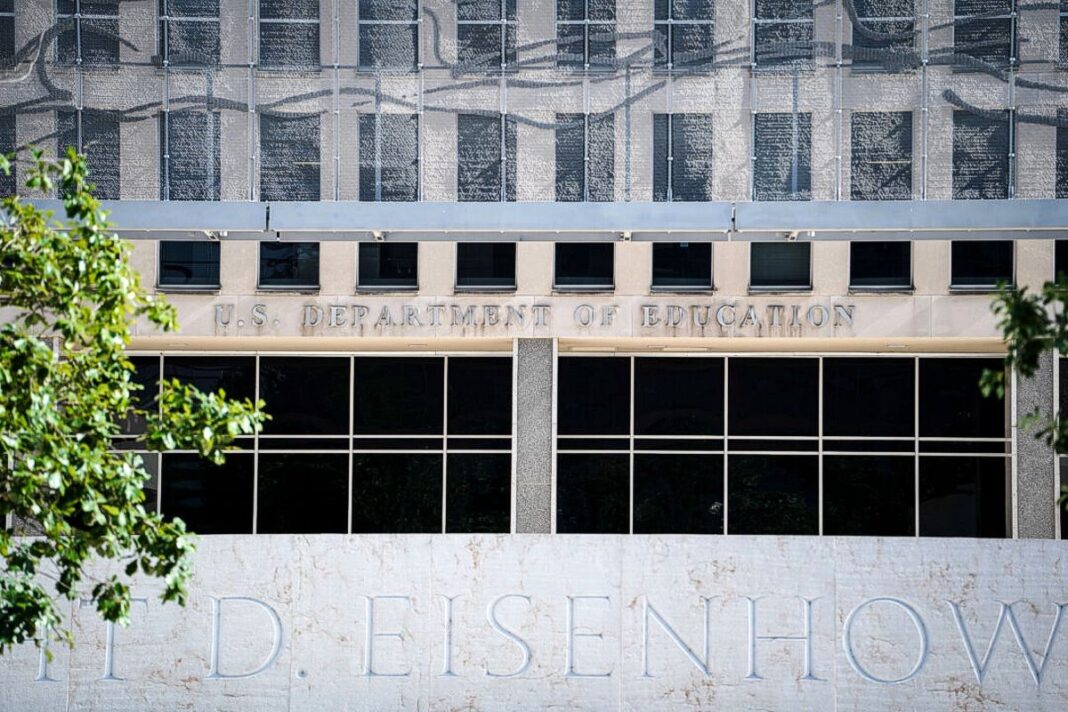


The American Federation of Teachers previously sued Trump to maintain the existing arrangement for student borrowers.
The U.S. Department of Education has so far denied requests from more than 300,000 existing student loan recipients seeking new repayment terms, according to documents filed in a federal court earlier this month.
The Dec. 15 status report in the American Federation of Teachers’ ongoing lawsuit against the federal government, filed in the District of Columbia earlier this year, said President Donald Trump’s administration rejected 327,955 applications from borrowers who sought “the lowest monthly payment possible.”
More than 800,000 applications for income-driven repayment plans, which would result in lower monthly payments, are pending, according to court papers.
The Trump administration is required to provide these status reports under an Oct. 17 agreement between the two sides in this case that stipulates the Department of Education will continue to process applications for repayment plans based on income, even though Trump has ended President Joe Biden’s far-reaching student loan forgiveness initiatives.
The lawsuit alleges that the president did not have the authority to disrupt existing federal programs such as the Income-Based Repayment Plan, as well as Income-Contingent Repayment, Pay as You Earn, and Public Service Loan Forgiveness.
The Dec. 15 status report said the Trump administration did not disclose the total number of rejected applications in the previous required reporting period because of “logistical issues related to the government shutdown in October–November.”
Earlier this week, the Department of Education confirmed that it will soon begin garnishing wages from borrowers who have defaulted on their loans.
Students typically go into default if a payment hasn’t been made in 270 days, according to the Federal Student Aid website.
Under federal law, loan holders can order employers to withhold 15 percent of the borrower’s pay without taking them to court until the loan is paid back. Those who receive the notices have the right to a formal hearing or the chance to negotiate other terms with the Education Department, according to the website.




![Presidential ad: “It’s Morning Again in America” Ronald Reagan (R) v Walter Mondale (D) [1984—PRIDE]](https://www.thethinkingconservative.com/wp-content/uploads/2025/12/maxresdefault-327-1068x601.jpg)

