

States and utilities can submit applications to secure funding by May 20, with the department set to select projects by August.
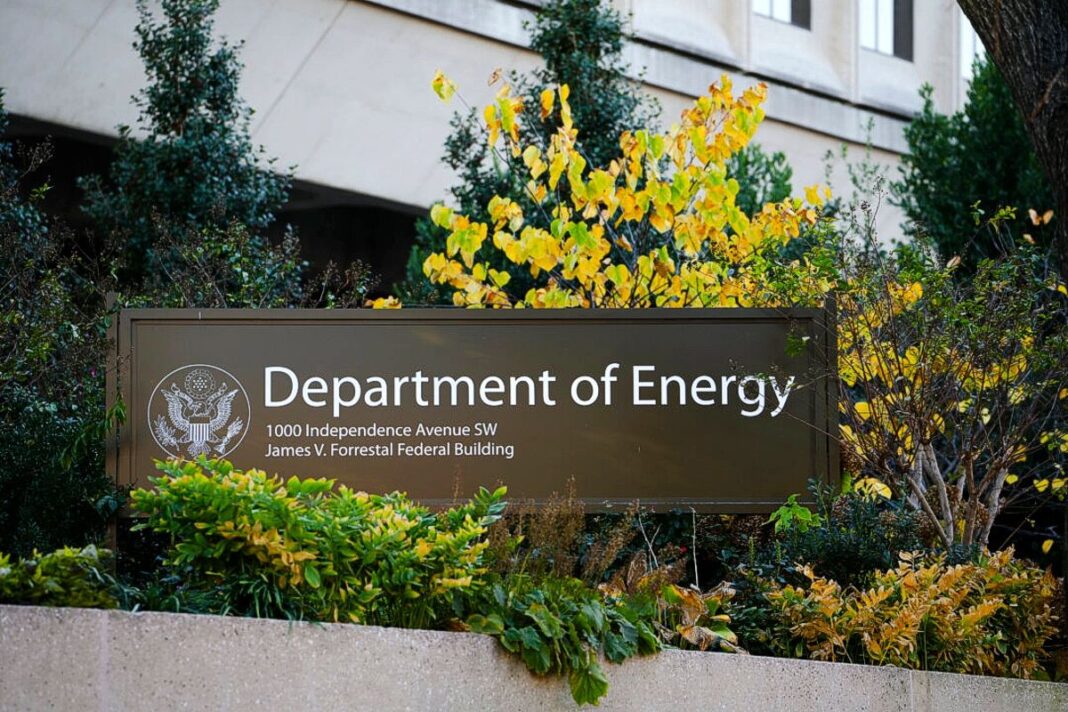
The Department of Energy (DOE) has announced a $1.9 billion funding opportunity for projects aimed at speeding up improvements to the nation’s power grid to meet rising electricity demand while bringing down costs, the department said in a March 12 statement.
The money comes from the $10.5 billion authorized for a five-year grid resilience program under the Infrastructure Investment and Jobs Act of 2021. The funds were to be disbursed to states and electric utilities over five years.
The DOE will prioritize projects that replace existing power lines with higher‑capacity conductors, expand grid capacity, increase efficiency, lower prices for consumers, and improve overall system reliability and security, the statement said.
Project applications to secure funding are due by May 20, with the DOE set to select projects by August.
The funding opportunity will stabilize and optimize grid operations, strengthening it for rapid growth, said Katie Jereza, assistant secretary at the DOE’s Office of Electricity.
Secretary of Energy Chris Wright said, “For too long, important grid modernization and energy addition efforts were not prioritized by past leaders.
“Thanks to President [Donald] Trump, we are doing the important work of modernizing our grid so electricity costs will be lowered for American families and businesses.”
DOE said its latest action was in compliance with the Jan. 20, 2025, executive order signed by Trump—“Unleashing American Energy.”
In the order, Trump said burdensome and ideologically motivated regulations have impeded the development of America’s vast energy resources, leading to high energy costs for citizens and limited generation of reliable, affordable electricity.
The president ordered an immediate review of all agency actions that potentially burden the development of domestic energy resources.
Electricity Demand
The $1.9 billion funding to strengthen America’s grid comes amid concerns about the state of the country’s power infrastructure.
A significant portion of the power network dates back to the 1960s and ‘70s, according to an October 2023 statement from the DOE. As of 2023, 70 percent of transmission lines were over 25 years old and nearing the end of their life cycles.
“This has major consequences on our communities: power outages, susceptibility to cyberattacks, or community emergencies caused by faulty grid infrastructure,” the department said at the time.
The rise of artificial intelligence (AI) data centers, which require large amounts of electricity, adds to the problem.