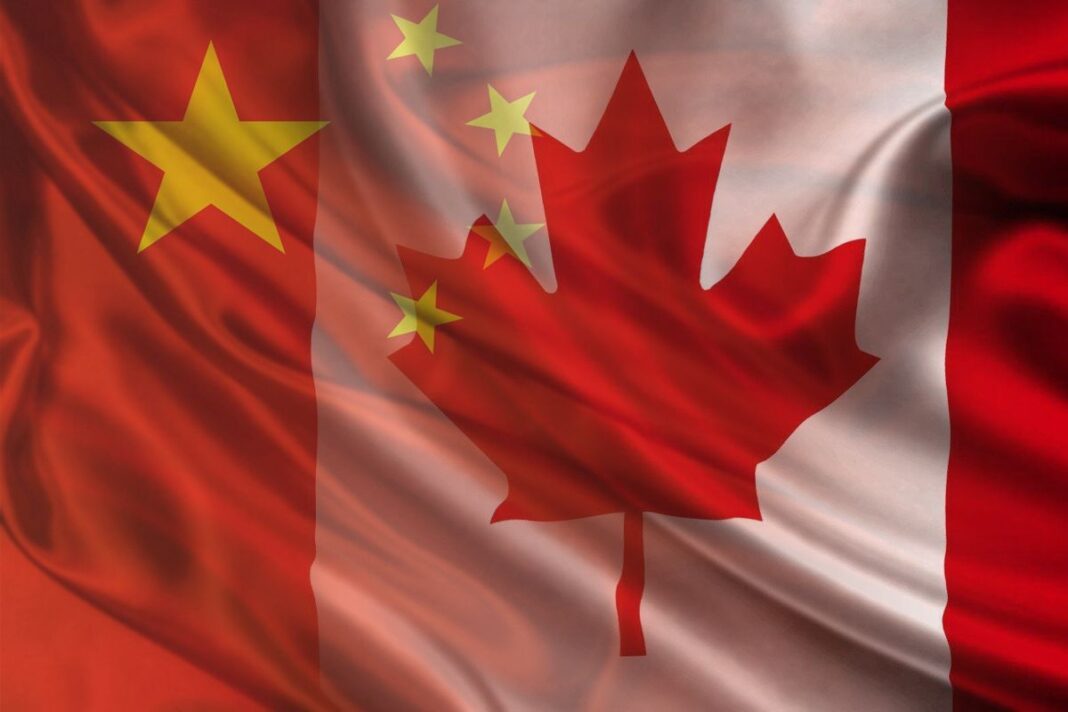

From Wheat to Leverage: How the CCP Exploits Canada’s Regional Fault Lines

5Mind. The Meme Platform

“This ‘induce dependency, then weaponize it’ strategy is a hallmark of hybrid economic warfare,” says Scott McGregor, an author and intelligence professional.

News Analysis

Prime Minister Pierre Trudeau’s effort to forge diplomatic ties with the Chinese Communist Party (CCP) in 1970 proved highly consequential, opening the floodgates for other Western Bloc nations to follow suit and bringing the regime out of isolation. But another move made by Canada years earlier has continued to entangle its relationship with the communist regime.

In 1958, as millions were starving to death in China due to the famine caused by CCP leader Mao Zedong’s disastrous Great Leap Forward, China bought a small amount of grain from Canada, which Ottawa took note of as a sign of an emerging market. And after two Chinese agents who visited Canada in 1960 struck a deal for wheat worth $60 million, the government of John Diefenbaker, a self-declared staunch anti-communist, seized the opportunity to forge a $420 million deal for wheat and barley exports to China.

To be sure, there were dissenting voices in cabinet amid concerns about U.S. sanctions against the CCP, but ultimately the prospects of a lucrative new trade channel prevailed.

And as Canada’s agricultural and agri-food/fish exports to China have since grown to an annual $11.5 billion, so has China’s leverage over Canada each time Beijing wants to steer Ottawa in a certain direction. Very often, during heightened Beijing-Ottawa tensions, sectors and regions most impacted by potential revenue loss, should China block imports, act as local champions urging Ottawa to follow Beijing’s wishes.

“By targeting key sectors in select jurisdictions, Beijing creates localized economic pain, encouraging provincial leaders to advocate for pro-China positions in Ottawa,” Scott McGregor, an author and a former Canadian Armed Forces intelligence operator and intelligence adviser to the RCMP, told The Epoch Times.

He notes that Canada’s agricultural sector, and particularly canola, pork, and soy, is “highly exposed to CCP influence” due to the sector’s high dependence on exports to China.

The latest example of this is China slapping 100 percent tariffs on Canadian canola products at a time when Canada is mired in trade tensions with the United States and China is sending signals for Ottawa to move to its front rather than Washington’s. Against this backdrop, some premiers, such as Saskatchewan’s Scott Moe, whose province is a heavy canola exporter, are asking for closer trade ties with China.

But this CCP tactic of using imports as leverage has been seen before on multiple occasions, including when Canada arrested Huawei executive Meng Wanzhou on a U.S. extradition request in late 2018 and China blocked Canadian agricultural imports shortly after, in addition to detaining Canadian citizens Michael Kovrig and Michael Spavor in retaliation.


By Omid Ghoreishi

Read Full Article on TheEpochTimes.com

Contact Your Elected Officials
The Epoch Times
The Epoch Timeshttps://www.theepochtimes.com/
Tired of biased news? The Epoch Times is truthful, factual news that other media outlets don't report. No spin. No agenda. Just honest journalism like it used to be.

EU Commissar: Free Speech Is a Virus, Censorship the Vaccine

Ursula von der Leyen likened “malign information” to a virus, arguing society must be inoculated through “prebunking,” widely seen as censorship.

The family fault line

The future of humanity rests not upon government, but with the family. A principle that is as bold as it is true and profound.

Media is an Arm of the DNC

Those on the conservative right have realized both television, Hollywood, and the web have been biased in favor of the left and their causes and positions.

When Narrative Replaces Law

When media abandons its responsibility to inform and chooses to provoke, it does not distort truth. It creates the very chaos it then pretends to lament.

Behind the Curtain

At times people sense something is wrong. Events seem disconnected, yet together form a pattern of irrational policies, cultural shifts, and baffling narratives.

New York Civil Trial to Examine Liability in Teen Gender Surgery Case

The trial will determine liability for medical providers accused of malpractice in a gender dysphoria treatment involving surgery on a 16-year-old patient.

ICE Agent Involved in Shooting Is Getting Death Threats, Border Czar Says

Border czar Tom Homan defended ICE amid protests against the agency in the wake of the shooting death of a woman in Minneapolis.

Tens of Thousands Join Protests in Minneapolis After ICE Shooting

Tens of thousands of people took to the streets of Minneapolis on Jan. 10 to protest the shooting of Renée Nicole Good by an ICE officer,

Schools Increasingly Consider Rewarding Teachers for Results, Not Seniority

Across many states and hundreds of school districts, traditional teacher pay based on seniority is being replaced by merit and performance models.

Treasury Secretary Says US Can Easily Cover Any Tariff Refunds

The Treasury currently has $774 billion, more than enough to cover refunds if the Supreme Court rules against the government, Scott Bessent says.

Trump Declares National Emergency to Shield Venezuelan Oil Revenues Held in US Custody

Trump signed an EO declaring a national emergency to block courts or private creditors from seizing Venezuelan oil revenues held in U.S. Treasury accounts.

Trump Directs Purchase of $200 Billion in Mortgage Bonds

President Trump on Thursday ‍said the United States will purchase $200 billion ‌in mortgage bonds, with the goal of bringing down housing costs.

Trump Says US Will Begin Land Strikes on Cartels in Mexico

President Donald Trump announced in an interview aired Jan. 8 that the United States would begin launching strikes on cartels in Mexico.
spot_img

Related Articles