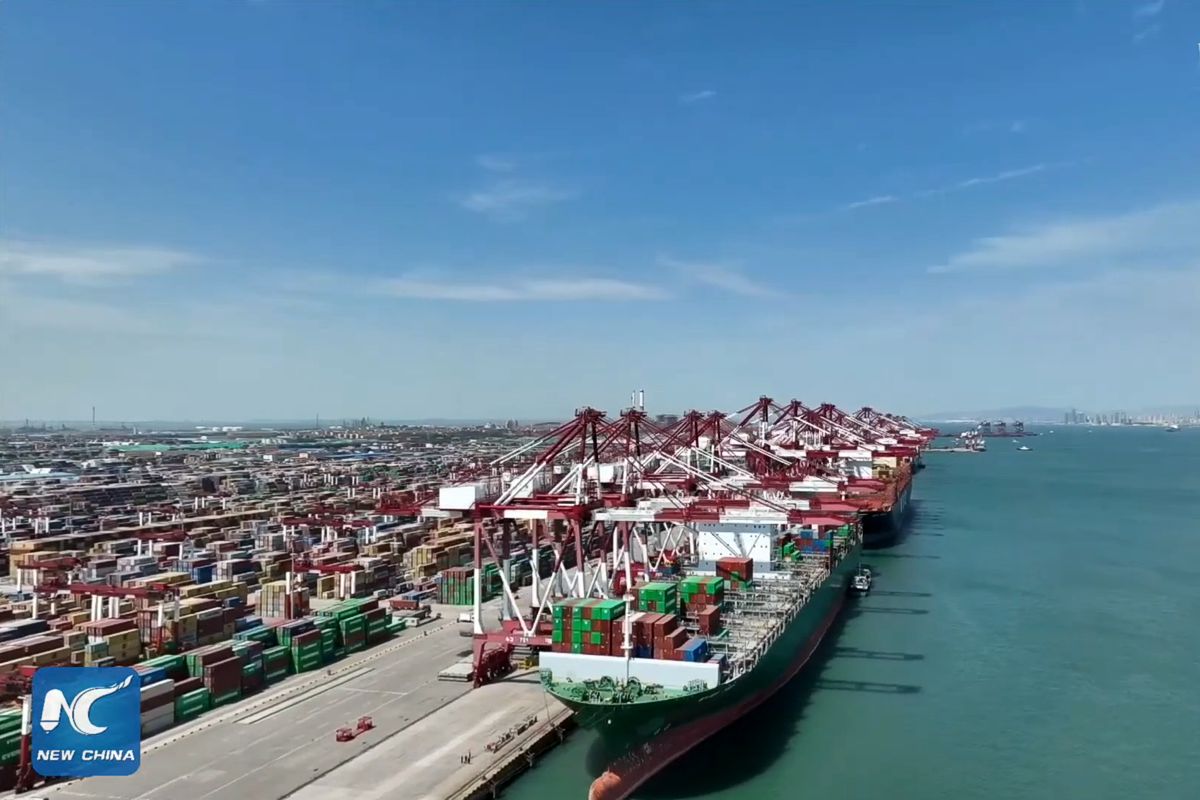


Tariffs on foreign partners played a big role in China’s economic transformation and could be a big factor in the U.S. recovery.
The common understanding of tariffs is that they are bad for trade. That can be true, but not always. They certainly helped China develop in a number of ways.
But before that discussion, a brief review of tariffs is helpful.
Yes, Tariffs Can Raise Prices
In simple terms, tariffs are a tax foreign companies must pay to sell their goods in a target market, such as China or the United States. The typical result is that foreign goods become more expensive because they raise the price of the goods they’re selling via the “market access tax” that tariffs truly are.
The impact of tariffs on prices can ripple through the economy. When the price of goods rises, the prices of other goods and services increase as well, because the tariff costs are passed from producers to importers, distributors, wholesalers, retailers, and resellers before being passed on to consumers.
Not Always Intended to Protect Domestic Producers
Tariffs are often meant to protect domestic producers from foreign producers with lower labor costs, government subsidies, economies of scale, and other advantages. Domestic producers often raise their prices as well to capture more profit because their foreign competitors have raised theirs. For most goods, higher prices typically mean lower overall consumption.
In the case of China in the late 1980s and throughout the ‘90s, there were few domestic producers of anything the developed world wanted. China didn’t make cars, furniture, computers, appliances, etc., so there was no need to protect non-existent domestic producers. At the same time, labor costs in developed economies were high by global standards. China had abundant, cheap labor, offering huge profit opportunities for foreign producers.
And yet China still imposed tariffs. There were several good reasons for that.
Wallowing in deep poverty from its planned economy, China made its large labor pool available to the developed world in exchange for technologies, technical know-how, and direct investment. China charged tariffs upfront to make money immediately, long before any of their cheap labor and manufacturing capabilities had come to fruition. It also acquired hard currency, which it desperately needed.
By James Gorrie