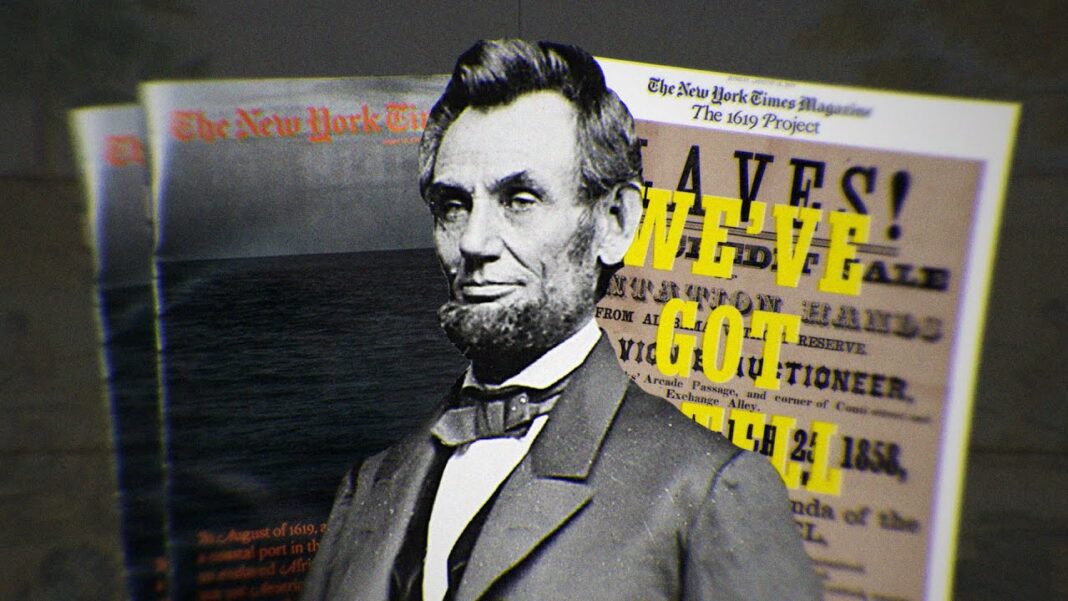


I Helped Fact-Check the 1619 Project. The Times Ignored Me.

5Mind. The Meme Platform
Politico

The paper’s series on slavery made avoidable mistakes. But the attacks from its critics are much more dangerous.

On August 19 of last year I listened in stunned silence as Nikole Hannah-Jones, a reporter for the New York Times, repeated an idea that I had vigorously argued against with her fact-checker: that the patriots fought the American Revolution in large part to preserve slavery in North America.

Hannah-Jones and I were on Georgia Public Radio to discuss the path-breaking New York Times 1619 Project, a major feature about the impact of slavery on American history, which she had spearheaded. The Times had just published the special 1619 edition of its magazine, which took its name from the year 20 Africans arrived in the colony of Virginia—a group believed to be the first enslaved Africans to arrive in British North America.

Weeks before, I had received an email from a New York Times research editor. Because I’m an historian of African American life and slavery, in New York, specifically, and the pre-Civil War era more generally, she wanted me to verify some statements for the project. At one point, she sent me this assertion: “One critical reason that the colonists declared their independence from Britain was because they wanted to protect the institution of slavery in the colonies, which had produced tremendous wealth. At the time there were growing calls to abolish slavery throughout the British Empire, which would have badly damaged the economies of colonies in both North and South.”

I vigorously disputed the claim. Although slavery was certainly an issue in the American Revolution, the protection of slavery was not one of the main reasons the 13 Colonies went to war.

The editor followed up with several questions probing the nature of slavery in the Colonial era, such as whether enslaved people were allowed to read, could legally marry, could congregate in groups of more than four, and could own, will or inherit property—the answers to which vary widely depending on the era and the colony. I explained these histories as best I could—with references to specific examples—but never heard back from her about how the information would be used.

Despite my advice, the Times published the incorrect statement about the American Revolution anyway, in Hannah-Jones’ introductory essay. In addition, the paper’s characterizations of slavery in early America reflected laws and practices more common in the antebellum era than in Colonial times, and did not accurately illustrate the varied experiences of the first generation of enslaved people that arrived in Virginia in 1619.

By LESLIE M. HARRIS

Leslie M. Harris is professor of history at Northwestern University, and author of In the Shadow of Slavery: African Americans in New York City, 1626-1863 and Slavery and the University: Histories and Legacies.


Read Full Article on Politico.com

Contact Your Elected Officials
The Thinking Conservative
The Thinking Conservativehttps://www.thethinkingconservative.com/
The goal of THE THINKING CONSERVATIVE is to help us educate ourselves on conservative topics of importance to our freedom and our pursuit of happiness. We do this by sharing conservative opinions on all kinds of subjects, from all types of people, and all kinds of media, in a way that will challenge our perceptions and help us to make educated choices.

Funding Dissent: Smash for Cash – A Breakdown of Manufactured Outrage in Modern America

Today a disturbing trend has emerged. Protests are no longer always organic expressions of public will, but staged performances.

 DOGE RIP: Full of Sound and Fury but Accomplishing Nothing

DOGE’s disbanding is irrelevant; its wrecking-ball reform approach failed. It should have learned from Clinton’s Reinventing Government and worked with Congress.

The Dismal Failure of Multiple Choice Testing

Multiple-choice tests undermine true mastery; real competence is proven through written problem-solving, not guessing, leading to flawed student assessment.

Is Actor Tom Hanks In Trouble?

For years rumors of actor Tom Hank visiting Epstein’s tropical Little Saint James Island were sex acts with minor children allegedly took place.

It Is Not Affordable To Vote Democrat

Democrats caused the affordability crisis, despite media claims it helps them. President Trump is working to fix the problems voters face.

Officials Give New Details on $700 Million Google Settlement

Google has agreed to pay out a $700 million settlement to people who paid to download apps through the Google Play Store.

Trump Admin Approves 6 States to Restrict Food Stamps

Six more states are able to restrict food stamps starting in 2026, federal officials announced on Dec. 10.

USA Rare Earth Accelerates Plans for Commercial Rare Earth Production

USAR says early pilot results prompted faster plans to begin commercial rare-earth mineral production at its Round Top mine in West Texas.

Amazon Doubles Same-Day Fresh Grocery Delivery to 2,300 US Locations

Amazon said its perishable grocery sales are 30 times higher than in January, as more customers now rely on its same-day delivery option.

Trade Chief Jamieson Greer Indicates Progress on US–India Trade Deal

U.S. Trade Representative Jamieson Greer hinted that the United States and India are making progress on a deal.

Trump Touts Lower Prices, Bigger Paychecks in 1st Stop of National Tour

President Trump told an energetic crowd at a Dec. 9 rally that his administration’s policies are lowering the cost of living nationwide.

Trump Announces $12 Billion Farm Aid Program

Trump made the announcement at a roundtable at the White House to discuss his economic aid package for American farmers.

Alina Habba Resigns as Acting US Attorney for New Jersey

Acting U.S. Attorney Alina Habba resigned Monday after a federal appeals court ruled she had been serving in the position unlawfully.
spot_img

Related Articles