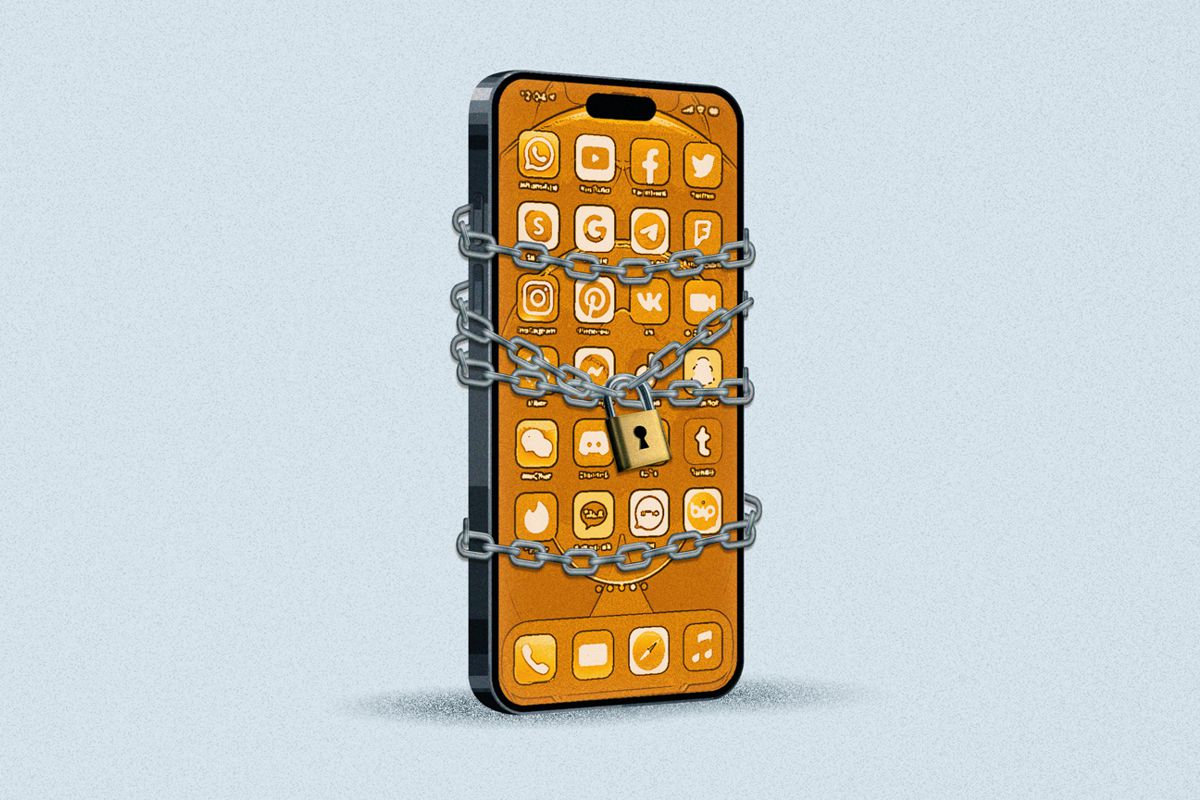


My attention was no longer my own, and I wanted it back.
I made the decision around midnight. That’s when I noticed the clock while scrolling Instagram for a “few minutes” before bed. Nearly two hours had passed.
“Enough!” I said, for the umpteenth time, and vowed to make a clean sweep.
Social media was just part of the problem.
On a given day, I was also checking three messaging apps, half a dozen news sites, YouTube, live sports scores, and good old-fashioned email—all three accounts. Television had become something I listened to while trolling for news, gossip, or cat videos.
My attention was no longer my own, and I wanted it back.
So I bought a flip phone, put my smartphone in a drawer, and set my internal clock to 2006, the year before the iPhone was released.
For the next 31 days, I read books, wrote down driving directions, sharpened my listening skills, and navigated two major holidays without so much as Candy Crush for comfort.
The experience was different than I imagined it might be. I learned much about the role of the smartphone in my life and how it came to devour so much of my focus.
And I learned that I wasn’t alone.
Smartphone Usage
The last thing I did with my smartphone was post a photo of my new flip phone on social media and humble brag about my bold experiment.
Friends began messaging almost immediately, and their curiosity betrayed a hint of longing. In fact, most Americans seem to have an uneasy relationship with their phone.
More than 90 percent of Americans have a smartphone, according to Pew Research. And those devices consume an increasingly large share of our attention.
Americans spend an average of 5 hours and 16 minutes a day on their phones, according to a 2025 report by Harmony Healthcare IT. That’s a 14 percent increase over the preceding year. Nearly half (49 percent) report feeling addicted to their phones. More telling is that more than half of Americans (52 percent) say they want to reduce their phone time.
For parents with kids at home, the stakes are higher. About 40 percent of parents would like to exercise more control over their child’s screen time, according to a Pew survey. The same percentage reports arguments with their teenagers over phone use.
The reasons people list for wanting to reduce their phone time largely mirror my own—to gain control of my time, increase focus, get more sleep, and improve overall health.
I took that hopeful attitude into my monthlong trial.