

Core inflation, which strips out food and energy, also eased considerably to 2.6 percent.
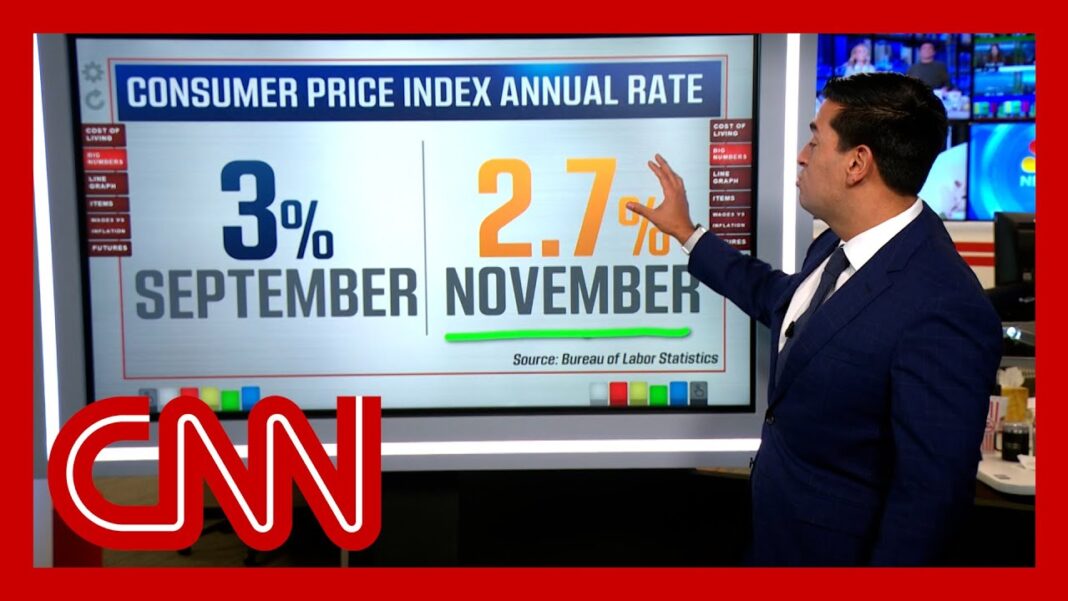
Price pressures may be cooling across the economy, with the 12‑month inflation rate slowing sharply in November.
The annual inflation rate eased to 2.7 percent last month—the lowest level since July—from 3 percent in September, according to the Bureau of Labor Statistics.
Economists had penciled in a reading of 3.1 percent.
The core consumer price index (CPI), which excludes volatile energy and food prices due to their noisy signals, also cooled to 2.6 percent from 3 percent in September. This represented the lowest reading since March 2021.
The market consensus was that core inflation would hold steady at 3 percent.
This is the first CPI report since the 43-day government shutdown. As a result, many typical data points were unavailable, and the one-month percent changes were not included because the October numbers are missing.
A federal funding lapse prevented the bureau from conducting its October 2025 survey, and the agency had no mechanism to obtain the data once operations resumed.
From September to November, the indexes for energy and shelter climbed 1.1 percent and 0.2 percent, respectively.
The food index ticked up 0.1 percent. Within this category, egg prices are down more than 13 percent year over year, but beef has surged about 15 percent.
Both kitchen staples have experienced tremendous volatility over the past year. The Avian flu outbreak caused egg prices to spike earlier this year, but they have since eased due to a blend of administration policy actions and market dynamics.
A mix of declining stocks and higher input costs has boosted beef prices, forcing the White House to increase imports from Argentina to ease consumer costs.
Tariff-sensitive items were little changed over the past 12 months.
The apparel index is up 0.2 percent year over year, while the new-vehicle index has risen 0.6 percent over the 12 months ending in November. Additionally, on an annualized basis, appliances have increased by 0.5 percent, smartphones have declined by 9.4 percent, and footwear has dipped by 0.1 percent.
By Andrew Moran