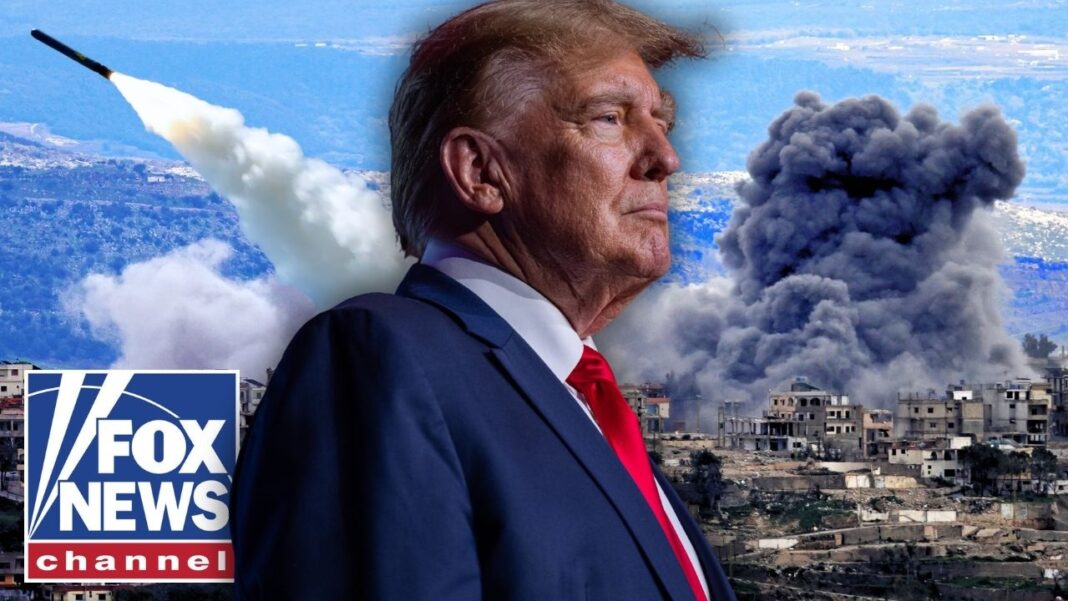
Washington has put forward a 15-point plan that Tehran has rejected and issued its own terms.
Iran has rejected a U.S.-backed cease-fire proposal and set out its own set of five conditions for ending the war, according to an Iranian regime official’s remarks to state media, which comes as the Trump administration pursues diplomatic contacts through intermediaries in an effort to settle the conflict diplomatically.
An anonymous senior Iranian political-security official told Press TV that Tehran would not accept externally dictated terms, saying that, “Iran will end the war when it decides to do so and when its own conditions are met.”
The official, who said that Iran’s military would continue inflicting “heavy blows” on its enemies until its demands are met, said Tehran’s conditions include a halt to “aggression and assassinations,” guarantees against future conflict, war reparations, an end to fighting across all fronts including Iran’s regional proxies, and recognition of its sovereignty over the Strait of Hormuz.
The comments come as U.S. officials, according to Israeli sources briefed on the matter who spoke to Epoch Magazine Israel, have advanced a 15-point proposal to Iranian figures via intermediaries that would require Iran to halt uranium enrichment, dismantle key nuclear facilities, curb its missile program, and stop supporting regional proxies in exchange for sanctions relief.
The Epoch Times has reached out to the White House for comment.
Diplomacy Efforts Continue Amid Regional Strikes
Alongside the diplomatic push, fighting across the region continued on March 25, with Iran launching fresh missile and drone attacks on Israel, and targeting energy infrastructure across the Persian Gulf.
Countries including Saudi Arabia and Kuwait reported intercepting drones aimed at key facilities, while Israel has continued strikes on Iranian military and industrial sites.
President Donald Trump, meanwhile, said on March 24 that the United States was engaged in negotiations with Iran on ending the conflict, which has disrupted shipments of oil and key commodities like fertilizer inputs, fueling price swings and raising concerns about global supply shortages.
The U.S. proposal, according to the Israeli sources, was conveyed to Iranian figures through Pakistan and shared with Israeli officials. The sources said Washington was awaiting a response from Tehran on whether it would agree to further talks.
It remains unclear who is engaging with the U.S. proposal on Iran’s side. Iranian parliamentary speaker Mohammad Bagher Ghalibaf previously publicly denied that any negotiations with Washington were taking place, and an Iranian military spokesman recently signaled there were no signs of de-escalation.
The Iranian regime issued its 5-point counterproposal via Press TV, confirmed by the Consulate General of Iran in India.
“Iran has rejected the U.S. proposal conveyed through a friendly regional mediator and is prepared to continue its defense and inflict heavy blows on the enemy,” the consulate statement said.
Iranian regime figures told the mediator that Iran will only accept a cease-fire once its conditions are accepted and that, until then, “no negotiations will be conducted.”
By Tom Ozimek