Netanyahu said Trump will be awarded the prize ‘for his tremendous contributions to Israel and the Jewish people.’
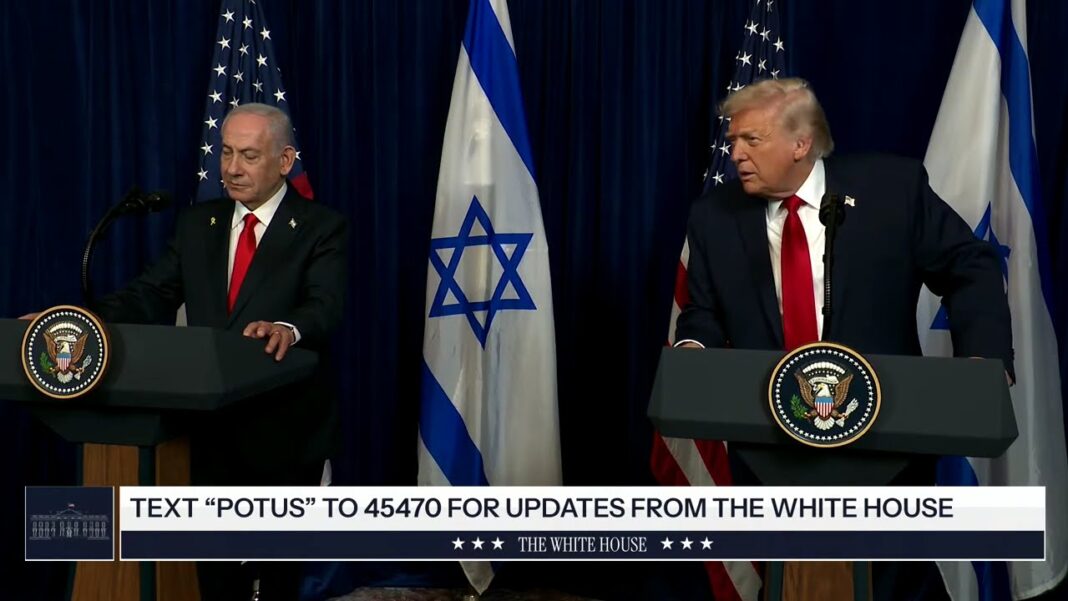
President Donald Trump will receive Israel’s highest civilian honor, the Israel Prize, Israeli Prime Minister Benjamin Netanyahu said on Dec. 29.
Trump will make history getting the prize, Netanyahu noted during a press conference with the U.S. president at Trump’s Mar-a-Lago estate in Florida.
“We decided to break a convention too, or create a new one, and that is to award the Israel Prize, which in almost our 80 years we’ve never awarded to a non-Israeli, and we’re going to award it this year to President Trump,” Netanyahu said.
Netanyahu said Trump will be awarded the prize “for his tremendous contributions to Israel and the Jewish people.”
“This reflects the overwhelming sentiment of Israelis across the spectrum,” he added. “They appreciate what you’ve done to help Israel and to help our common battle against the terrorists and those who want to destroy our civilization.”
The Israeli leader invited Trump to Israel to receive the prize on the Jewish state’s independence day on April 22.
Trump said that being the recipient of the prize is “surprising and very much appreciated.” He said he would consider attending the ceremony.
Trump was informed of winning the prize during his meeting with Netanyahu, who put Israel’s education minister, Yoav Kisch, on the phone, according to a video released by Netanyahu’s office. Kisch, in turn, told Trump about the prize. He told Trump that the prize committee “noted your significant and consistent efforts on behalf of the Jewish people and the State of Israel.”
Kisch went on to laud Trump for his contribution in fighting anti-Semitism and brokering a cease-fire between Israel and Hamas that resulted in the release of the remaining hostages held by Hamas in Gaza. A final dead hostage has yet to be returned to Israel.
Trump called getting the prize “a great honor.”
The Israel Prize is usually for Israeli citizens, although there is a special category for “lifetime achievement and exceptional contribution to the nation” that allows for non-citizens or non-residents to receive the prize. Kisch also revised the rules in July to allow for Jews living abroad to be eligible.