Crude jumped to multi-week highs after Trump threatened Iran war escalation, unsettling markets and raising fears of prolonged supply disruptions.
Oil prices jumped sharply on Thursday after U.S. President Donald Trump signaled an escalation of military action against Iran, dampening hopes for a near-term diplomatic resolution and raising concerns about prolonged disruptions to global energy supplies.
Benchmark Brent crude rose by $8.34, or 8.2 percent, to $109.50 per barrel by 7:39 a.m. ET, while U.S. West Texas Intermediate (WTI) gained $9.23, or 9.2 percent, to $109.35. Both contracts touched their highest levels since early March and were on track for their largest daily gains in three weeks, though still below peaks above $119 reached earlier in the conflict.
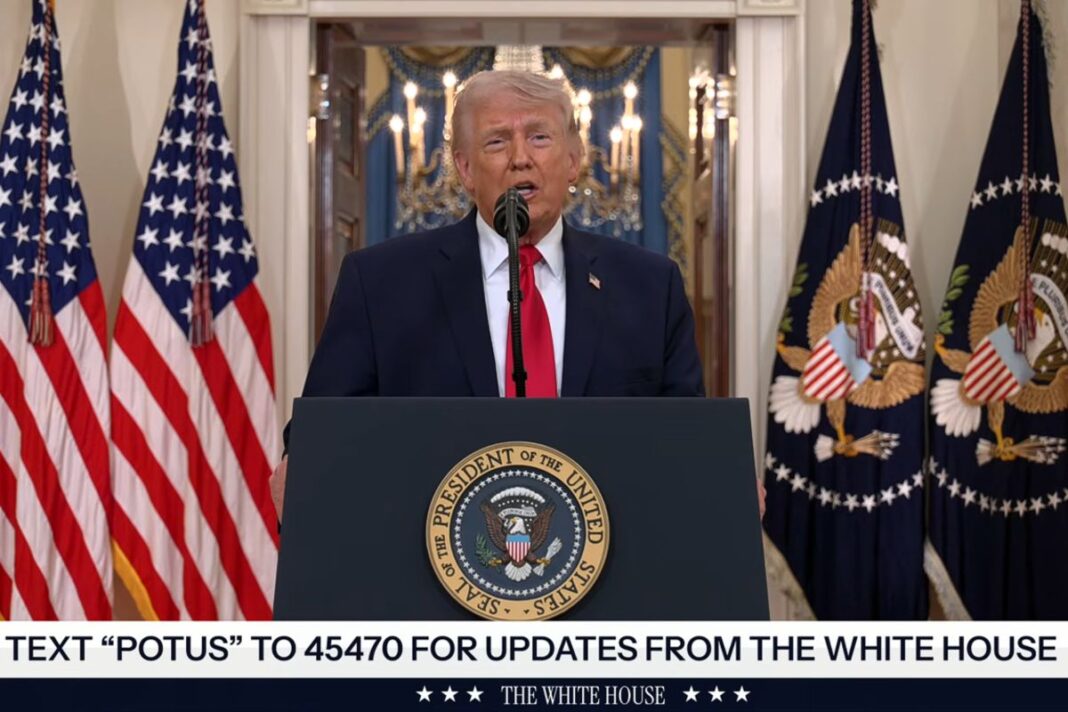
The rally followed Trump’s prime-time address late Wednesday, in which he vowed to intensify strikes against Iran over the coming weeks, while offering no clear timeline for reopening the Strait of Hormuz or ending the war.
“We’re going to hit them extremely hard over the next two to three weeks,” he said. “We’re going to bring them back to the Stone Ages, where they belong.”
The absence of any explicit reference to a cease-fire or diplomatic breakthrough unsettled markets that had, until recently, been pricing in a quicker de-escalation.
“Oil rebounded sharply on Thursday … after two days of declines, as US President Donald Trump threatened a further escalation of the war with Iran, injecting fresh uncertainty into energy markets,” ING analysts said in a note.
“Even if shipping through the Strait of Hormuz resumes, a return to pre‑war market conditions is likely to be slow, as upstream production restarts, logistics normalisation and inventory rebuilding will take time.”
The Strait of Hormuz, a narrow waterway between Iran and Oman, is a critical shipping lane that handles roughly a fifth of global oil supply. It remains effectively restricted by Iran in retaliation for the U.S.–Israeli attacks, with tanker traffic disrupted and insurers raising risk premiums.
In his primetime address, Trump urged countries dependent on Gulf energy flows to take a more active role in securing the strait, saying the United States would help but not lead such efforts.
French President Emmanuel Macron said on Thursday that it is “unrealistic” to reopen Hormuz by force due to the threat of Iranian missiles, telling reporters during a state visit in South Korea that securing the strait could only be done “in consultation with Iran” after a cease-fire.
Britain is hosting a virtual meeting of 35 countries to discuss options for reopening the Strait of Hormuz, though the United States is not expected to participate.
By Tom Ozimek