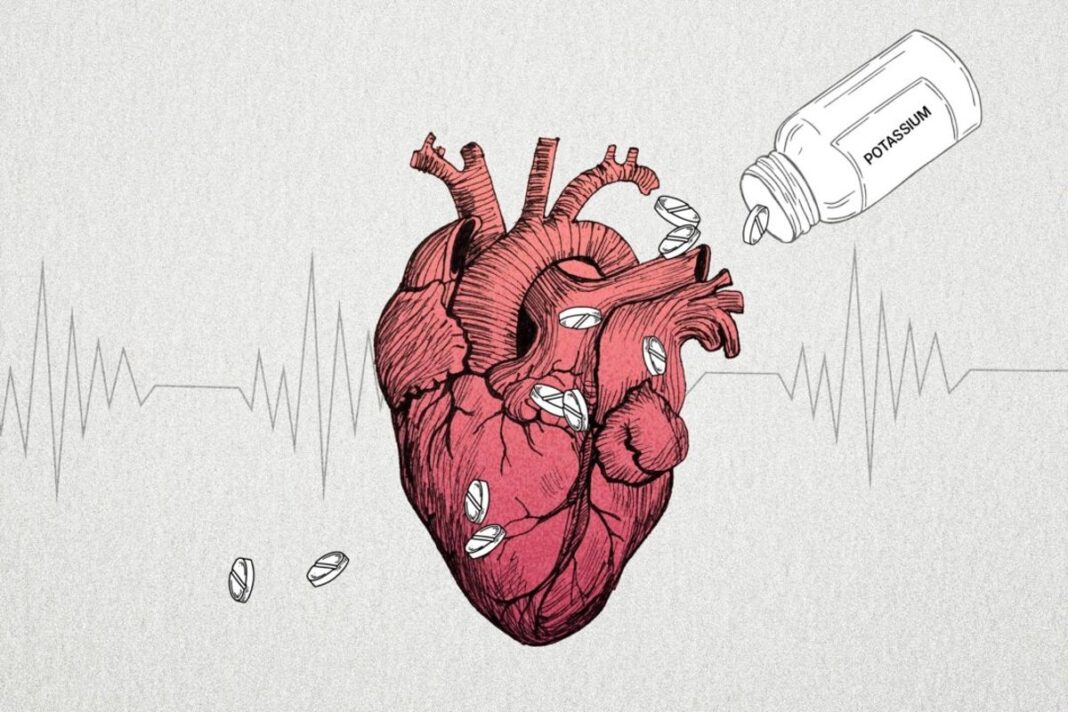


A simple change in diet could significantly benefit heart patients.
A simple dietary adjustment could be a game-changer for heart patients. Increasing potassium levels cuts the risk of dangerous heart rhythms by nearly a quarter, according to new research.
Participants in the treatment group had their potassium levels raised to 4.5 to 5.0 millimoles per liter (mmol/L) through diet, supplements, and/or medication.
The treatment was conducted in patients who had an implantable cardioverter-defibrillator (ICD), which is a surgically implanted device larger than a pacemaker, a more common implantable device.
A pacemaker is a small, surgically implanted device that helps regulate a slow or irregular heartbeat by sending electrical impulses to maintain a steady rhythm. An ICD, on the other hand, monitors the heart and delivers an electrical shock to correct fast heart rhythms, which can prevent sudden cardiac arrest.
Over an average follow-up of 3.3 years, patients who maintained higher potassium levels experienced significantly better outcomes, according to the results recently published in the New England Journal of Medicine.
The main goal was to see if the approach could reduce episodes of dangerous heart rhythms, hospitalizations, or death.
Key Study Findings
The study focused on patients with implanted ICDs. Patients started the trial with normal and low baseline levels of potassium at 4.3 mmol/L or lower.
The patients then raised their potassium levels either through diet, supplementation, or medication. Raising and maintaining a high-normal potassium level of 4 to 5 mmol/L had a 24 percent reduction in risk of serious heart rhythm problems. Potassium is needed to create heartbeats, therefore low potassium levels can lead to irregular heartbeats.
A major outcome was that there were fewer emergency interventions from implanted defibrillators—15.3 percent in the higher-than-normal potassium group versus 20.3 percent in the control group.
Hospitalizations for arrhythmias and heart failure were also less common among those with higher potassium levels.
Regarding safety, hospitalizations due to very high or very low potassium levels occurred in 1 percent of both groups, and deaths were reported in 5.7 percent of the high-normal group compared to 6.8 percent in the controls, a difference that the researchers didn’t consider statistically significant.
Dr. Carolyn Lam, a cardiologist and senior consultant at the National Heart Centre Singapore, who pioneered the first Women’s Heart Clinic in Singapore, and was not involved in the trial, told The Epoch Times that the findings apply specifically to patients who have implanted defibrillators, are at high risk of ventricular arrhythmias, and have a starting potassium that is not higher than 4.3 mmol/L.
Lam said that potassium levels have a “U-shape relationship” with health outcomes, meaning that both high and low levels can lead to adverse events.
“Thus, it is important that patients know their potassium levels before simply applying these results to themselves,” she said.
What The Findings Mean for Patients
Although the study was conducted only in patients who already had an ICD, Professor Henning Bundgaard, senior author of the study, said in a statement that the findings may be applicable to many patients, especially those who have cardiovascular disease associated with a high risk of ventricular arrhythmia.
Dr. Ian J. Neeland, an associate professor of medicine at Case Western Reserve University and director of University Hospitals Center for Cardiovascular Prevention, who was not involved in the trial, said that patients should discuss strategies with their doctor to keep potassium levels in the high-normal range. Patients should be sure to take drugs that help the body hold onto potassium, he said, which includes Spironolactone and eplerenone, according to current guidelines for patients with implanted cardiac devices.
Some foods that increase potassium include bananas, raisins, prunes, broccoli, potatoes, and tuna.
Neeland added that patients should also alert their doctor if they develop any conditions that could acutely lower their potassium levels, such as diarrhea or vomiting.
“They should work with their doctor to find the best strategies to keep potassium in the high-normal range,” he said.