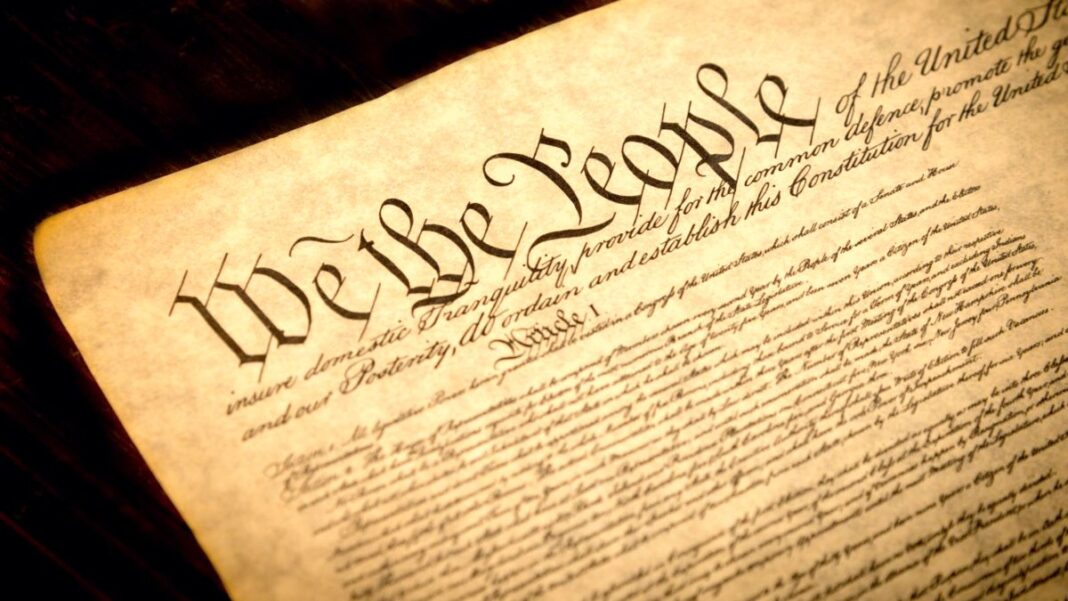


The U. S. Senate has never been the same since the Seventeenth Amendment to the U.S. Constitution was passed. Before we had this amendment, senators were appointed by the legislature of their state (see Article I, Section 3 of the Constitution). Now, we have the Seventeenth Amendment which says that senators are elected by the people of their state. This might not seem like a big change. However, our Founding Fathers never wanted meant it to be this way.
Beginning in 1893, the House of Representatives passed this amendment several times, but the Senate refused to approve it. However, when over thirty of the states demanded this change in the way senators were elected, the Seventeenth Amendment was passed by Congress in 1912 and ratified by the states the following year.
The initial purpose of the Senate was to focus on the interests of the states. Allowing our senators to be chosen by the state legislatures gave the states a part in the federal government. However, this check the states had on the federal government was struck down by the Seventeenth Amendment and tipped the balance of power in the wrong direction. The amendment was hailed by some as a “triumph for democracy,” but the weakness of the new system soon appeared. The states’ political power diminished and the states lost their veto power over laws which violate their states’ rights. After striking down the Seventeenth Amendment, America would have two houses of Congress representing the people, but there would be no one in Washington to represent state governments.
Originally, Senators were to be appointed by the state legislatures because those in the legislatures were expected to know the best-qualified individuals to represent their state in Washington D.C.. Additionally, the Senate would be held accountable to the state legislatures. James Madison discussed this topic:
The senators will be appointed by the legislatures; and, though elected for six years, I do not conceive they will so soon forget the source from whence they derive their political existence. This election of one branch of the federal by the state legislatures, secures an absolute dependence of the former [the federal] on the latter [the states].
Fisher Ames, a participant in his state ratifying convention following the 1787 Constitutional Convention, was apprehensive of senators being chosen directly by the people (as is the case today). He said:
This would totally obliterate the federal features of the Constitution. What would become of the state governments, and on whom would devolve the duty of defending them against the encroachments of the federal government? . . . The state governments represent the wishes, and feelings, and local interests of the people.
Though we may wish to keep our vote for our senator, to restore the states’ position, a new amendment needs to be passed, repealing the Seventeenth. This would let the states regain both their representation in the Senate and their veto power over laws which violate states’ rights.
Bibliography:
- “Constitutional Amendments, History of.” The Encyclopedia Americana. 1946.
- Bowen, William R., et al. American Government in Christian Perspective, 3rd ed. Abeka Book, Inc., 2016.
- Skousen, W. Cleon. The Making of America, 3rd ed., revised. National Center for Constitutional Studies, 2007.