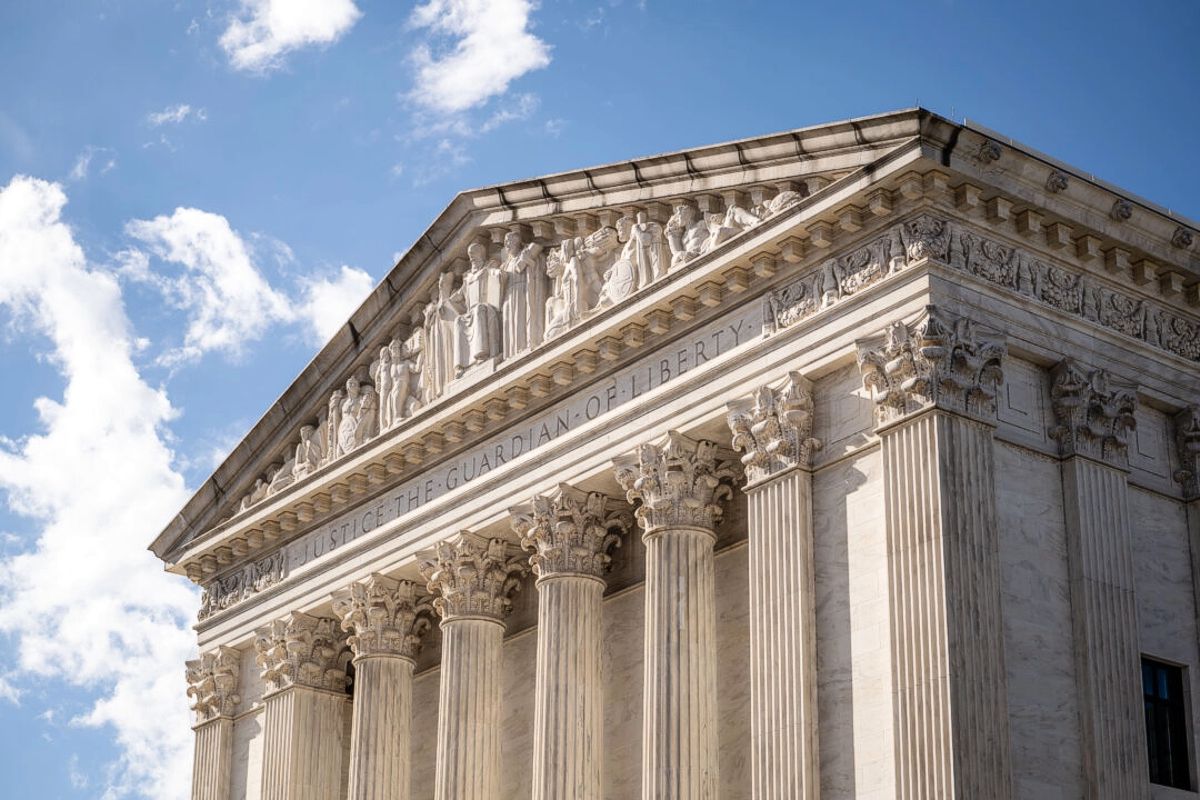


Suncor and Exxon sought review of a Colorado Supreme Court ruling allowing Boulder, Colorado, to use state law to file a lawsuit against the companies.
The U.S. Supreme Court on Feb. 23 agreed to take an appeal by oil companies that seek to halt climate-related city and state lawsuits against them.
This case concerns a lawsuit filed by Boulder, Colorado, but many states, such as California and Hawaii, and local governments, such as Chicago and Baltimore, have filed suits against energy companies, arguing that their products contribute to “climate change.” In some suits, they also allege that the companies have misrepresented these risks.
The court granted the petition in Suncor Energy (U.S.A.) Inc. v. County Commissioners of Boulder County in an unsigned order. The court did not explain its decision. There were no recorded dissents.
Exxon Mobil Corp. is also a co-petitioner. The City of Boulder is a co-respondent.
Boulder alleges the oil companies misled the public about the risk of fossil fuels to the climate.
The oil companies counter that state law doesn’t allow lawsuits to target such a worldwide issue as “climate change.”
The state-level trial court denied the companies’ motion to dismiss the Boulder lawsuit. A divided Colorado Supreme Court affirmed.
The majority of the state’s high court acknowledged the U.S. Supreme Court’s precedents that found claims for relief for injuries alleged to have been caused by interstate pollution are exclusively governed by federal law. However, that court held that because Congress passed the federal Clean Air Act, state law was allowed to regulate interstate emissions, the companies’ petition said.
“There are few, if any, more consequential questions pending in the lower courts concerning the relationship between state and federal law,” the petition said, adding that the lawsuit belongs in federal court.
“Boulder, Colorado, cannot make energy policy for the entire country.”
The federal government filed a brief supporting the companies’ position.
Deputy U.S. Solicitor General Sarah Harris said if the Colorado Supreme Court’s ruling is allowed to stand, “every locality in the country could sue essentially anyone in the world for contributing to global climate change.”