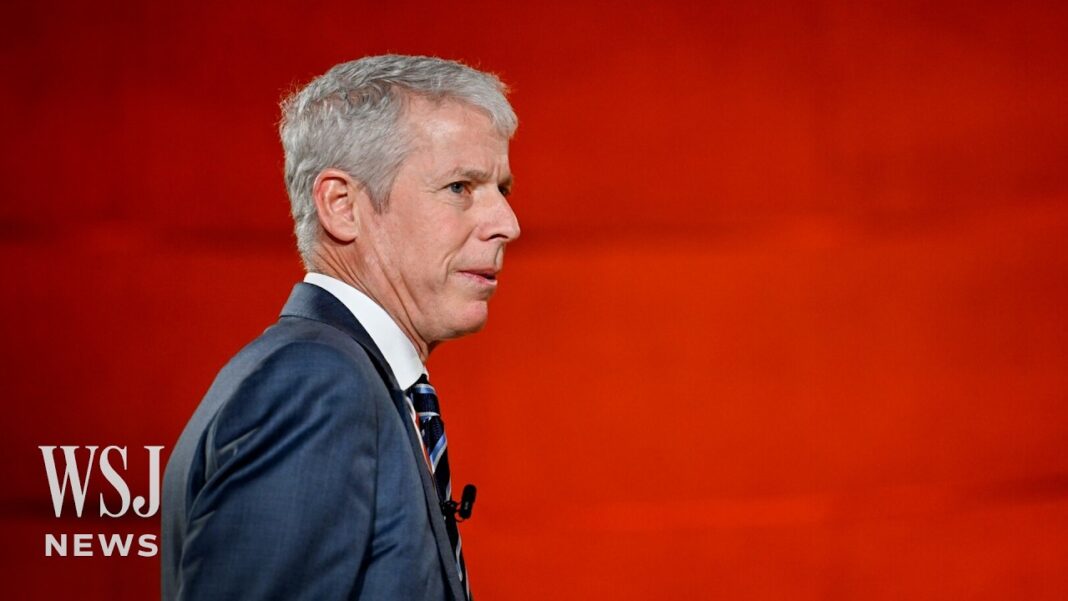
‘Like a lot of our meetings we’ve had with the Chinese over the past year, we want to ensure continued stability in the U.S.–China relationship,’ Greer said.
Top trade negotiators from the United States and China kicked off a new round of talks in Paris on March 15, less than two weeks ahead of an anticipated summit between their leaders in Beijing.
The U.S. delegation is led by Treasury Secretary Scott Bessent and Trade Representative Jamieson Greer, while the Chinese team is headed by Vice Premier He Lifeng, a member of the Chinese Communist Party’s powerful Politburo and the nation’s economic czar.
The trade talks started on the morning of March 15 at the headquarters of the Organisation for Economic Co-operation and Development in France, according to China’s state media Xinhua.
Neither Washington nor Beijing provided details about the meetings’ agenda. The Chinese regime’s commerce ministry said the latest consultations will cover “economic and trade issues of mutual concern,” according to a March 13 statement.
Bessent, in a March 12 statement announcing the trade talks, said that his team aims to “continue to deliver results that put America’s farmers, workers, and businesses first.”
The high-level meeting is expected to set the stage for U.S. President Donald Trump’s visit to China, which the White House has said will begin on March 31.
The meeting also marks the first time trade representatives from both sides sit down together since the U.S. Supreme Court struck down Trump’s global tariffs under an emergency law in late February.
The U.S. president subsequently imposed a 10 percent import duty under Section 122 of the Trade Act of 1974, which can last for 150 days.
Over the past week, the Trump administration opened two investigations under Section 301 of the Trade Act of 1974, which allows the United States to impose penalties, such as tariffs, on countries that engage in unfair trade practices impacting American businesses.
On March 11, the U.S. Trade Representative’s office launched an investigation to identify countries that export excess industrial capacity to the United States. Trading partners named in this probe include the European Union, Mexico, and China.
On March 13, Greer said that his office had initiated an investigation into 60 economies, including China, to assess whether they have taken “sufficient actions” to curb the use of forced labor in the products they export.
By Dorothy Li