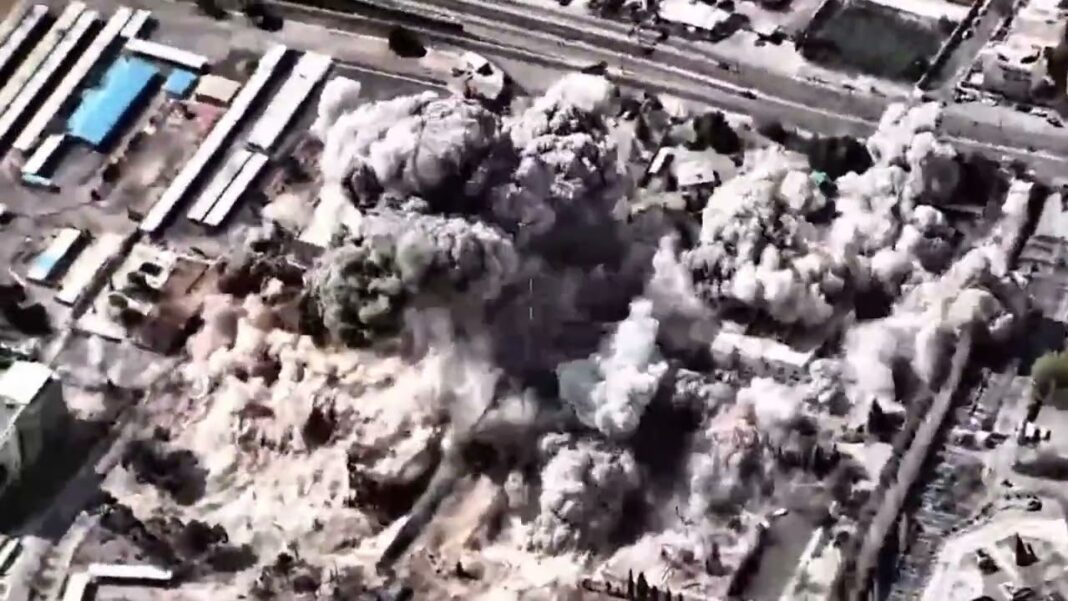


Iran’s Supreme Leader Ali Khamenei was killed in U.S. and Israeli strikes on Saturday.
President Donald Trump has agreed to open discussions with Iran’s newly established leadership following the death of Supreme Leader Ali Khamenei. The move signals a potential shift in diplomatic dynamics between Washington and Tehran.
“They want to talk, and I have agreed to talk, so I will be talking to them,” Trump told The Atlantic on March 1. “They should have done it sooner. They should have given what was very practical and easy to do sooner. They waited too long.”
Khamenei was killed in U.S. and Israeli strikes on Saturday.
In accordance with constitutional procedures, Iran has established a temporary leadership council to assume the responsibilities previously held by Khamenei.
The formation of the council was announced by Ali Larijani, Secretary of Iran’s Supreme National Security Council. The interim body includes current Iranian President Masoud Pezeshkian, Judiciary Chief Gholam Hossein Mohseni Ejehei, and cleric Ali Reza Arafi.
The council will “temporarily assume all the duties of leadership” until a successor is selected. Pezeshkian confirmed on state television that the new body “has begun its work.”
Under Iran’s constitution, the responsibility for appointing a new Supreme Leader falls to the 88-member Assembly of Experts, a clerical body elected by popular vote every eight years. However, all candidates for the Assembly must first be approved by the Guardian Council—half of whose members are appointed by the Supreme Leader—giving the ruling establishment significant influence over the selection process.
To appoint a new ayatollah, the Assembly must secure a two-thirds majority in a secret ballot. Among those considered for the position is Khamenei’s son, Mojtaba Khamenei.
Larijani stated that the interim council will retain authority until a successor is formally chosen.
Larijani, a former Revolutionary Guards member, parliament speaker, and chief nuclear negotiator, has previously signaled openness to resolving tensions over Iran’s nuclear program. Speaking to Oman state television in February, he suggested that U.S. concerns could be addressed.
“If the Americans’ concern is that Iran should not move toward acquiring a nuclear weapon, that can be addressed,” he said.
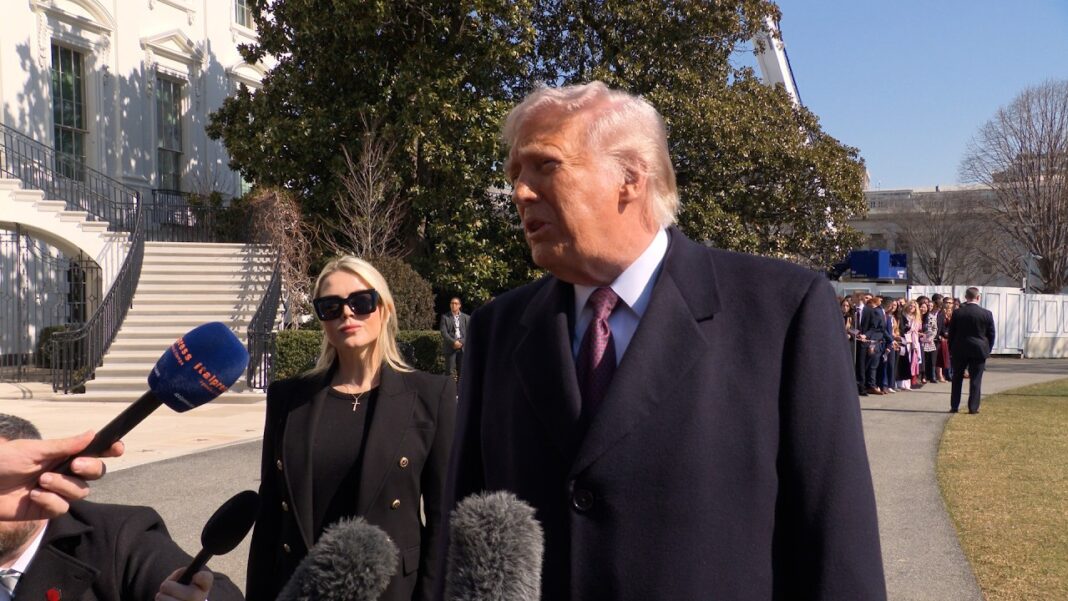
Nuclear negotiations had stalled after Trump expressed dissatisfaction with Tehran’s position. Speaking outside the White House on Feb. 27, he said, “I’m not happy with the fact that they’re not willing to give us what we have to have. I’m not thrilled with that. We’ll see what happens. We’re talking later.”
Following Khamenei’s death, however, Trump indicated diplomacy may now be more feasible. In an interview with CBS News, he described the situation as “much easier now than it was a day ago, obviously, because they are getting beat up badly.”