

The United States is seeking full removal of Iran’s enriched uranium under the terms of a cease-fire, with Trump floating sanctions relief tied to compliance.
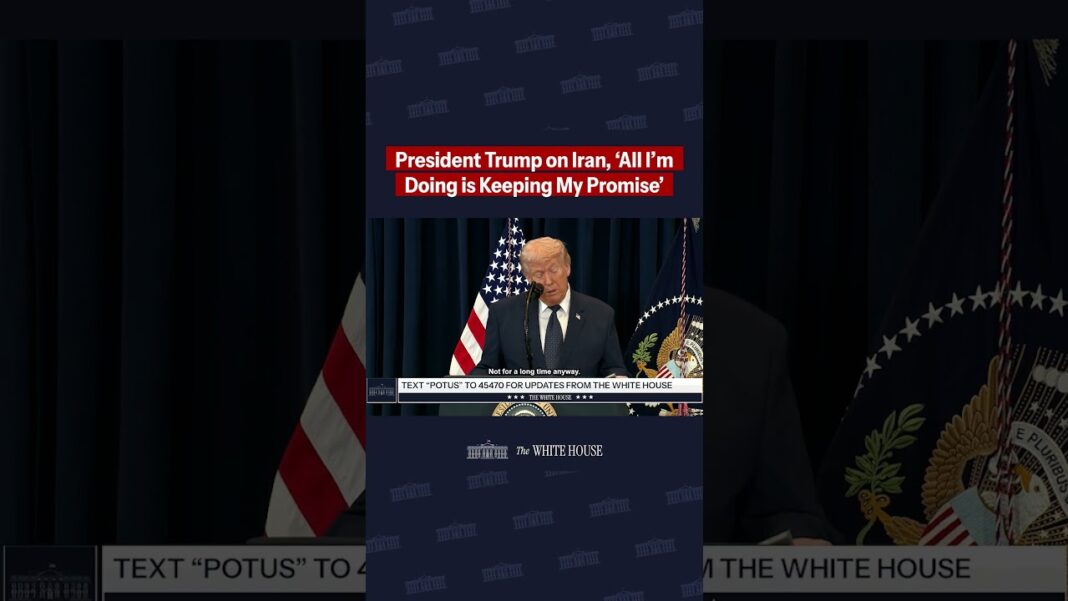
U.S. President Donald Trump said on April 8 that the United States will work closely with Iran’s new leadership to eliminate Tehran’s nuclear capabilities, including extracting and removing what he described as deeply buried enriched uranium, as part of a broader push toward a peace deal.
In a post on Truth Social, Trump said Iran had undergone what he called a “very productive” regime change that has pledged no further uranium enrichment, adding that Washington would “work closely” with Tehran to “dig up and remove all of the deeply buried … Nuclear ‘Dust.’”
Trump said the material—remnants of Iran’s enriched uranium stockpiles believed to be stored in underground facilities bombed by U.S.–Israeli forces—remains under “very exacting” satellite surveillance and asserted that “nothing has been touched from the date of attack.”
He added that discussions would extend beyond nuclear issues to include tariff and sanctions relief, signaling readiness to provide economic incentives to Iran tied to compliance with U.S. demands.
Preventing Tehran from obtaining nuclear weapons was a key aim of the Trump administration’s military campaign, which also sought to degrade Iran’s broader capacity to produce advanced weaponry and project force across the region, including against Israel.
Near Weapons-Grade Stockpile
Iran has about 970 pounds of uranium enriched to 60 percent purity—a short, technical step from weapons-grade levels of 90 percent—according to the International Atomic Energy Agency (IAEA), the United Nations’ nuclear watchdog agency.
That stockpile could be sufficient for as many as 10 nuclear weapons if further enriched and weaponized, IAEA Director General Rafael Grossi said last year.
Iran has long maintained that its nuclear program is peaceful, but the IAEA and Western governments say Tehran operated an organized weapons program until 2003.
IAEA inspectors have not been able to verify the status of Iran’s near weapons-grade uranium since June 2025, when Israeli and U.S. strikes significantly degraded Iran’s air defenses, military leadership, and parts of its nuclear infrastructure, while also halting inspections.
Grossi has said that the IAEA believes a stockpile of roughly 440 pounds of highly enriched uranium is stored in tunnels at Iran’s nuclear complex outside of Isfahan. Additional quantities are believed to be at the Natanz nuclear site, and lesser amounts may be stored at a facility in Fordo, he has said.
It’s unclear whether additional quantities could be stored elsewhere.
By Tom Ozimek