Taiwanese President Lai Ching-te said Taiwan will ‘work even more closely’ with the United States in all sectors to ensure regional peace and stability.
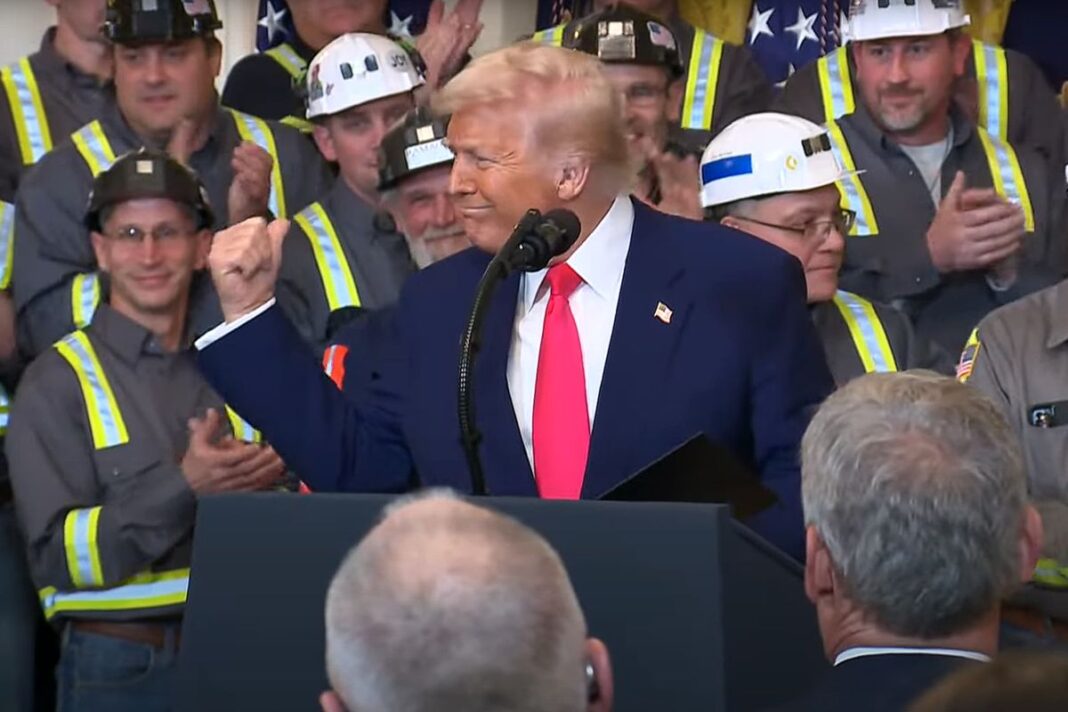
TAIPEI, Taiwan—President Donald Trump signed new bipartisan legislation on Taiwan into law on Dec. 2, drawing a swift protest from China’s communist regime, which regards Taiwan as part of its territory.
Trump signed the Taiwan Assurance Implementation Act into law, requiring the U.S. State Department to review and update its guidelines for U.S. engagements with Taiwan at least once every five years. The measure is designed to deepen the U.S.–Taiwan relationship in the absence of formal diplomatic relations.
On Dec. 3, Taiwan President Lai Ching-te took to X to say that he “greatly” appreciates Trump’s decision, calling it “underlining the importance” of U.S. engagement with Taiwan.
“Going forward, we’ll work even more closely with the U.S. in all sectors to ensure regional peace, stability & prosperity,” Lai added.
The law “carries great significance in that it affirms the value of U.S. interaction with Taiwan, supports closer Taiwan-U.S. relations, and stands as a firm symbol of our shared values of democracy, freedom, and respect for human rights,” Taiwan Presidential Office spokesperson Karen Kuo said in a statement.
“A robust Taiwan-U.S. relationship is a cornerstone for maintaining peace and stability in the Indo-Pacific region,” Kuo added.
In January 2021, just before the end of the first Trump administration, then Secretary of State Mike Pompeo lifted “self-imposed restrictions” on contacts between officials between the United States and Taiwan, which were put in place after Washington switched diplomatic recognition from Taipei to Beijing in 1979.
Taiwan Foreign Minister Lin Chia-lung told reporters on Wednesday that the new law would enable Taiwanese officials to enter U.S. federal agencies for meetings, even though the language of the legislation does not explicitly mention this.
In response to the new U.S. law, Lin Jin, spokesperson for the Chinese regime’s foreign ministry, told a daily press briefing that China firmly opposes any form of official exchanges between the United States and “China’s Taiwan region,” according to state-run media Xinhua.
By Frank Fang