

Exceptions were granted to lower tariffs to 15 percent for the European Union, Switzerland, Japan, and South Korea, and 10 percent for the UK.
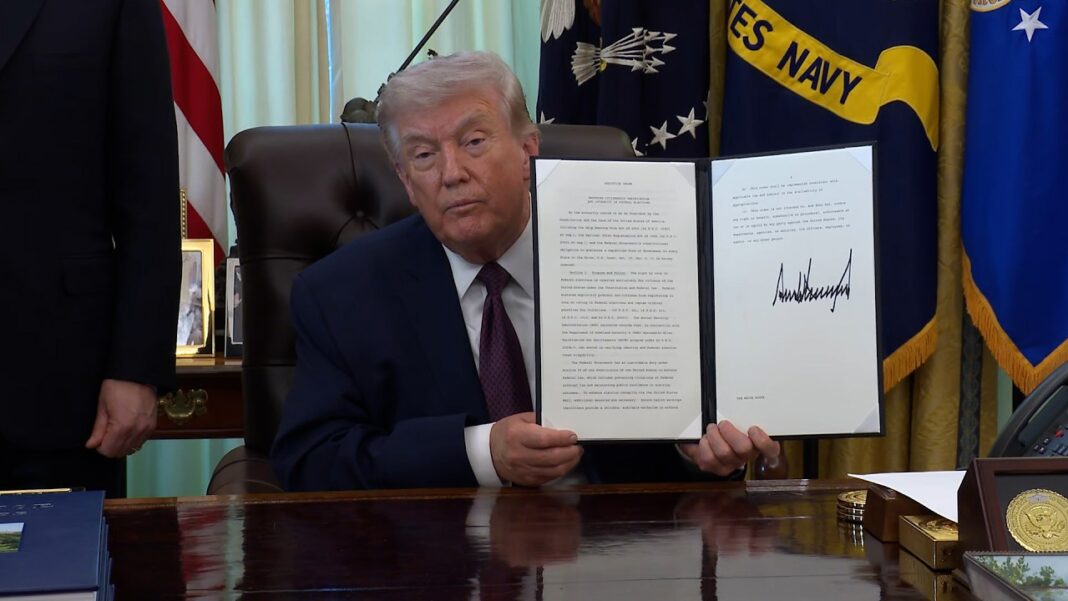
WASHINGTON—President Donald Trump signed executive orders on Thursday raising levies on some medications and refining calculations on steel tariffs.
Pharmaceutical drugs produced outside the United States are subject to 100 percent tariffs, unless manufacturers agree to onshore production and offer most-favored-nation pricing.
The Commerce Department is authorized to reduce levies to 20 percent for companies that invest in American facilities and remove the tariffs entirely for those that agree to both conditions.
Exceptions were granted, lowering tariffs to 15 percent for the European Union, Switzerland, Japan, and South Korea, and a 10 percent levy for the United Kingdom.
Reduced rates reflect prior commitments with trading partners, according to a senior administration official.
The UK was awarded a lower tariff “because they were the first ones who did this deal, and they committed to raise their prices for pharmaceuticals, and they have actually done so,” the official told reporters during a background call on April 2.
Trump negotiated deals with 13 pharmaceutical companies over the past year, securing $400 billion in domestic manufacturing investments.
Agreements with four more of the largest producers are nearing completion, according to the president.
He also signed an order simplifying the calculation for steel tariffs, now levied at 50 percent of U.S. steel prices and 25 percent for products containing more than 15 percent of the metal.
The changes are intended to mitigate efforts by steel wholesalers and exporters to reduce the impact of tariffs by artificially lowering the stated value of the metal on the global market.
This is a developing news story and will be updated.